When PPR Capital Management started to develop its PPR Keystone Housing Growth Fund, the 21st Century ROAD to Housing Act was still in development.
While the Senate passed a version of the legislation that cast doubt on the future of institutional investment in single-family rentals, Craig Johnsen, chief asset officer for PPR, said the Wayne, Pennsylvania-based commercial real estate investment firm was “always pretty confident” that a loophole was going to be carved out.
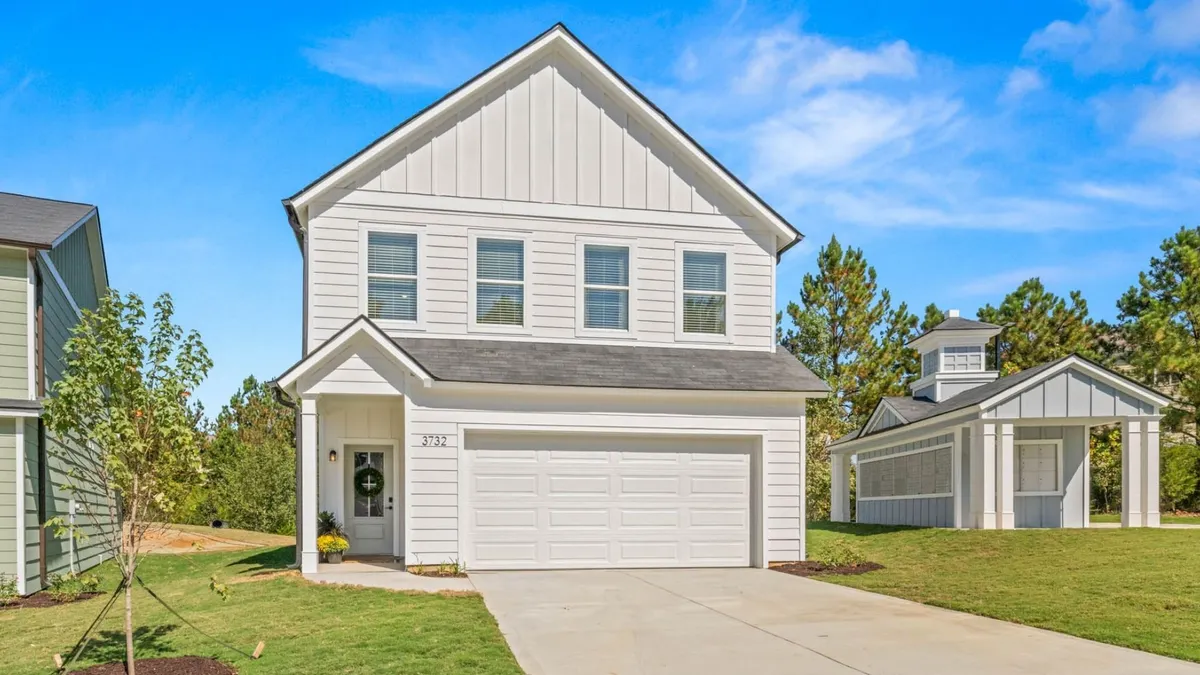
After the reworked housing bill became law earlier this month, PPR announced that it was launching the PPR Keystone Housing Growth Fund, targeting $100 million in investments to buy BTR properties at or near certificate of occupancy, entering after development and construction risk has already been absorbed by the sponsor, according to a press release shared with Multifamily Dive.
The firm is targeting 10 high-growth, supply constrained single-family markets with strong renter demand and has already made “soft commitments” to two properties in Charlotte, North Carolina, and one in Nashville, Tennessee, according to Johnsen. He wouldn’t disclose the names of the communities.
“In 60 to 90 days we're targeting for the first closing,” Johnsen said. “But there's a little bit of flexibility there.”
PPR plans five- to seven-year holds on its questions, according to Johnsen. “The play obviously is to acquire and place some kind of aggregation facility that will last 12 to 18 months for each property and stabilize it,” he said. “Then once it stabilizes, flip it to agency debt.”
Defining a target
For many BTR developers, the original plan was to build their communities, lease them and then sell, according to Johnsen. But the market is presenting some obstacles currently as their debt matures.
“They are struggling with the lease-up because that environment is so much more competitive than they expected and they can't get the rents they wanted,” Johnsen said. “They thought they could rent these for $3,000 a unit and they're sitting at $2,500.”
On top of that, as the federal housing bill was debated, it created uncertainty in the market. It also opened up some opportunity, with a lot of “big capital players who had soft commits” exiting the market due to regulatory uncertainty.
“The builders thought that there was going to be a soft landing for them on the capital front,” Johnsen said.
Right now, Johnsen sees enough pipeline of vacant or partially leased properties in the market to support the $275 to $300 million that PPR has earmarked for acquisitions once leverage is added in. But that opportunity won’t last forever.
“It's an opening in the market that's going to exist, I'd say right now, for the next, call it two years or so,” Johnsen said.
Click here to sign up to receive multifamily and apartment news like this article in your inbox every weekday.
Correction: In a previous version of this article, Craig Johnsen was misidentified.