

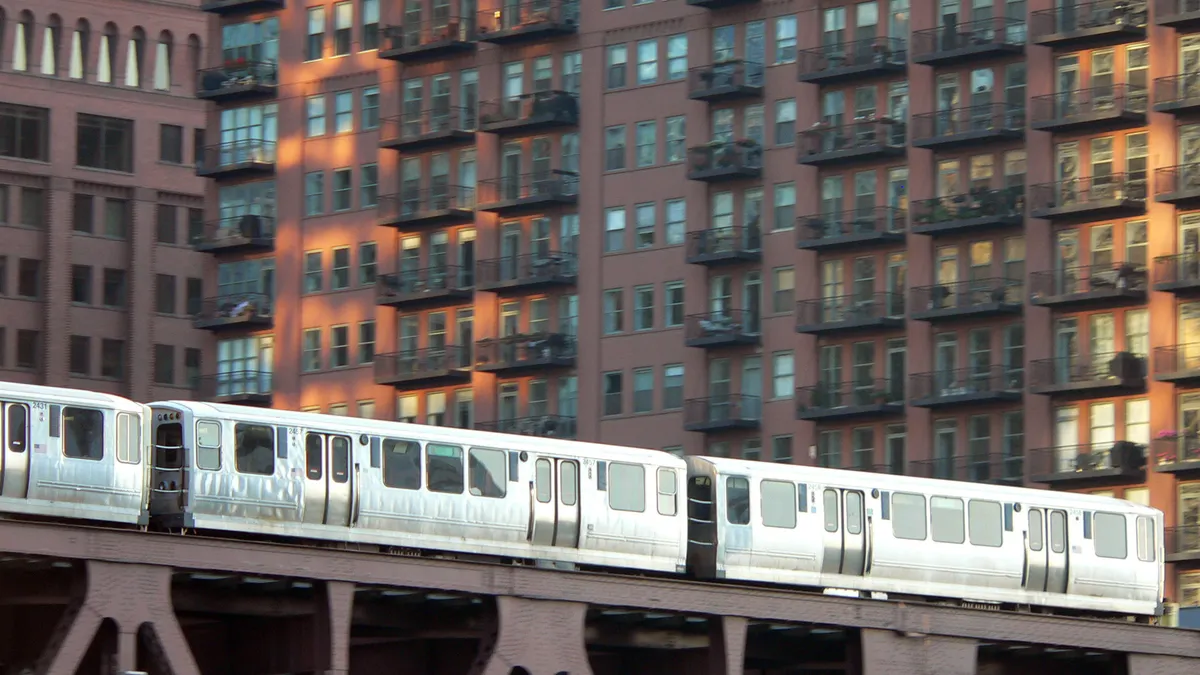

Chicago Mayor Brandon Johnson wants to retool the city’s tenant protections for the first time in 40 years as rental costs rise faster than other metros around the country.
Johnson this summer introduced the Protecting Renters Ordinance, joining other major cities in targeting “hidden junk fees,” administrative charges that can drive up costs for renters.
The proposed ordinance also establishes an administrative body to oversee and investigate rental complaints and shores up eviction protections by requiring landlords to provide just cause for an eviction or non-renewal of a lease.
It requires annual paid registration of all non-owner-occupied rental units to create a citywide data system to ensure compliance. The registration fees will fund the new administrative body, according to Johnson. The proposal also creates a Tenant Bill of Rights, which covers tenant organizing, lease termination and retaliation claims, among other protections.
“This ordinance is about keeping our neighbors housed, holding bad landlords accountable, ensuring stable and safe living conditions, and making housing as a human right a reality for every Chicagoan,” Johnson said in a June 29 news release introducing the reforms.
The backlash from real estate and landlord groups was swift, with many arguing the regulatory changes would drive up the cost of providing housing and create new regulatory hurdles.
Chicago City Council members in July introduced a competing reform measure, the Fair and Accountable Illinois Rental Ordinance, which significantly pares back Johnson’s proposals.
More than 50% of Chicago households are renters, and more than 40% of those renters are considered cost burdened, paying more than 30% of their income toward rent, according to the city.
The number of cost-burdened renters in the U.S. hit a record-high 22.7 million last year. A recent survey of renters found nearly 80% incurred some type of “junk fee” as part of their rent.