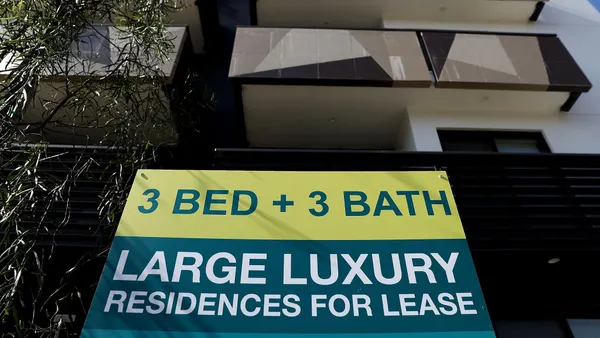
Multifamily rent prices continued to rally in July on a monthly and yearly basis, with rents increasing across most U.S. markets and many Sun Belt metros posting strong monthly gains, according to an Aug. 3 report from real estate data firm Yardi Matrix.
The average advertised rent rose $4, or 0.2%, from June to $1,771, making it “the largest July increase since 2015 outside the exceptional post-pandemic boom years,” per Yardi. Rents also rose 0.2% year over year. So far in 2026, rents have risen $22, or 1.3% — a slight increase from the same period in 2025, but still indicating limited pricing power.
That recent strength suggests that demand is healthy despite elevated levels of apartment supply, according to Yardi. Although the recent wave of deliveries continues to temper rent growth, apartment project completions are slowing. Plus, high mortgage rates are keeping homeownership less affordable, supporting renter demand.
Concessions are still high, though, indicating that many owners are focused on occupancy over rent growth. Stubborn inflation, high borrowing costs and geopolitical conflict could delay the occupancy recovery and muffle rent growth in the near term, according to Yardi, making its outlook for multifamily “cautiously positive.”
Inflation, along with proposed tariffs and renewed conflict in the Middle East, “have pushed gasoline prices higher and driven the 10-year Treasury yield to an 18-month high,” according to Yardi. These factors could keep interest rates high and weigh on consumer confidence.
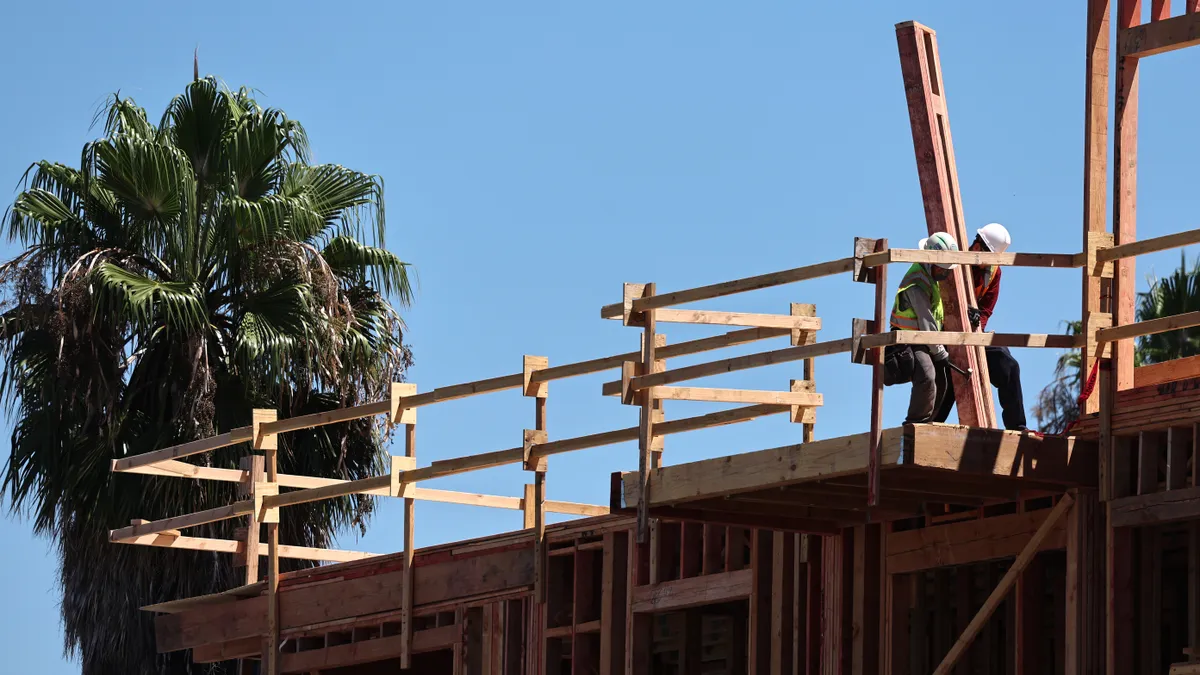
The federal 21st Century ROAD to Housing Act, signed into law in July, will likely boost rental construction, but the impact will take years to be felt, per Yardi: “Not only do new programs and individual projects take years to plan and deliver but for supply to grow, efforts must be made to attack high construction costs, which continue to be a major drag on development.”
Regional variation
Regional variation in rent growth remains, but is becoming less pronounced, according to Yardi. Prices have recently increased in the Mountain West and the Sun Belt — where rents have declined since 2024 — suggesting that supply-driven pricing pressure is easing in those areas.
“While it is too early to declare a turning point, the recent improvement offers hope that markets hit hardest by the development boom are beginning to recover,” according to Yardi.
Still, Gateway and Midwest markets saw the highest year-over-year rent growth, led by San Francisco (5.3%), New York City (5.2%), Kansas City in Kansas and Missouri (3.1%), Chicago (2.7%) and the Twin Cities in Minnesota (2.4%).
Rent growth remained negative in high-supply metros, led by Austin, Texas, (-3.7% YOY), Denver (-2.7%), Phoenix (-2.1%), Tampa, Florida (-2%), and Houston (-1.9%).
The national occupancy rate fell to 94.1% in June, down 60 basis points from a year earlier. San Francisco was the only major market to post a YOY increase, of 0.3%, supported by strong demand tied to artificial intelligence-related job growth.
All other major markets posted declines, with the largest drops in Tampa (-1.4% YOY) and Washington, D.C. (-1%). On an absolute basis, Houston, Austin, Dallas, Las Vegas and Atlanta continue to have the lowest occupancy rates among major markets.
Asset type trends
Boosted by strong demand and rent growth in the Midwest, single-family build-to-rent rents rose $5 in July to an all-time high of $2,240, with year-over-year growth up 0.3%. San Francisco rental occupancy rates were 94.7% in June, down 30 basis points YOY.
Rent growth for the BTR segment was strongest in the Midwest, led by Indianapolis, Chicago, Cleveland-Akron and Kansas City. Miami was the sole non-Midwest market among the top performers. By contrast, all four major Texas metros ranked among the nation’s weakest markets, with San Antonio, Austin, Dallas and Houston posting annual declines.
“The nearly 9.5-percentage-point spread between Indianapolis and San Antonio highlights the growing regional divergence in the SFR market, with Texas experiencing the greatest pricing pressure owing to high deliveries of all types of rental stock,” according to Yardi.
Lifestyle rents increased 0.1% YOY in July, while renter-by-necessity rents rose 0.5% YOY. Occupancy stood at 96.4% for RBN and at 94.4% at lifestyle properties.
Click here to sign up to receive multifamily and apartment news like this article in your inbox every weekday.