Dive Brief:
- A federal judge in Washington on Monday dismissed 10 out-of-state property managers from a class action rent price-fixing lawsuit that names Yardi Systems, a property management software company, as lead defendant, holding that the court didn’t have jurisdiction over them.
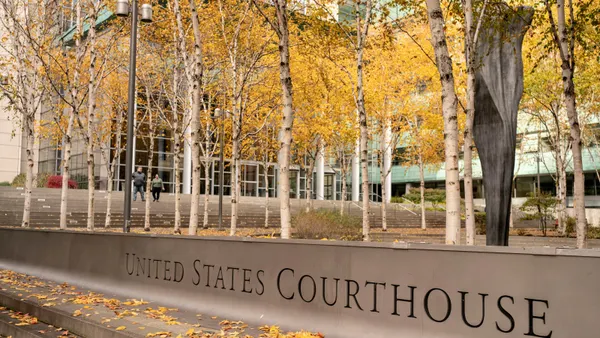
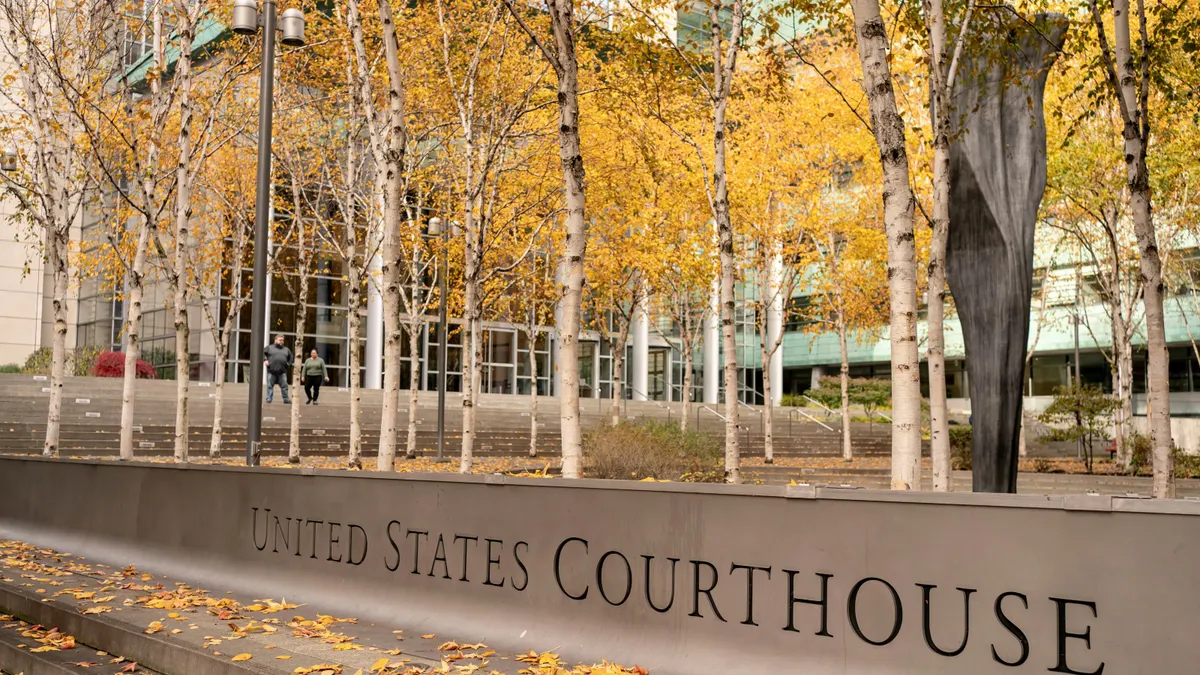
- The U.S. District Court for the Western District of Washington at Seattle does not have personal jurisdiction over non-resident LLC defendants who did not undertake “intentional actions expressly aimed at the state,” Judge Robert Lasnik said in a March 30 filing.
- Santa Barbara, California-based Yardi and defendants with operations in and ties to Washington state remain part of the lawsuit, which accuses the companies of orchestrating a nationwide scheme to inflate the cost of apartment rent using algorithmic pricing software.
Dive Insight:
In the lawsuit filed in September 2023, Washington state resident McKenna Duffy alleges that Yardi exchanged competitively sensitive and non-public information with clients through its automated rent pricing software, Revenue IQ (formerly RENTmaximizer), and that the defendants engaged in direct conversations with their competitors about pricing through market surveys.
Yardi and 10 apartment operators asked for the suit to be dismissed, arguing that the plaintiffs didn’t have standing and were “attempting to manufacture a Sherman Act violation.” In December 2024, Lasnik ruled that the landlords and software maker must face the suit, writing in his statement, “as technology has evolved, so too have methods of price fixing.”
At the time, Yardi told Multifamily Dive that the company’s software never uses confidential competitor pricing data in its rent recommendations. Rather, it relies on its clients’ property data and publicly available housing market information to help users make pricing decisions.
“There is nothing illegal about Yardi’s revenue management product, and the allegations against the company are simply false,” a Yardi spokesperson said. “We stand behind our software and will continue to defend vigorously against this baseless litigation.”
Now Lasnik narrowed the case, dismissing claims against Banyan Living Ohio LLC, Envolve Communities LLC, Grubb Properties LLC, The Habitat Company LLC, LumaCorp LLC, f/k/a LumaCorp Inc., McWhinney PropertyManagement LLC, Singh Management Co. LLC, Towne Properties Asset Management Company Ltd., Walton Communities LLC and Woodward Management Partners LLC.
“While the alleged conspiracy had the potential to impact rental prices in housing markets with which the moving defendants have no connection, such impacts were certainly not defendants’ goal and cannot support a finding that the non-resident LLC defendants purposefully directed activities toward Washington,” Lasnik wrote.
Last year, Yardi was successful in fending off a class action lawsuit in the Superior Court of California, Alameda County. In October 2025, the state court agreed with Yardi that its Revenue IQ software does not violate California’s antitrust and unfair competition laws because it does not, and by design cannot, use any client’s confidential pricing information to recommend pricing for any other client.
Clarity around algorithmic pricing
As cases around algorithmic pricing in the apartment industry work their way through the courts, there is growing clarity around the legal standards for its use.
In November 2025, fellow algorithmic pricing software provider RealPage settled a major price-fixing lawsuit with the Justice Department. The agreement included no financial penalties, damages or findings or admissions of wrongdoing, but did place guardrails around what data the firm can collect and how it can use it.
Richardson, Texas-based RealPage said the settlement would boost confidence for the housing industry and demonstrated that its revenue management software can be used in compliance with the views of federal antitrust enforcers, though several state attorneys general are still pursuing separate legal actions.
Multiple cities have successfully barred the use of algorithms in setting rents in recent years, per an Oct. 2025 blog post from law firm Arnold & Porter. They include San Francisco; Philadelphia; Minneapolis; Jersey City and Hoboken in New Jersey; Providence, Rhode Island; San Diego; and Seattle.
As municipalities have started to crack down on algorithmic pricing, RealPage has gone on the offensive. In November 2025, the company asked for a preliminary injunction on New York’s prohibition on the use of pricing algorithms to set residential rents. It’s the first state to impose such a ban. Berkeley, California, also passed a resolution that banned pricing algorithms for rental properties in April 2025, but delayed implementation until March 2026 after RealPage sued, The Daily Californian reported.
Click here to sign up to receive multifamily and apartment news like this article in your inbox every weekday.