
The Legionnaires’ disease outbreak in New York City in early July that sickened almost 50 people is the latest in a series of outbreaks that appear to be accelerating, health officials say. For facility managers who want to be proactive about prevention, fast-acting tests are available to supplement the monthly or quarterly tests that many municipalities require, a testing specialist says.
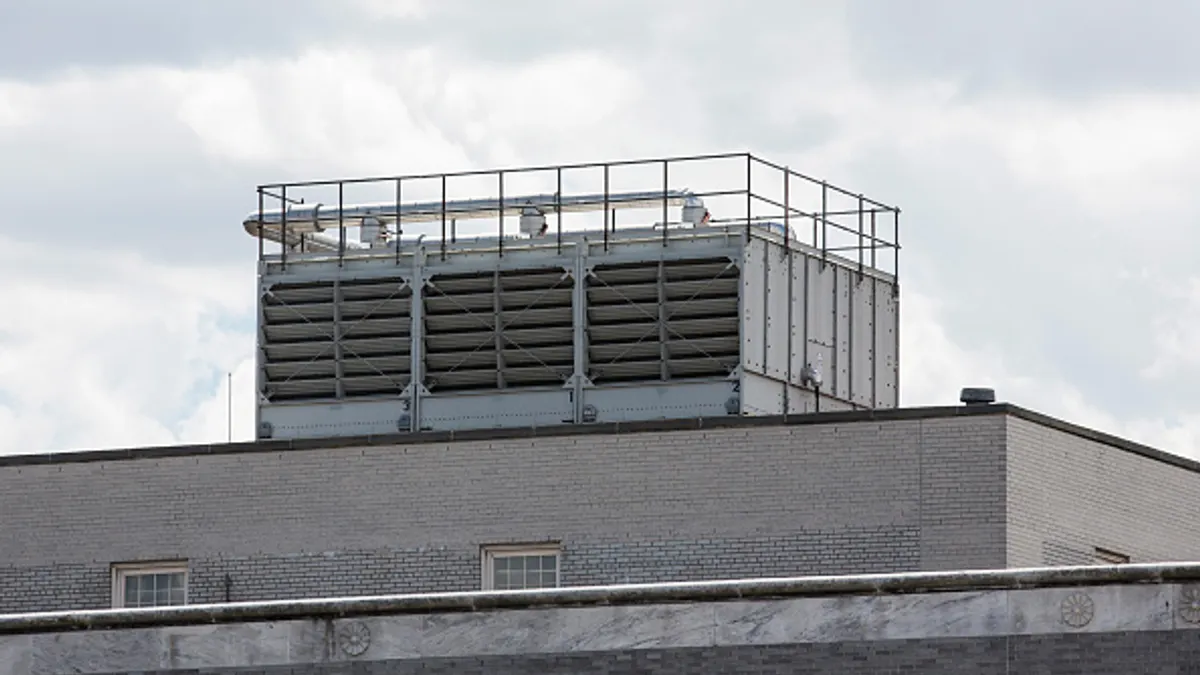
The source of last week’s New York outbreak is likely a cooling tower in the upper east side of the city, according to city officials. “All cooling towers in the affected area are being tested,” health officials said in a July 4 notice.
The city has required building owners to register their cooling towers, maintain a mitigation plan and test their water systems quarterly since 2015. It increased the testing requirement to monthly after a 2025 outbreak killed three and sickened some 80 people, although enforcement has been spotty, according to a Gothamist report.
Out of almost 6,000 cooling towers in the city, one in five had not submitted a test for Legionella bacteria, the report said. “It’s unclear how well building owners are complying with the enhanced testing requirements,” it said.
Health officials say outbreaks have been happening more frequently and will likely increase as temperatures rise. “Climate change is worsening our exposure and increasing the propensity for Legionnaires’ disease clusters like we’re seeing today,” Alister Martin, the commissioner of the New York City health department, said in a Guardian report after the NYC outbreak.
Legionella bacteria occurs naturally in water and it isn’t typically a health issue until it becomes concentrated in favorable environments, like warm water, according to the Centers for Disease Control.
The risk of concentration is greater in commercial buildings, where water systems tend to be larger and more complex, according to Gary Rankin, CEO of testing company Hydrosense.
“Their larger and more intricate water systems … tend to include cooling towers, multiple air conditioning units and extensive plumbing networks [which] provides more opportunities for Legionella bacteria to grow and spread,” Raskin wrote in a piece for Facilities Dive in March.
Most municipalities, including New York City, require building operators to use a lab culture when testing their water systems. The tests are considered the gold standard, according to the U.S. Occupational Safety and Health Administration, but they can miss some risks, Rankin told Facilities Dive last year.
Lab cultures typically take between 10 days and two weeks before results are available, a time gap that can leave people exposed to high concentrations of the bacteria, Rankin said.
Even if the result is negative, the water system can still pose a risk, because the test is a snapshot of what was happening two weeks ago, not what’s happening today, he said. “A negative result is kind of meaningless because Legionella can double in 24 hours, so all it tells you is the system was safe 10 days ago or two weeks ago,” he said.
A number of companies, including Rankin’s Hydrosense, make an antibody test that can be a supplement to lab culture testing, Rankin said, because it can provide results in half an hour, giving facility managers an almost real-time status check on their water systems.
“Most of the folks we deal with in the water management space tend to use at least two different tests,” he said, “so they don’t have any blind sides.”