Housing affordability was a defining issue in the Nov. 3 midterm elections, and it will likely remain a priority in the upcoming Democratic-controlled Congress, experts said. Democrats clinched majorities in both the House and Senate and flipped several governor’s seats, CNBC reported.
Both sides care deeply about housing, and the affordability challenge is not going away, Greg Brown, the National Apartment Association’s senior vice president of government affairs, told Multifamily Dive.
That shared priority was evident when Democrats and Republicans came together this summer to pass the most consequential federal housing legislation in decades, as well as in “the conversations that we've already had with members of Congress from both sides about what comes next,” on housing policy, Brown said. But it will be “interesting to see how [that process] plays out, given the new division of control.”
Congressional committee members worked across the aisle to pass the 21st Century ROAD to Housing Act, and that could offer a model for getting more housing legislation approved, Andy Winkler, managing director for housing and infrastructure at the Bipartisan Policy Center, told Multifamily Dive.
Part of the reason that ROAD passed “was Congress had not done that much related to housing over the last few years, and yet we've seen such staggering housing costs, and so they really did feel the pressure to respond,” Winkler said.
It will take time for new congressmembers to staff up and get up to speed on issues, Winkler said, “which creates this real need for stakeholders and others to engage and educate members and staff about housing and their priorities.”
One major complaint from the multifamily industry is that national politicians are focused on homeownership and don’t pay as much attention to the rental housing industry, Bernard Fulton, senior vice president of legislative and political affairs for the National Multifamily Housing Council, told Multifamily Dive.
Although both parties recognize that more housing action is needed, “just because they think this is something that has to be addressed doesn't necessarily mean they have the right path forward,” Fulton said. “And that's [the multifamily industry’s] opportunity.”
New Congress brings changes
Based on results of the last two major national elections, Fulton thinks elected officials have a lot more urgency to cut a deal. He expects to see tariff and tax legislation coming out of Congress, as well as more oversight of the financial regulators that influence interest rates.
“I fully expect once we really get into the nitty-gritty of January for people to immediately start introducing bills, and start crafting even a second comprehensive ROAD 2.0, maybe even before the end of 2027, [send it] to the White House,” Fulton said.
Democratic control of both houses could lead to national budgets that protect federal programs like Community Development Block Grants and the Low-Income Housing Tax Credit, which also aid the expansion of affordable multifamily housing, Joel Berner, senior economist with Realtor.com, told Multifamily Dive in emailed comments.
Other key issues to watch are whether areas “where Democrats gained power choose to pursue rent control or other tenant protections, how immigration policy changes and what effects it might have on the construction labor force, and whether Democrats at the federal level work to roll back tariffs on construction materials," Berner said.
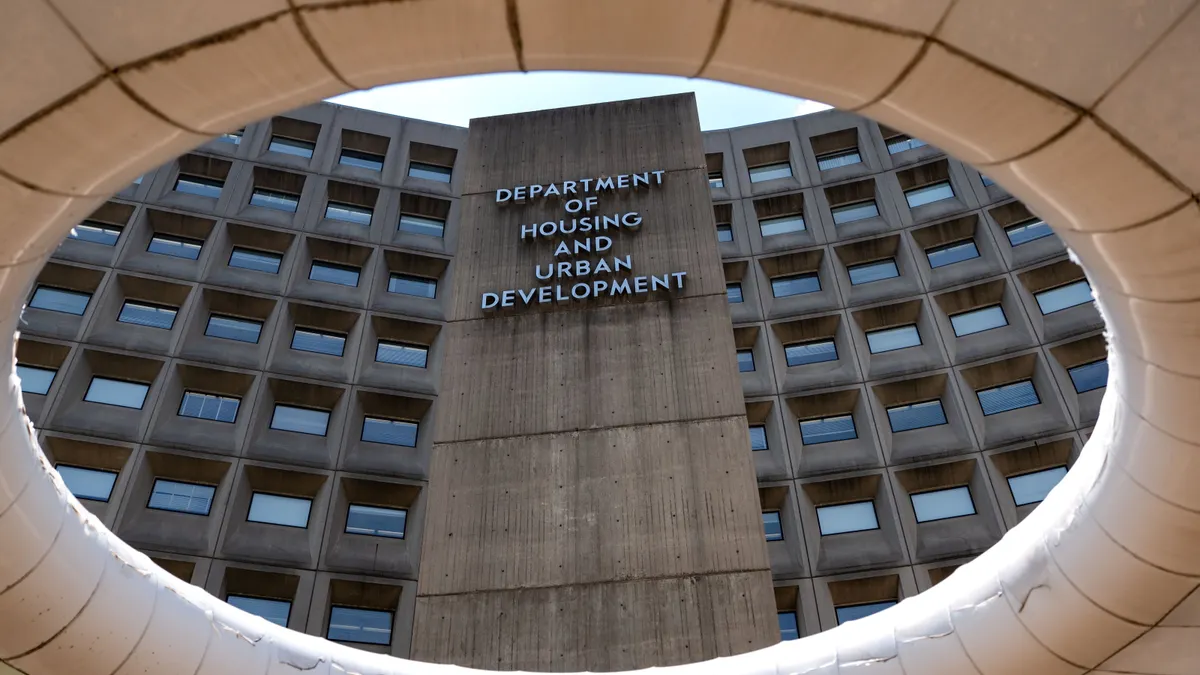
Big changes are coming to the House Financial Services Committee, which has authority over HUD, the U.S. Department of Agriculture’s housing programs and some of the financial regulators, according to Fulton. “We see pretty significant people not returning to those committees, and you also have new committee leadership in the House,” he said.
Republicans have been very focused on deregulatory measures and streamlining some HUD programs, according to Winkler, but “where maybe their priorities shift is if Congress changes the funding or appropriations levels or anything else.”
Winkler expects additional scrutiny on how agencies are implementing ROAD. Most of the programs and changes that the bill creates are not funded and will require appropriations, and “I do think maybe in a Democrat-controlled House and Senate, the dynamics of funding some of those programs could be different,” Winkler said.
More collaboration on housing ahead?
Despite party differences, housing still seems like an area ripe for collaboration in the new Congress, Winkler said.
“I do think if you're looking at divided government in which the bills that a Democratically controlled Congress passes need to be signed by the president to become law, this is one area that stands out to me as an opportunity to continue to work on the progress that was made this Congress,” Winkler said.
There's increasingly a broad recognition that the root of the housing problem is a lack of supply, according to Fulton.
Policies that “support zoning and land-use changes that boost housing production efforts is an area of shared agreement,” Fulton said. “Sometimes where disagreements come in is how you best support state and local governments in those efforts.”
There is also bipartisan agreement about improving access to federal housing financing programs, according to Winkler.
“A lot of the loan programs and other things haven't had the technology or systems to be updated in many years, and so I think just making them more user-friendly and available, basic kind of good governance for some of these programs could be areas of shared prioritization,” Winkler said.
There are also opportunities to update HUD’s Section 8 program that both sides agree with, “that make the program more efficient, save money, make it a better experience for residents, and make it easier to use for the private sector so more private owners will participate,” according to Brown.
Every district in the country is affected by housing policy, and housing should not be a partisan issue, according to Brown. “Our job should be to bring them back to, ‘here's a place where you can work together and have some real impact for your constituents and for the country.’”
Click here to sign up to receive multifamily and apartment news like this article in your inbox every weekday.