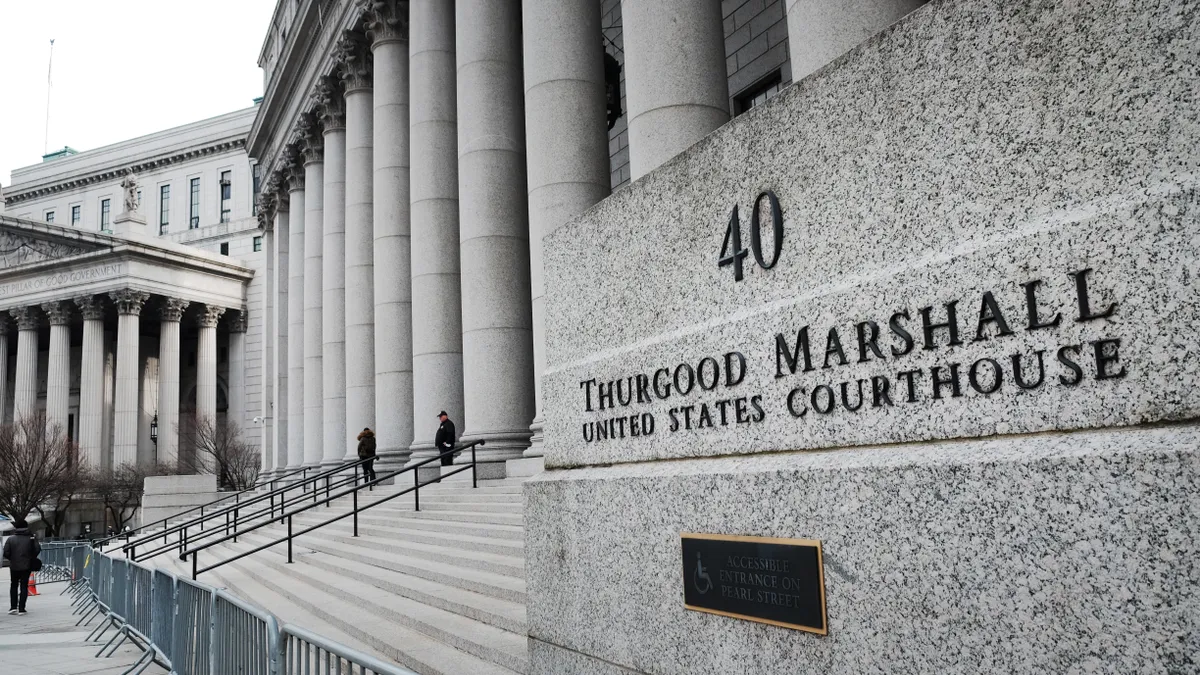
A major federal antitrust lawsuit over algorithmic rent-setting via Realpage’s software has been settled, per filings in RealPage Inc. Rental Software Antitrust Litigation in the U.S. District Court for the Middle District of Tennessee, Nashville Division.
The court approved the settlements, “including the Settlement Amounts, the releases, and the dismissal with prejudice of the Action as to the Settling Defendants,” and found that the settlements are fair and adequate to the settling class, according to the Oct. 15 filing.
In late 2022 and early 2023, a slew of class-action lawsuits were filed against Realpage and about 50 of the largest apartment owners and operators, alleging that the Richardson, Texas-based software provider enabled landlords to collude to raise rent prices beyond free-market levels in violation of antitrust law. Those cases were centralized into one in April 2023.
Settlement agreements came in waves, with 11 defendant landlords reaching 14 class settlements in May for $218 million and 27 landlords with 26 settlements worth more than $141.8 million in October 2025. The plaintiffs asked for class certification on Oct. 2.
The settlement class includes U.S. multifamily renters who paid any owner or operator on a property that used Realpage’s Revenue Management Solutions, Lease Rent Options, YieldStar and/or AI Revenue Management at any time between Oct. 18, 2018 through Nov. 21, 2025, per the filing.
None of the companies admitted fault or liability. They did, however, agree to stop providing Realpage with their nonpublic data for use as an input in Realpage’s revenue management system’s price recommendations, and to stop using Realpage’s RMS in ways that use competitors’ non-public data to inform pricing recommendations.
Whether the settlement agreements “really will work to limit the ability of these firms to coordinate with each other, to communicate with each other, that's the thing that I can't tell reading the decree,” Peter Carstensen, antitrust expert and professor of law emeritus at the University of Wisconsin-Madison, told Multifamily Dive.
The settlements offer guidance to the companies providing rent-pricing models, according to Carstensen.
Looking ahead, “the question for any particular industry is: How much are they giving up by restricting what they do? Are there moves they can make consistent with the decree that would allow them to establish a little more coordination in pricing?” Carstensen said.
States tried to stop settlements
Not everyone is happy with the settlements.
After the defendant landlords asked for final approval of their settlements on Sept. 25, attorneys general from the District of Columbia, Kentucky, Maryland, New Jersey and Washington fought the agreements, saying that they could “unlawfully restrict” their own separate lawsuits. The AGs had raised such concerns after the first group of settlement agreements last November.
However, Judge Waverly Crenshaw again denied their request to reject the settlements, saying in an Oct. 9 filing that “the proposed releases do not injure the State AGs’ independent sovereign or quasi-sovereign interests,” but added that he would take their concerns into consideration.
Although the DOJ and state AGs with antitrust concerns typically work together, there are a growing number of fights between states and the federal government over settlements right now, according to Carstensen.
“What is different here in the second Trump administration is that the Justice Department and Trade Commission are bringing cases and settling them, and the states have brought the same case but are not settling on the same terms,” Carstensen said. “You're looking at the states not having confidence in the Justice Department or the Trade Commission to do the right thing.”
Per the final settlement, all claims against the defendants are permanently closed, except where expressly outlined in the agreement, according to the Oct. 15 filing.
“This dismissal does not affect, release, or impair any claim against any Defendant or alleged co-conspirator that is not a Settling Defendant,” Waverly said in the filing. Furthermore, the court’s certification of the settlement class “is for settlement purposes only and is without prejudice to, or waiver of, any defense, argument, or position of any Party with respect to any other class in the Action or any other action.”
In November 2025, the U.S. Justice Department settled with Realpage in a related 2024 lawsuit that claimed the software provider enabled landlords to collude to raise rent prices. Several similar state and local lawsuits are ongoing.
“The federal settlement is what it is, but it's not the final word necessarily,” Carstensen said.
Click here to sign up to receive multifamily and apartment news like this article in your inbox every weekday.