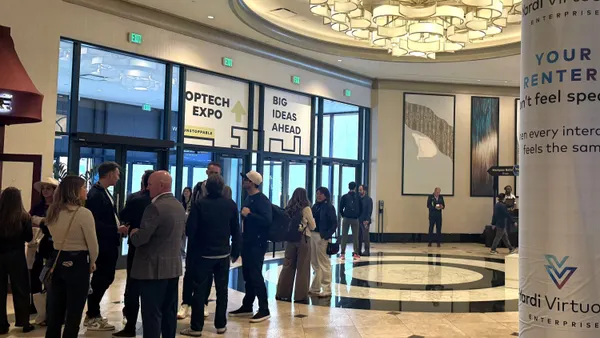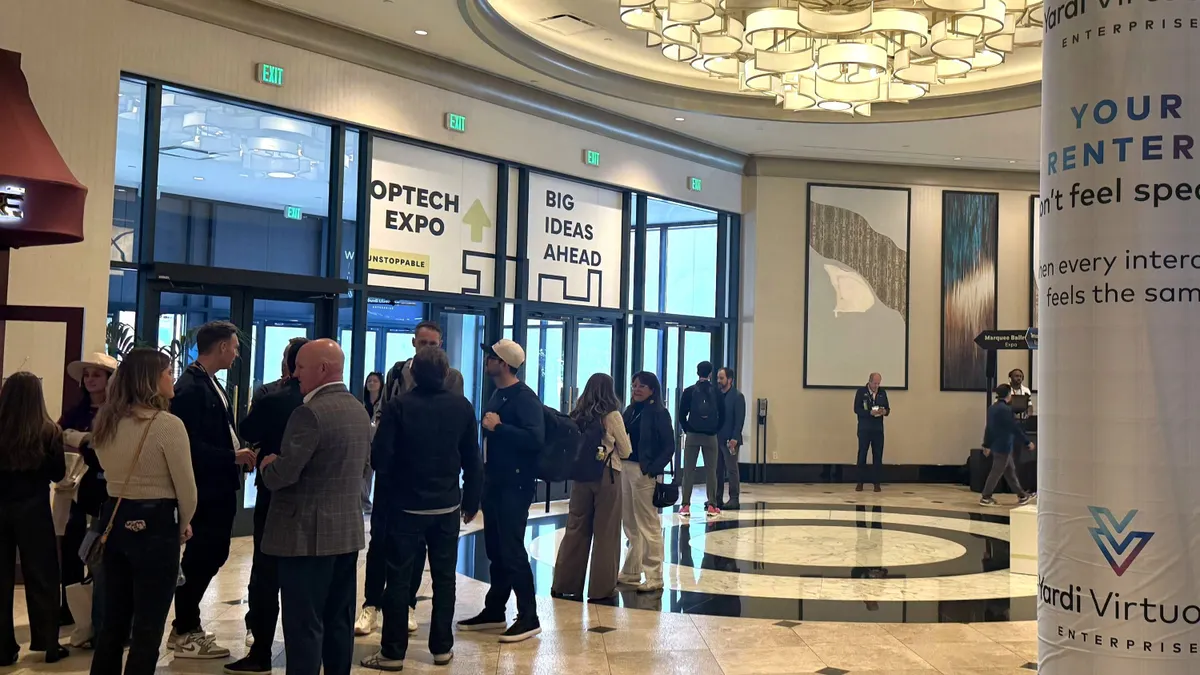
LAS VEGAS — There is no shortage of modern technology, such as managed Wi-Fi and smart-home features, that developers and renovators can put in apartment buildings.
But before committing to those technologies, those groups must keep the residents front and center as they plan.
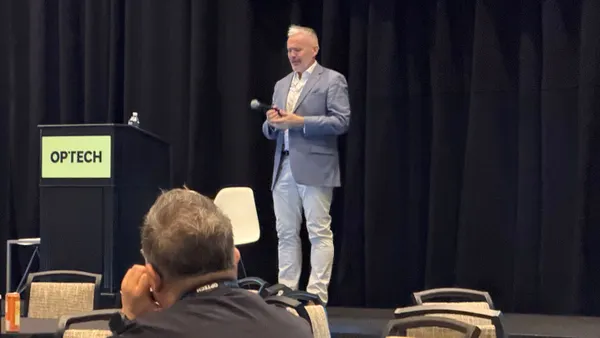
“In pre-construction, it's really [about] what problem am I actually solving and how am I delivering that to the resident?” Duncan Cannon, senior director of building technology at Cortland, said on Monday at OPTECH 2026 in Las Vegas. “In multifamily, we are trying to deliver that experience to the residents.”
In new developments, Mike Smith, president and CEO of WhiteSpace, agreed that stakeholders should be “asking questions around what is that end-user experience that you want to deliver.”
Adding too many shiny bells and whistles can also lead to poor user experience. Cannon called some of the features being put into buildings “technology glitter” and said developers need to be cognizant of how they work with one another.
“A lot of the point solutions don't necessarily tie to each other,” Cannon said. “You have [to have] the overall idea of what you want to deliver to those residents.”
While user experience should be a guiding principle in connected buildings, staff education, accurate cost estimates and the selection of building components also matter a great deal.
Staff education
In redevelopment projects, such as those involving the installation of managed Wi-Fi, the operations team needs to be onboard, according to Cannon.
“They need to understand what's happening,” Cannon said. “They need to understand the timeline because I promise you those residents will come in asking questions, and the more prepared they are to answer those questions, the better you will be set.”
Changing access control also requires significant planning, according to Lisa Moore, senior director of community technology at Mill Creek Residential Trust.
Last year, the company replaced door locks at roughly 600 units, according to Moore. Mill Creek needed its community team to educate residents.
“We were constantly making sure that the community team was communicating when there would be tech on site at those particular units," Moore said. “The resident has to be involved in that process because the last thing you want them to do is show up home after work one night and have to deal with something that they weren't expecting to deal with.”
The community team’s job doesn’t end after new door locks are installed or internet service is upgraded. Team members need frequent training on the systems to account for staff turnover at the property, according to Smith.
Moore took it a step further, pointing out that operators should create their own documentation to supplement what vendors provide.
“It [the vendor’s documentation] is never enough,” Moore said. “And we use our own documentation because it's just never really step-by-step enough for the actual community team.”
Pricing, materials pitfalls
Even if developers and owners keep staff and resident needs front and center when designing connected buildings, they can still run into problems.
For instance, relying on a previous project’s costs to estimate a new project’s budget isn't the best strategy, according to Michael Doucette, vice president at Blueport, who also spoke at OPTECH.
“In some cases, we see a lot of developers that have a number from a previous project associated with this new project, but it doesn't fit,” Doucette said. “It's not apples to apples. This [new building] might have a different amenity space, or this [property] has a different unit setup.”
The choice of materials also matters.
“You need to look at the components in detail,” Patrick Bailey, co-founder and senior vice president at ICS Advanced Technologies, said at OPTECH. “Everybody's gone through the days where we had copper-clad coax that didn't carry a signal very far.”
Accounting for geographic differences is also important when planning how to heat and cool technology equipment, according to Bailey.
“You have different requirements,” Bailey said. “In Arizona, you have to cool equipment. In Iowa, you don't necessarily have to cool it, but you do have to heat it in some cases.”
Click here to sign up to receive multifamily and apartment news like this article in your inbox every weekday.