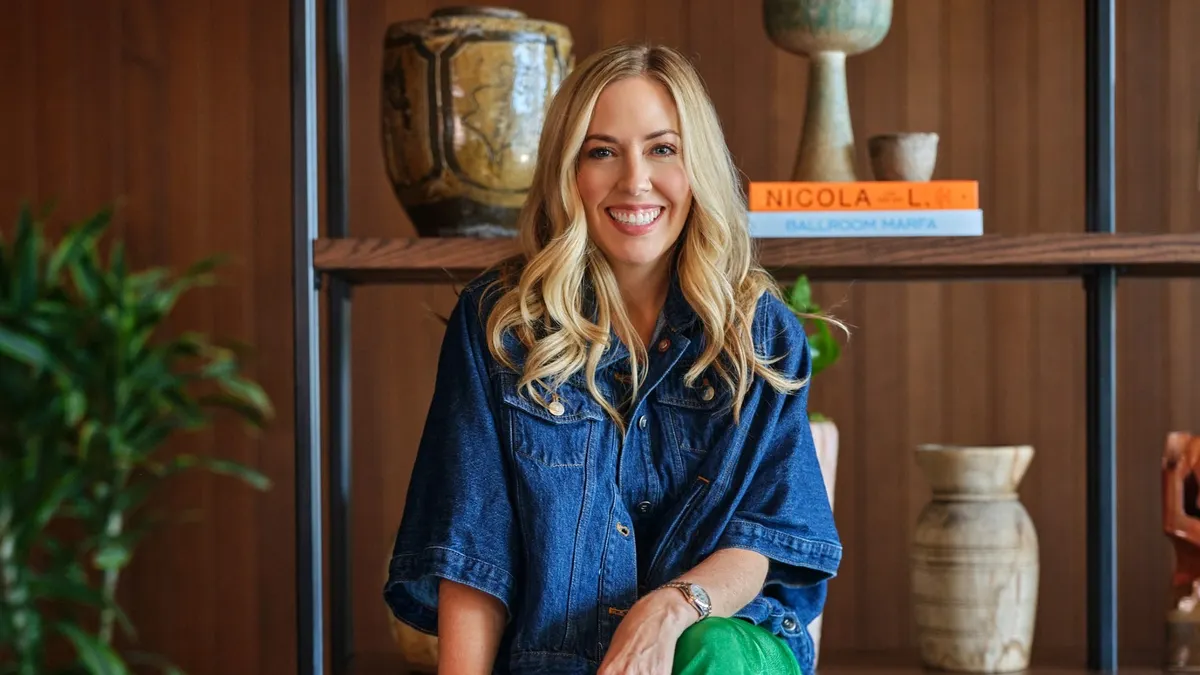
Chelsea Kloss believes good design is key to the long-term success of a multifamily property.
Austin, Texas-based real estate development firm LV Collective recently named Kloss as its first-ever chief design officer in recognition of her contributions. She has been with the company for more than five years, starting as director of interiors + curation. Kloss told Multifamily Dive that her role organically evolved into a C-suite position as the firm has grown, adding that the move is “really groundbreaking, and I'm humbled by it.”
“The opportunity for a designer to be in the C-suite, I'm excited about what it means for other designers to see the impact that they can make, not just from a traditional design perspective, but on the financial success of an asset and the overall impact that resident happiness makes on evaluation of a property,” Kloss said.
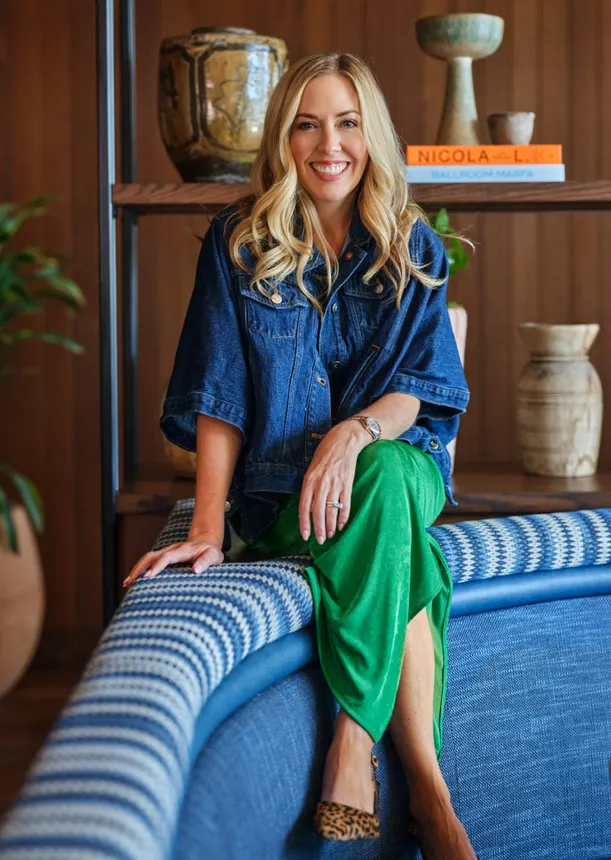
Kloss started in high-end residential new home construction where she created spaces for families. Although she was working on a smaller scale, that experience taught her how to observe residents’ behavior and address the needs of multiple users.
“That's one of the big differentiators on how I design and how I approach design and multifamily spaces. It's not just about the longevity of a product, and not just about how many years you can get out of it,” Kloss said. “It's about the longevity of a resident's happiness within that space, and the longevity of the reputation of the building based on that.”
Here, Kloss talks about her approach, how residents’ expectations are changing and how design can drive value long-term for multifamily operators.
This interview has been edited for brevity and clarity.
MULTIFAMILY DIVE: It’s unusual for a designer to be in a C-suite role. How is LV thinking about design differently from other multifamily companies?
CHELSEA KLOSS: Design has typically been considered like a fleeting moment in the life cycle of a project. You come in, you specify finishes, you select furniture, you install it and then that was the end of the relationship. I think what we're seeing in the industry is that beautiful spaces are no longer what's going to set a space apart. It's a given. It's an expectation, not just from myself and from my team, but from the industry, from residents. They see these beautiful properties on social media. The game has really upped in the multifamily world. I think it's more closely related to hotels and hospitality.
But what we've realized is, by putting design in the C-suite, it really allows the experience and the thought process of what a resident needs to start at the beginning, at the initial concept of a project.
Can you tell us a bit about your design approach?
What we've discovered is that design is much deeper than that when it relates to the experience you have. It's not just a pretty face anymore. There's psychology behind how to create a space that promotes culture and community, like how we use furniture arrangements to create opportunities for engagement or create pinch-points within a footprint of an amenity area that kind of forces people to get a little closer. These are strategies that aren't necessarily about how it looks and feels, but how it promotes the ability for people to connect on a human level.
Spaces that smell good, sound good, if the right music is playing, if it's got a hospitality-forward team that's operating the space — it shifts people psychologically from a place of protection to a place of connection, and that's where the magic really happens. People may have been drawn to a space because it's beautiful, but they stay because they feel good and safe and connected, not to just the built environment, but to the other people who are living and experiencing life within that particular property.
What do you think makes a design successful in multifamily spaces?
In order for a space to really, at least from LV Collective's perspective, be successful, is something that we call energy per square foot, and it's something we're so passionate about. What that means is when we deliver a property, we visit that property, and we observe and we walk each space. We're curious about what areas are busiest.
As much as we love winning awards and having a reputation for great design, for me it's really not solidified until I walk a property and I see every seat is taken, I see people laughing, engaging, working. I see people living life, and every single space that we've designed sort of maniacally for them over the course of 2, 3, 4 years is being used in the way that we imagined.
I think the energy per square foot is an interesting way to take this feeling that people have always associated with good design that's beautiful and functional. We can actually measure it and say, ‘this is successful because people are packed in the space, you can't find a seat because it's such an incredible experience.’ People are drawn from their private units, and they want to be part of the community.
Can you give an example of this?
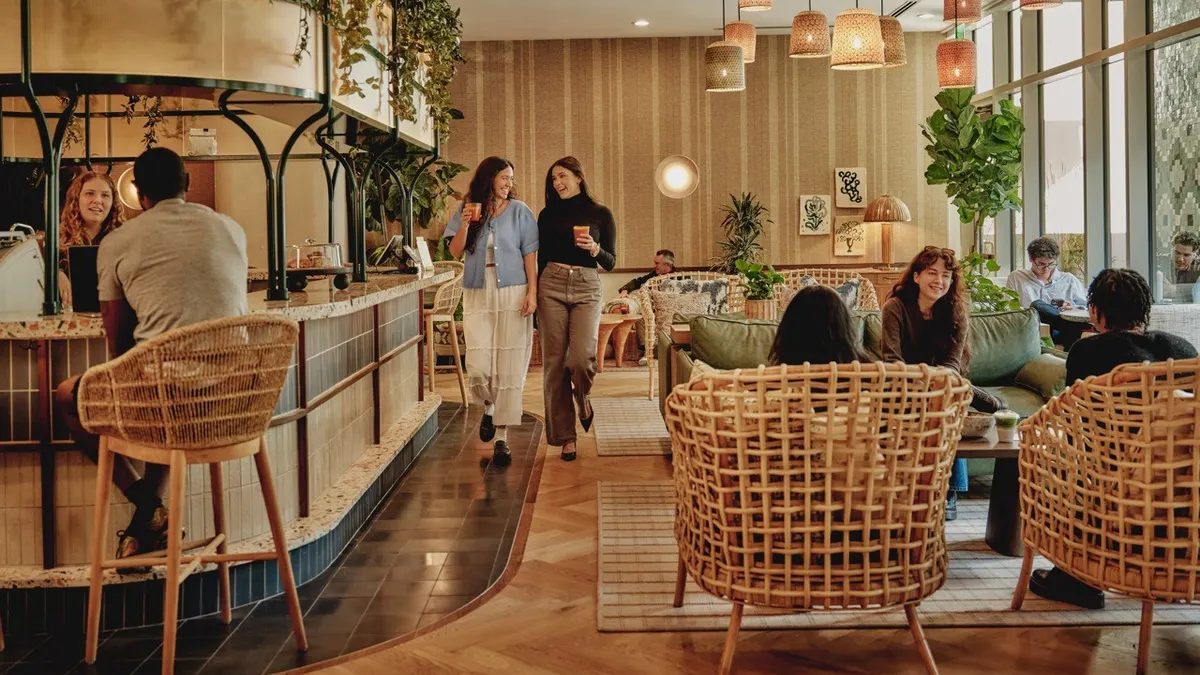
We actually created our own coffee concept called Daydreamer, and we put it in the most important real estate in the building, in that main lobby. We believe that this is a part of daily ritual that that people tend to do behind a closed door, and we wanted to create a space where people were enticed to leave their units and start their day with their community, their neighbors, and invite individuals who are not part of the property to come and join them at this beautiful coffee shop that's inspiring and also allows people to perform daily rituals of co-working or socializing or taking time to read or be introspective.
That's a big part of how we influence energy per square foot in our buildings: We lead with hospitality at that ground level, and we really help people start to curate their day from that first cup of coffee.
What are some common mistakes you see design-wise?
What I see happen often is people look to other people's properties, or look to other markets, and just try to rinse and repeat. We had a project where we were looking to put a clubhouse on a rooftop because, quite frankly, it's something that we saw all of our competitors doing. We were into the construction process, and we started to get more feedback from residents living in other properties. We got really curious about what was working and what wasn't working in other assets, and we discovered that you can't just do what everyone else is doing.
We do extensive research in the initial onset of of development to really understand our resident and to forecast what what they do on a daily basis, what they're interested in, and if we're really good — and this is always our goal — we try to deliver something that they didn't even know that they needed, something that subconsciously they're looking for that's missing within their their life, and deliver at that as sort of this aha moment. I'm more interested in forecasting that than what the next paint color of the year is.
I want to go deeper. I want to get more psychological with where people's lives are trending, what things are happening within wellness, and how we can use our buildings and our designs as tools and vehicles to create spaces that support people throughout their entire day, week, month, and a career and a relationship. To me, that's more rewarding and more fulfilling than simply delivering beautiful spaces.
How do you figure out what your residents want?
We talk to people. We listen. If it's a market that we know, we still try to get granular with not making assumptions about what people want, but asking them and really taking their feedback. It's a pretty extensive process. But what it really boils down to is listening and observing.
I think as designers, we're trained to program. We're trained to see how people live and use design as a way to support that lifestyle. And so a big part of what you learn as a designer is just to listen to people, ask them what they want, see what they need and try to fill in some of those gaps for them. We do a lot of boots on the ground, asking, watching, observing, researching what's successful in a particular neighborhood, a block. But what we realized is we were building, developing and leasing quite a few properties, but that feedback loop wasn't complete until we have incorporated operations and management within our platform.
We've recently launched LV Management, so now it's not just asking people what they want three years before, it's talking to people who live in the property, talking to our operations team, and responding in real time to what's being used and what isn't being used, or what may have worked the first year but what's not resonating the second year.
What are some of the biggest challenges you’re encountering in the design world right now?
Development and construction costs are still hovering at an all-time high, and what that means is that density is no longer just a part of the strategy; it is the lifeblood of the success of underwriting. My role as chief design officer is to ensure resident expectation is protected and shepherded from concept to delivery and beyond. So that means that our strategy on the importance of amenity areas is more important than ever.
We're fortunate at LV because we've always believed that activation of amenity areas is the most important part of the success of how residents feel in a building. We don't have to change our approach, it's already kind of the DNA of this idea of get people out of their residences, get them into the culture and community, get them really bought into the lifestyle beyond their front door, and you will have a very loyal, a very fulfilled, a very happy resident who wants to stay in the building, who wants to refer friends and who wants to help add to that great reputation of the property.
So I think this challenge of high cost of development and high cost of construction, boutique scale, smaller square footage, you know, private residences, is really forcing people to think about ‘okay, how do we get daily life? How do we take people's daily rituals, daily habits, and how do we get them to leverage square footage and shared spaces, so that they don't feel like they're giving something up within their private unit because it's smaller?’ They're seeing it as a benefit because we're able to really amenitize the space, and that's where the magic happens.
What is shifting in regards to design and operations best practices?
Location, quality materials, unit count, bed count — all those things still matter, right? It’s still real estate, we're still location, location, location. But what we're discovering is that the true differentiator on the value of the property boils down to the residents and their willingness to absorb an increase in rent, because it's not about the money; it's about the culture. They're not just leaving a unit, they'd be leaving their people.
We say, ‘find your people, find your place,’ and so this idea of design bringing in the right people — and then management hosting the people in a way that they feel seen and heard and appreciated and valued — means retention. It's not just a feeling, it's math, and those things drive up the value of a property. So that's what's really exciting for me as a designer is to no longer be considered just ‘oh, you feel good when you walk in the space but we can't really put a number to what that means on the value of a property or how it's positively impacting the financials of an asset.’ We see it, we know it, we hear it from the residents.
I think that's really the next level of design and development within the multifamily world, is the focus on the people and how they feel about the property and how that feeling translates into what they're willing to pay.
Click here to sign up to receive multifamily and apartment news like this article in your inbox every weekday.