Dive Brief:
- A new bipartisan bill, the Build HUBS Act, aims to boost construction of housing near transit hubs nationwide. Sen. John Curtis (R-Utah) and Sen. Lisa Blunt Rochester (D-Del.), both members of the Senate Committees on Environment and Public Works and Commerce, Science, and Transportation, introduced the legislation on Jan. 14.
- The bill proposes changes to improve the usability of key infrastructure loan programs that enable HUD and the Department of Transportation to collaborate and prioritize transit-oriented development projects. It would also prioritize TOD housing attainable to low- to moderate-income people.
- The Build Housing, Unlock Benefits and Services Act is supported by a slew of city planning and housing industry groups, including the National Apartment Association, National Association of Affordable Housing Lenders and National Association of Home Builders.
Dive Insight:
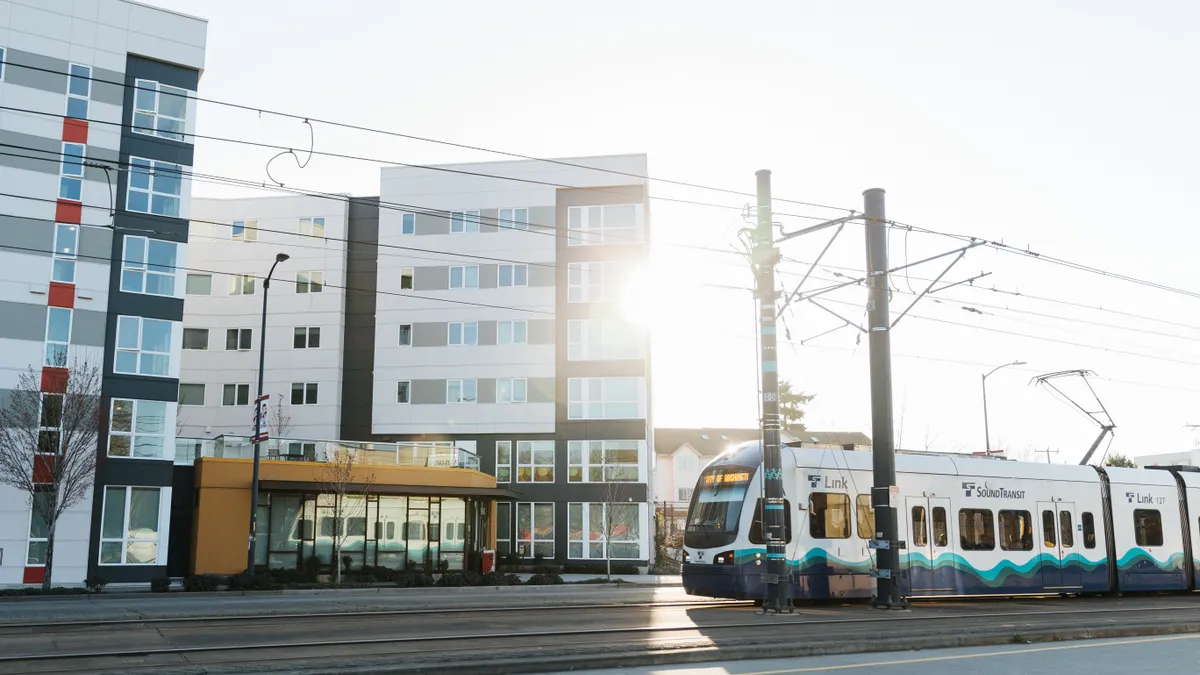
Building dense, walkable, mixed-use developments near public transportation is a development strategy that uses land efficiently, spurs revitalization and improves access to housing, jobs and services, according to a press release from Blunt Rochester’s office.
In recognition of the direct link between housing and transportation, the 2021 Infrastructure Investment and Jobs Act amended the Transportation Infrastructure Finance and Innovation Act and the Railroad Rehabilitation and Improvement Financing program to include certain TOD projects.
However, TIFIA- and RRIF-funded TOD projects have not yet realized their full potential due to unforeseen gaps in their authorizations, according to the bill’s supporters. The Build HUBS Act aims to remedy that and other issues.
“The Build HUBS Act helps us maximize transportation investments, makes better use of public land, and empowers local leaders to use existing infrastructure programs more effectively to build housing where it matters and makes sense,” said Curtis in the release.
Here’s what the Build HUBS Act would do:
- Extend TIFIA and RRIF through 2031
- Clarify the definition of transit-oriented development to “better capture the wide range of transportation assets that can anchor TOD across communities of all sizes”
- Implement a delegated lending model to retain federal oversight while adopting private sector efficiency and expertise
- Speed up processing timelines for project review and funding.
- Waive certain National Environmental Policy Act requirements, including for office-to-residential conversions and infill development
- Encourage existing loan programs to prioritize projects that promote workforce housing
The legislation is led in the House of Representatives by Rep. Laura Friedman (D-Calif.) and Rep. Mike Lawler (R-N.Y.). It has been referred to the House Transportation and Infrastructure Committee.
“Taking on our housing affordability crisis means using all the tools at our disposal,” said Blunt Rochester in the release. “Investing in transit-oriented development will have a positive impact on housing affordability, local economies, and quality of life.”
Click here to sign up to receive multifamily and apartment news like this article in your inbox every weekday.