Last year, rents fell for the first time since the 2010 global financial crisis, and 2025 ended with flat growth. Economists are eyeing a slow increase in prices in 2026 as COVID-era apartment supply continues to burn off.
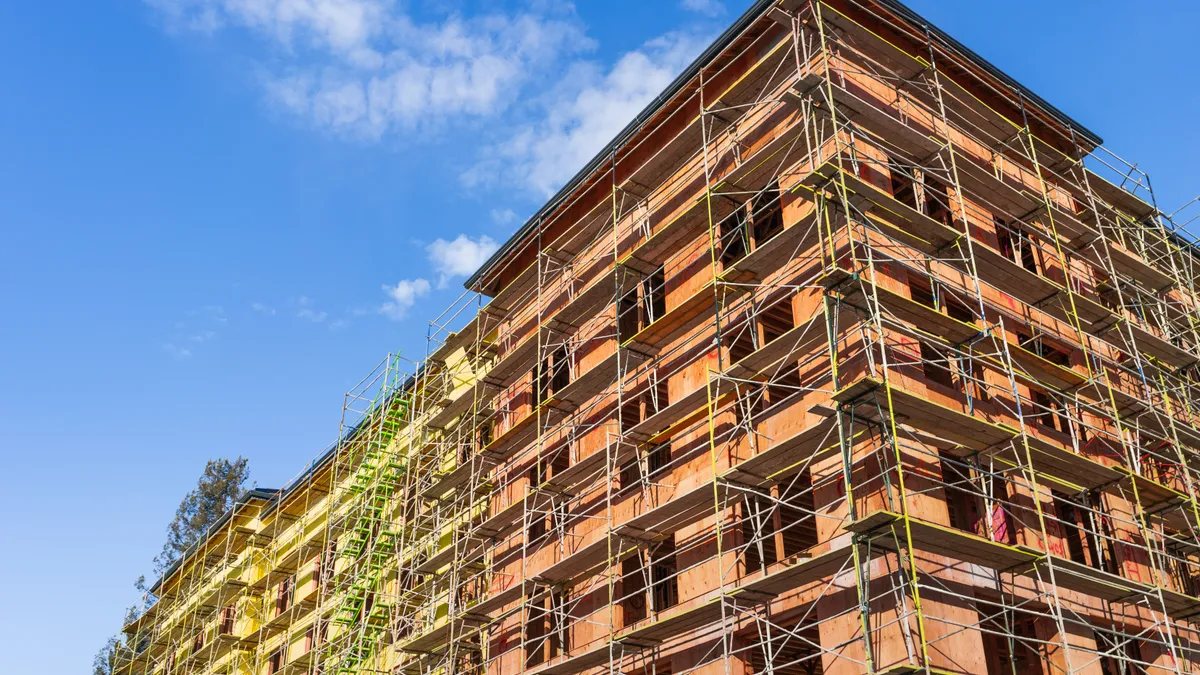
In 2025, the multifamily housing sector navigated the late stages of a high-supply cycle following years of near-record construction activity from 2020 to 2023, according to the National Apartment Association. Multifamily starts dropped by more than 40% between 2023 and 2025 and are likely to remain weak due to the high cost of materials, persistently high interest rates and concerns about oversupply in the Sun Belt, per data firm PwC.
The consensus outlook right now points to rent price growth of about 2% this year, said housing economist Jay Parsons, citing those waning levels of apartment completions.
“There's a wide range of scenarios that could play out, but assuming the economy produces steadier job growth in 2026, I would take the ‘over’ on that,” Parsons said in emailed comments to Multifamily Dive.

“Even if absorption moderates down from 2025's peak levels, it won't take a crazy amount of demand to outpace the dwindling levels of completions — and that should allow occupancy rates to recover enough for operators to burn off some of the concessions and see some pickup in rent growth by year-end 2026.”
Still, with three years of multifamily delivery levels not seen since the mid-1980s, some oversupplied markets are going to need much longer to return to equilibrium than anticipated, according to Jay Lybik, senior director of market research at Continental Properties.
“The uneven nature of rent growth across markets will continue in 2026 and it looks like once again, the Midwest will most likely be the regional rent growth leader as [its] markets remain the most balanced,” Lybik said in an email.
Supply is tightening amid turbulent macroeconomic conditions that could ding demand, however.
Macro concerns
Currently, about half of consumer spending is driven by the top 10% wealthiest earners, per Moody’s Analytics, and overall consumer confidence weakened for a fifth consecutive month in December as apprehensions about jobs and income deepened, according to The Conference Board Consumer Confidence Index. In addition, the Trump administration’s immigration policies are slowing rental demand, according to Yardi’s December 2025 National Multifamily Report.
Yardi Economist Greg Ressler said he expects rents to gradually rise in the year ahead as new supply slows and absorption catches up. Nonetheless, “Lower-income households are under financial stress; spending has been bolstered by [the] top 20% of households,” Ressler said in an email to Multifamily Dive.
Jon Siegel, co-founder and chief investment officer of RailField Partners, previously told Multifamily Dive that while 2026 could bring “positive vibes around the industry,” it’s also possible that “nobody has any money to spend, people are losing their jobs or something else weird happens.”
Similarly, Parsons is eyeing tenants’ conditions: “We know there'll be lower-than-usual supply in 2026, so it's really all about demand. Seeing enough demand to push down vacancy will depend on some improvement in job growth and consumer confidence,” Parsons said.

Although rent growth is typically strongest during the first half of the year, it wouldn’t be surprising for that pattern to flip in 2026, according to LeaseLock Chief Economist Greg Willett.
“Shaping that outlook, lots more leases will reach their expiration point during the January through June time frame, but it will be easier for leasing activity to gain year-over-year momentum later in the year,” Willett said.
Rental lift in high-supply markets
LeaseLock’s Willett expects that apartment rents for move-in leases will “gain some momentum” in 2026 amid the slowdown in deliveries, and in particular, the tighter stock “should really help the pricing performances across the Sun Belt and Mountain-Desert region markets that have been adding so much new supply.”
The Dallas-based lease insurance provider’s base case scenario calls for a pricing increase of about 2%, per Willett. But even in regions where relatively high supply persists, opportunities can still be found at the more granular level, he added.
“While not every market is likely to see rent change get all the way back into positive territory for the metro as a whole, sizable rent improvements are expected in specific neighborhoods where construction activity is coming to an end,” Willett said.
According to CoStar’s Lybik, robust Sun Belt supply will keep rents low for a while.
“I expect that what will be most notable is that rent growth in some Sun Belt markets will continue to lag and not begin recovering as quickly as many forecasts show. This will be the result of the overhang of units being much larger than estimated,” said Lybik.

Lybik said he sees continued positive rent growth trends in San Francisco and Atlanta. “Atlanta finished the fourth quarter still in the red but it improved dramatically during 2025, especially compared to other Sun Belt markets and I see that recovery continuing into 2026.”
Per PwC, there are many properties still under construction in certain metros such as Orlando, Florida; Austin, Texas; Miami; Nashville; and Phoenix that will likely see a 4% to 5% increase in apartment stock in 2026 and 2027. Meanwhile, deliveries are dropping in under-supplied markets like New York City and Chicago.
“With these varying dynamics, rent growth may be slow to return to Sun Belt markets as they absorb excess deliveries of the last few years, while rents could continue to grow in Northeastern and Midwest markets where new units will be in short supply,” per PwC.
Concessions to linger
Last year, apartment landlords rode out the highest wave of new supply in a half-century by focusing on retaining tenants and leaning on concessions. Nearly one-quarter of apartments offered rent breaks in Q3 2025, according to Yardi Matrix.
Currently, concessions are at their highest point since the financial crisis, according to Parsons, and it will take a while for them to cycle out.
“We'll likely see concessions remain abundant into the spring leasing season. If vacancy drops off, we could see some concession burn-off by late spring and into the summer,” Parsons said. “But I doubt all the concessions will fully burn off in one leasing cycle.”
Since supply remains relatively abundant, multifamily pros should be prepared for some renters to move out when they no longer have price breaks, he said.
“As those concession-rich leases come up for renewal in 2026, we could see more move-outs from deal-chasing renters absent additional discounts — particularly if your advertised new lease rents are cheaper,” Parsons said.
Overall, renting continues to be attractive, according to Yardi’s Ressler: “Core markets aren’t dead; rent growth has recovered and occupancy has stabilized.” In many areas, monthly rent continues to cost less than a mortgage for a comparable unit, according to Zillow.
That means renters will likely want to stay put, Willett said, much like they did in 2025. Typically, in times of economic uncertainty, people feel safer staying in place rather than moving out.
“Resident retention at lease expiration should remain near record levels, helped by the fact that the premium to buy versus rent housing is still so big,” Willett said. “Look for continued solid rent growth for renewal leases, with the typical price bump likely to come in at 3% or better.”
As those concession-rich leases come up for renewal in 2026, we could see more move-outs from deal-chasing renters absent additional discounts — particularly if your advertised new lease rents are cheaper.

Jay Parsons
Housing economist
Rent control, RealPage wrinkles
As of last fall, there were more than 100 rent control measures in progress around the country, per the NAA, which tracks and opposes such legislation. Rent control proposals saw elevated activity last year, which is expected to continue in 2026.
Illinois may allow local rent control if legislation passes, and California is important to keep an eye on, given that “rents in the Bay Area are beginning to heat up again,” Lybik said.
Indeed, California’s statewide rent control proposal AB 1157 is back in play after stalling last year. The measure would change the existing rent cap and just-cause eviction law, the California Tenant Protection Act, by lowering allowable rent increases, expanding coverage and nixing the law’s scheduled sunset.
Massachusetts's rent control proposal is another important measure to watch in 2026, Parsons said. The measure would limit annual rent increases to the change in CPI or 5%, whichever is lower, and would apply to most residential rental units.
“If that makes it to the November ballot, it'll likely freeze up a lot of new investments in rental housing across the state because the proposal is particularly draconian,” Parsons said.
Lawsuits regarding the use of algorithmic rent pricing software like RealPage are continuing to wind their way through the courts, but some were resolved in 2025, with clearer guidelines around the legally compliant use of such tools emerging.
Still, because of the changes to how rent prices are totaled in some cases, some apparent growth could simply be attributed to those legal agreements, which require advertisers to include all compulsory fees in the monthly rent figure.
“The regulatory push toward all-in pricing that includes any recurring fees is a wild card in near-term rent growth,” Willett said. “Calculated rent increases may be exaggerated simply because of tweaks to what’s included in the base rent structure."
Lybik said he believes analytics firms are prepared to account for that possibility and doesn’t “think that the recent clarifications on reported rents will skew rental data in the largest markets.”
“I feel confident that the major data firms will be very focused on creating same-store analysis taking these changes into account. These companies already have very deep data sets on historic expenses and fees,” Lybik said.
Correction: An earlier version of this article misstated Jay Lybik's title.
Click here to sign up to receive multifamily and apartment news like this article in your inbox every weekday.