Faced with an excess of underused office buildings downtown along with a persisting housing shortage, Washington, D.C., is becoming a leader in office-to-residential conversions.
Nationwide, the number of conversion projects jumped 28% year over year at the beginning of 2026, Smart Cities Dive reported. RentCafe data showed that New York City far outpaced other jurisdictions, with 16,358 conversion units in progress, while D.C. ranked second with 8,479 such units underway. With office demand sapped by the pandemic, D.C. Mayor Muriel Bowser has focused on residential conversions to incentivize development and draw people to live downtown.
In 2024, D.C. launched the Housing in Downtown initiative, offering a 20-year tax break and other incentives to catalyze commercial-to-residential conversions, per the program website. Last October, the city expanded HID’s eligibility area, “greatly increasing the pool for potential conversion projects in the District.”
On Wednesday, Multifamily Dive witnessed Aviator House officially open its doors — the first HID-supported project to do so. Read on to learn more about the district’s newest conversion and two others on the way.
Aviator House, Dupont Circle
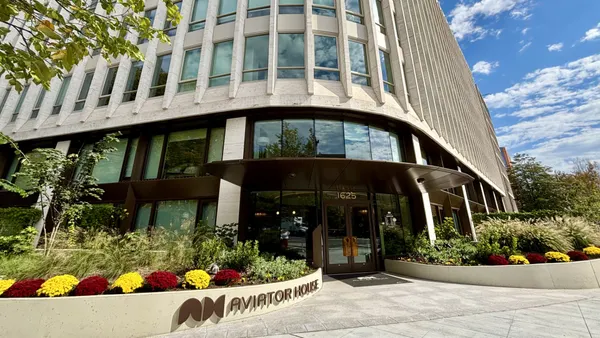
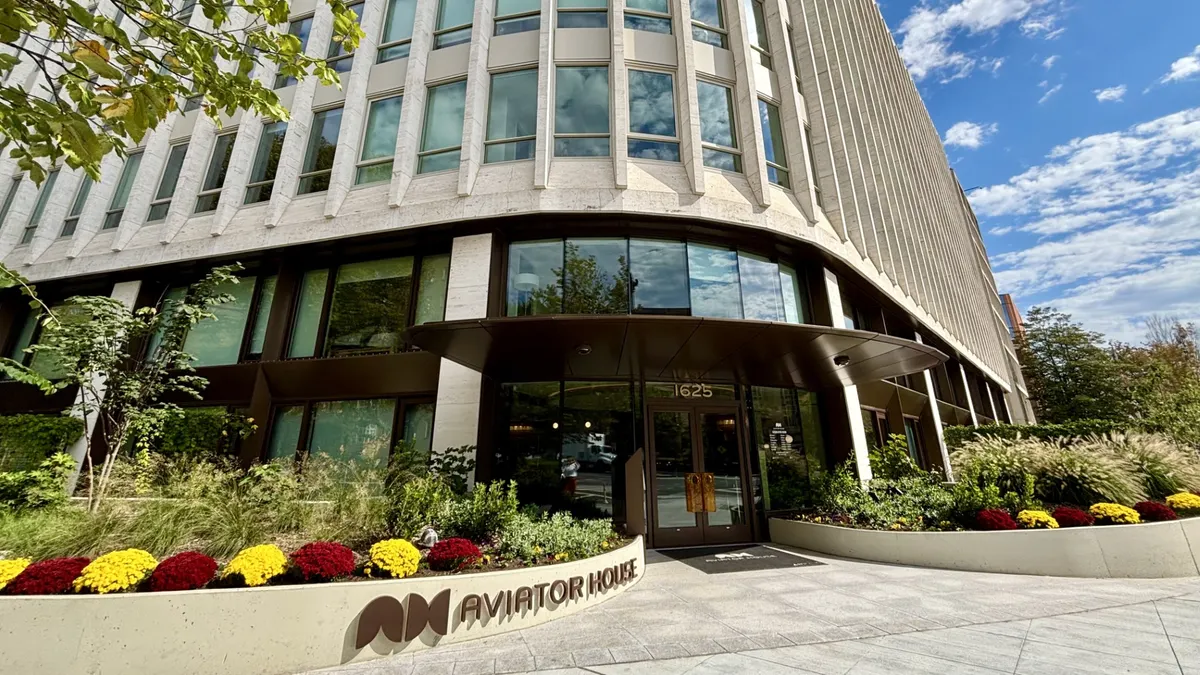
Aviator House, redesigned to honor its former use as the headquarters of the Air Line Pilots Association, has been transformed into 157 studio, one- and two-bedroom apartments, per a press release shared with Multifamily Dive. D.C.-based National Real Estate Advisors owns the eight-story, 1972-vintage building and developed the project through its subsidiary, National Real Estate Development.
Peter Epstein, managing director of development at National Real Estate Development and project lead, told Multifamily Dive that the firm decided to convert the building because it was “maybe 50% leased” in the wake of the pandemic. One of the first challenges was making the layout work for apartments.
“Every conversion project is such a puzzle. Financially, the project has to make sense, but physically, the building has to be able to convert,” Epstein said. “We felt that by being clever with how we laid out the floor plate, we could get units that were pretty efficient and sort of minimize the super deep units that you can get sometimes in office conversions.”
The project broke ground in October 2024, with Clark Construction as the general contractor and ECA as the architect, per the release. The firm leaned into design to differentiate it from other apartment complexes, according to Epstein: “We wanted it to have an actual identity and something that people would viscerally respond to and be drawn to.”
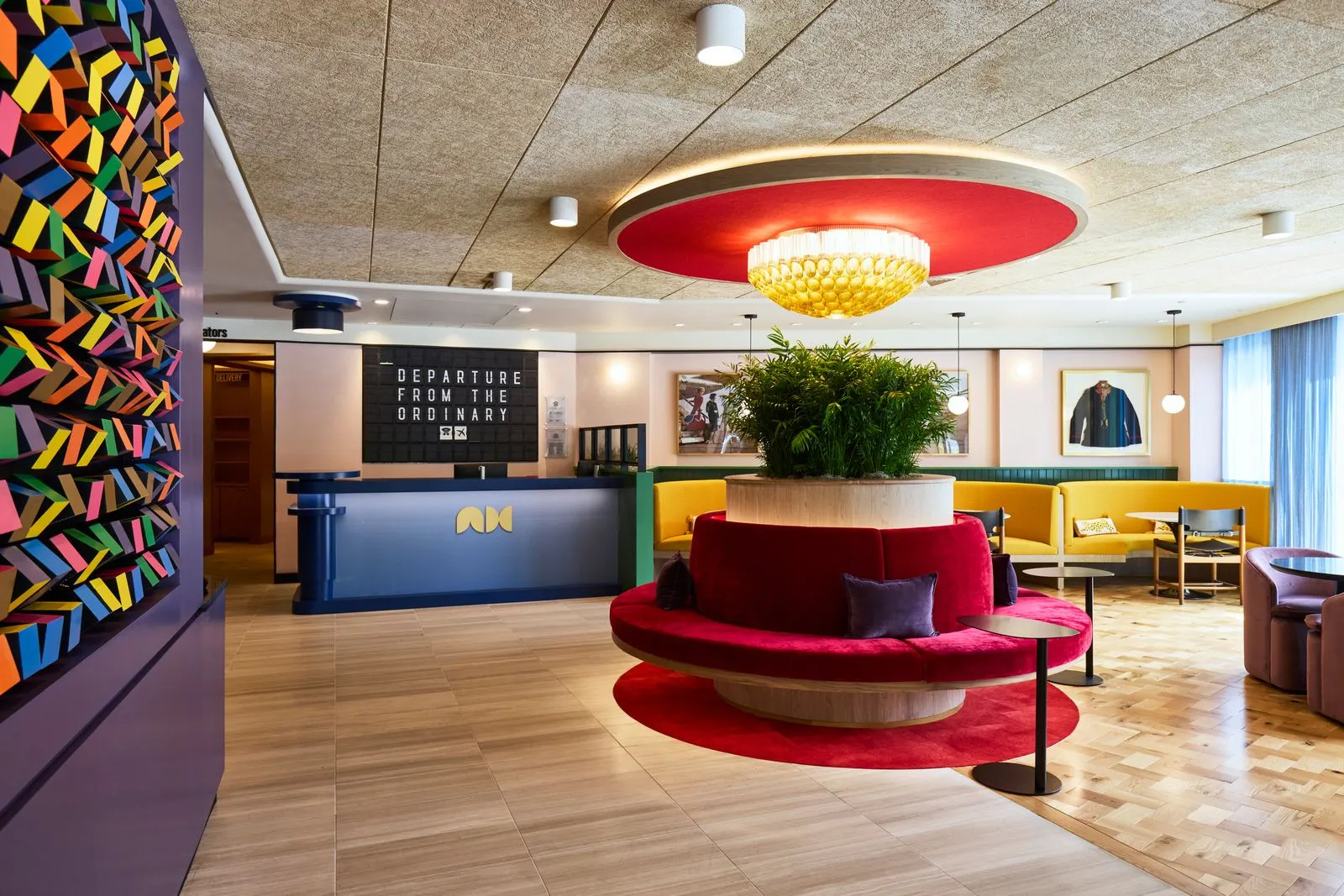
Designer Gaëtane Michaux of Gaetane and Co. Design told Multifamily Dive that she bought magazines from the 1970s from Etsy for inspiration, drawing on the patterns and bold colors of the aviation industry in that era and translating them for a modern resident “that's gonna live there every day.” Some of those retro advertisements now hang framed around the building.
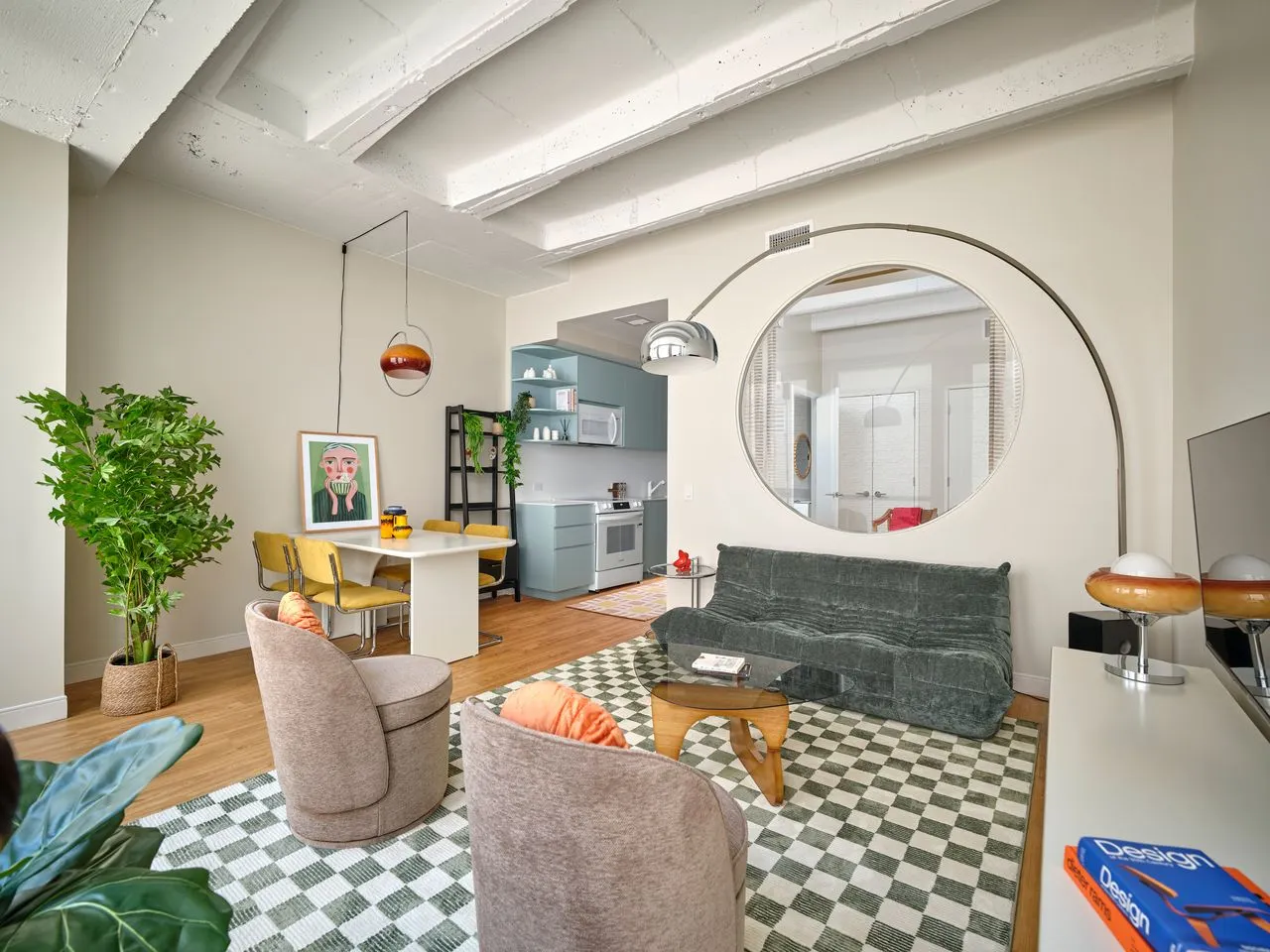
“When we started the project, we toured a lot of buildings and a lot of them were gray, beige. The extent of color was like these blue jeans, kind of bluish-gray color. It's like, ‘God, this is so boring,’” Michaux said. The team decided to use more neutral tones within the apartments, “but the amenity [spaces] remained vibrant and different.”
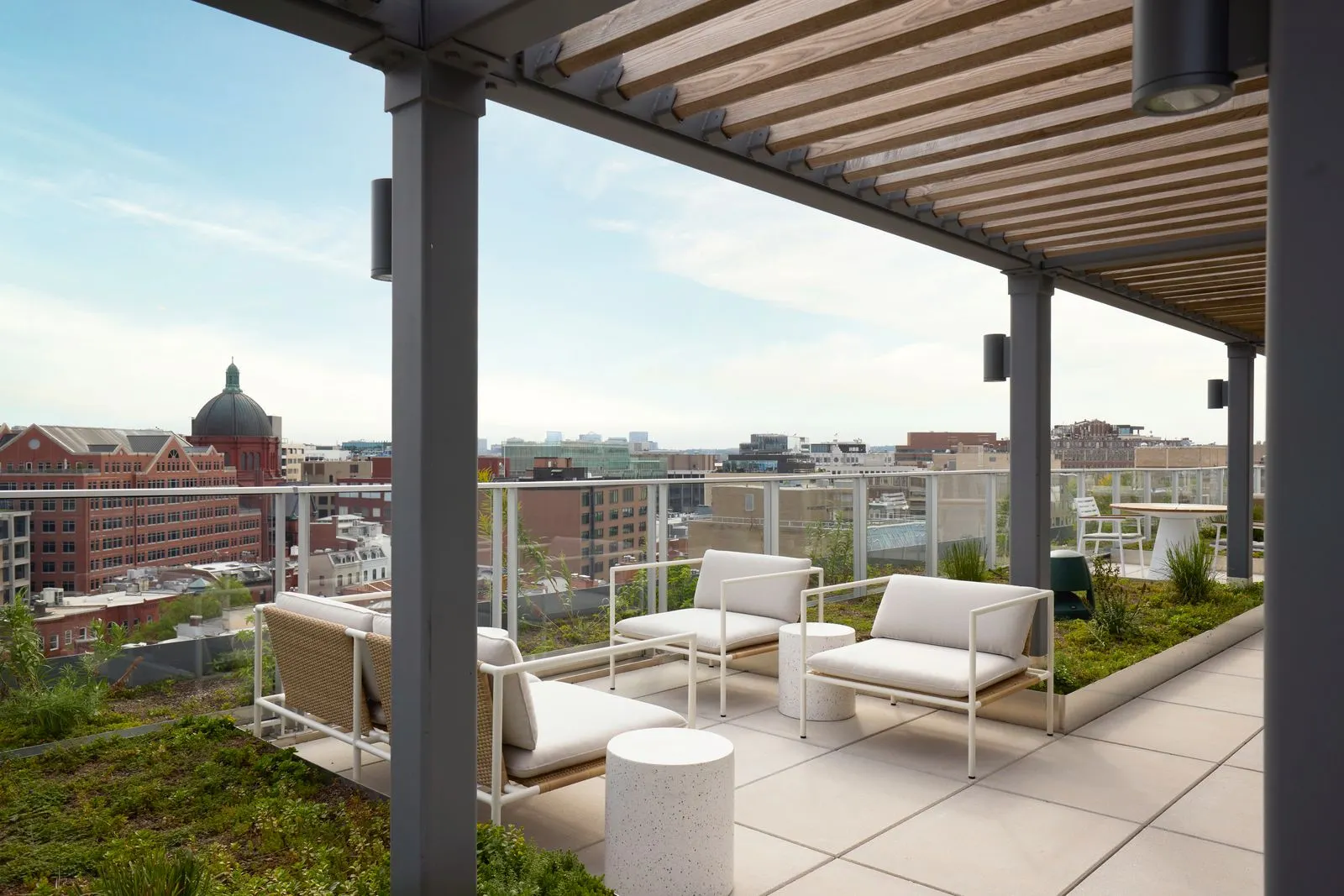
The design also features all-electric systems and green roofs, and the project is targeting LEED Gold certification, per the release. Virtual tours started in May, and now the building is just over 70% leased and more than 60% occupied, with 14 of the 16 affordable units taken, according to Epstein. Bozzuto operates the building and is offering concessions to fill the property before the end of the year.
“We moved a lot of the building without concessions, but it's important to keep a certain velocity because you want to get the building stabilized as soon as you can,” Epstein said. “So we have to respond to the market, and sometimes you need concessions to get a deal done.”
More such projects could be in National Real Estate’s future. To make a conversion project successful, “You need the good fundamentals. You need a good location,” Epstein said. “We're definitely interested in doing more conversions, but it's just a matter of finding the right building.”
The Geneva, Kalorama Triangle Historic District
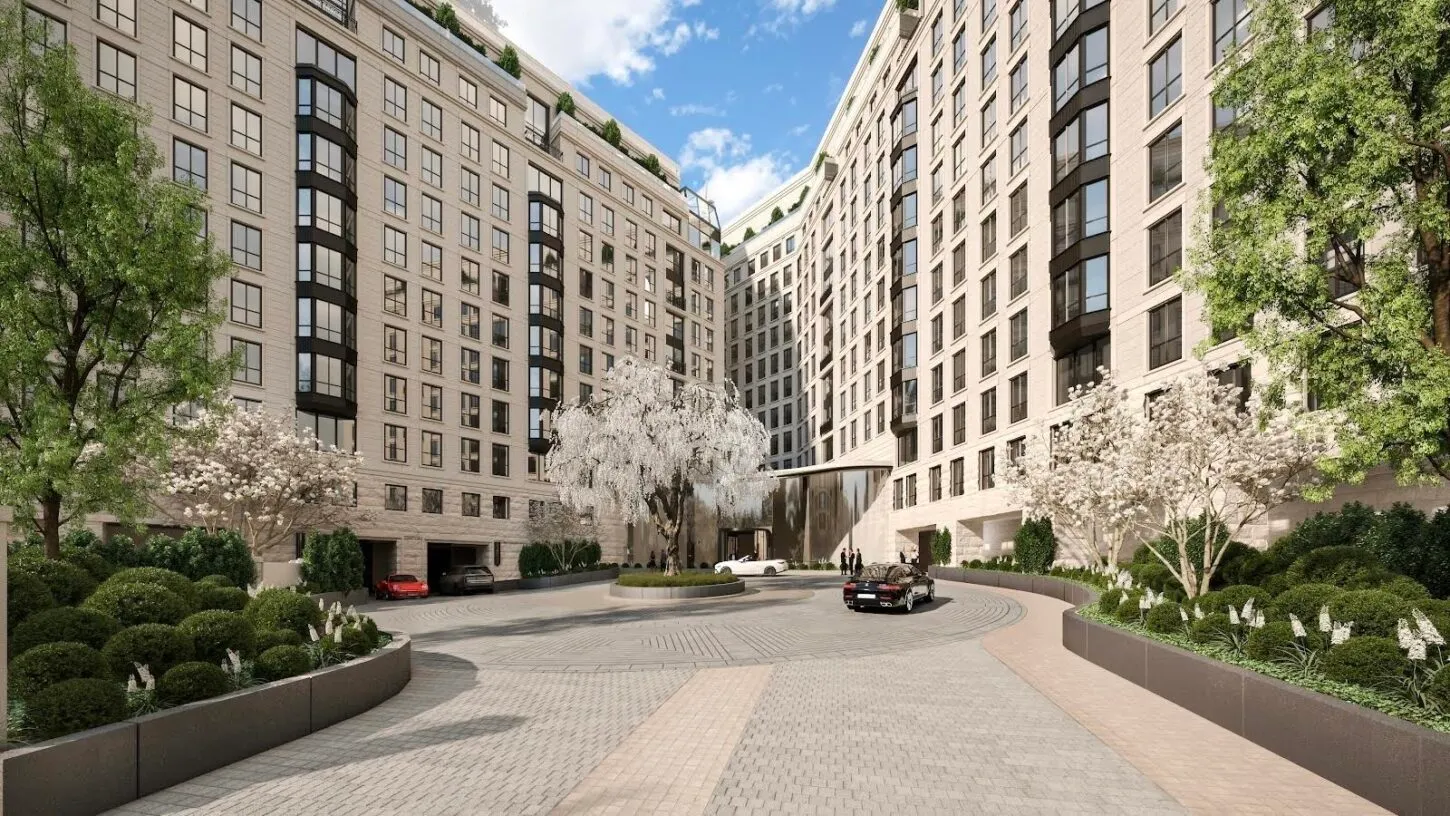
The Geneva is set to be the district’s biggest office-to-residential conversion yet. The two 15-story, mid-century office buildings will house 532 new apartments — 60 of which will be permanently affordable — as well as ground-floor commercial space, per a press release from Bowser’s office. Post Brothers’ 604,000-square-foot project broke ground in January.
In addition to HID support, the $575 million project is backed by $465 million in Commercial Property Assessed Clean Energy financing from Nuveen Green Capital and a $110 million senior loan from Mavik Capital Management, per the release.
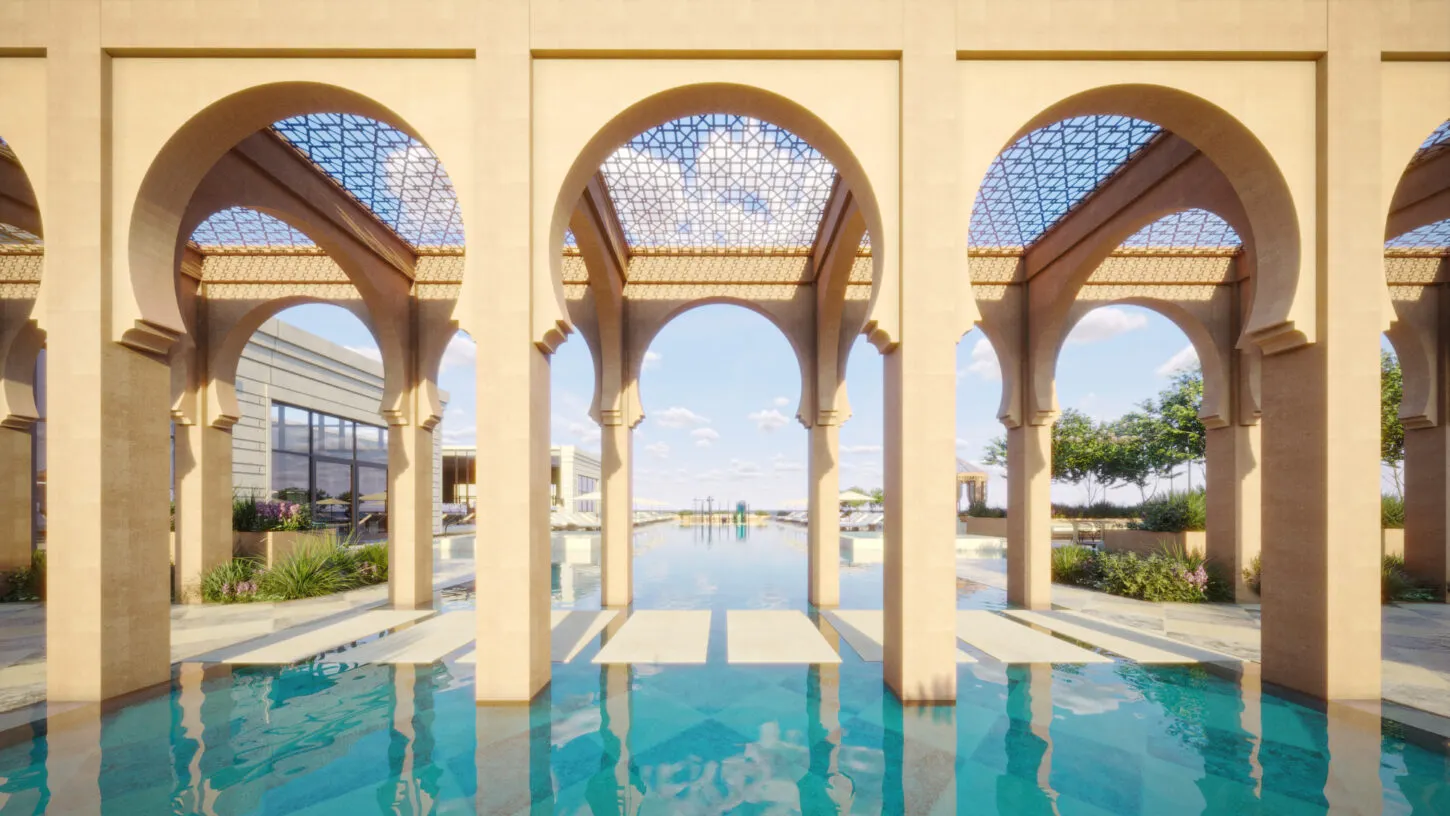
Handel Architects is designing the project with sustainable features like triple-glazed windows and all-electric apartments. It will also offer pools and fitness areas and “sweeping views toward the National Mall,” according to Handel, and will host studios and one-, two- and three-bedroom apartments as well as penthouses with four bedrooms.
Post Brothers President Matt Pestronk highlighted the “superlative scale and quality of the Geneva project” along with its prime location.
“Long-time partners Mavik and Nuveen Green Capital and our team saw the incredible potential, and together we generated an ingenious, relevant, and repeatable capital structure which we will use again in the future,” Pestronk said in the release.
1255 23rd Street NW, West End
Jemal Real Estate Strategies and DivcoWest have teamed up to convert an eight-story, 1982-era office building in D.C.’s West End neighborhood into an estimated 323 apartments, including about 36 affordable units, according to an Oct. 7 press release. The final design retains the ground-floor retail.
Madison Realty Capital provided a $40 million loan for acquisition and predevelopment, per the release. FILLAT+ Architecture is the project architect, and CBG Building Company is the general contractor.
Adaptive reuse will play an increasingly important role in D.C. neighborhoods going forward, according to Norman Jemal, senior managing principal of Jemal Real Estate Strategies.
“This partnership reflects our confidence in Washington, DC, and our conviction in the importance of giving existing buildings a second life," Jemal said in the release. “Despite being an office building, 1255 23rd Street NW has the geometry and bones for a stunning residential building, a use that aligns the building with the future needs of the community.”
Click here to sign up to receive multifamily and apartment news like this article in your inbox every weekday.