A number of property management groups across the country are aggressively growing by scooping up smaller operators to expand into new markets.
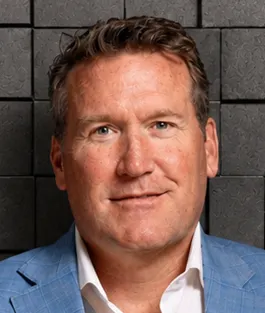
Michael Lynd, the CEO of Kairoi Residential, said he’s also looking to expand, but he’s being more selective. “We don't just want to be everywhere,” Lynd said. “We'll turn down assignments if it's a non-core market for us. We don't have an ambition to be in every market in the United States.”
Still, San Antonio-based Kairoi, which ranked No. 45 on the most recent National Multifamily Housing Council Top 50 Managers list, is “moving toward a national presence” in apartment management as it works to meet the needs of an evolving client base.
“The reasoning behind that is that our clients continue to show an interest in working with less management companies, not more,” Lynd said. “So they're consolidating their businesses and their management assignments among fewer and fewer managers, which allows their asset managers to be more efficient.”
Kairoi’s management business “is very selective and operates in the high-end niche, specifically,” Lynd said. Third-party management accounts for 75% of that business, which focuses primarily on institutional clients and core and core-plus properties, he said.
With that focus, Kairoi isn’t pursuing the same merger-and-acquisition opportunities as its peers. “If it's just a roll-up game that you're hoping to play without an outcome, I think that's a different business model than what we're living under,” Lynd said. “Our business model is different. We’re going to be Formula 1 drivers. There are only a few of them, and they're really, really, really good at what they do.”
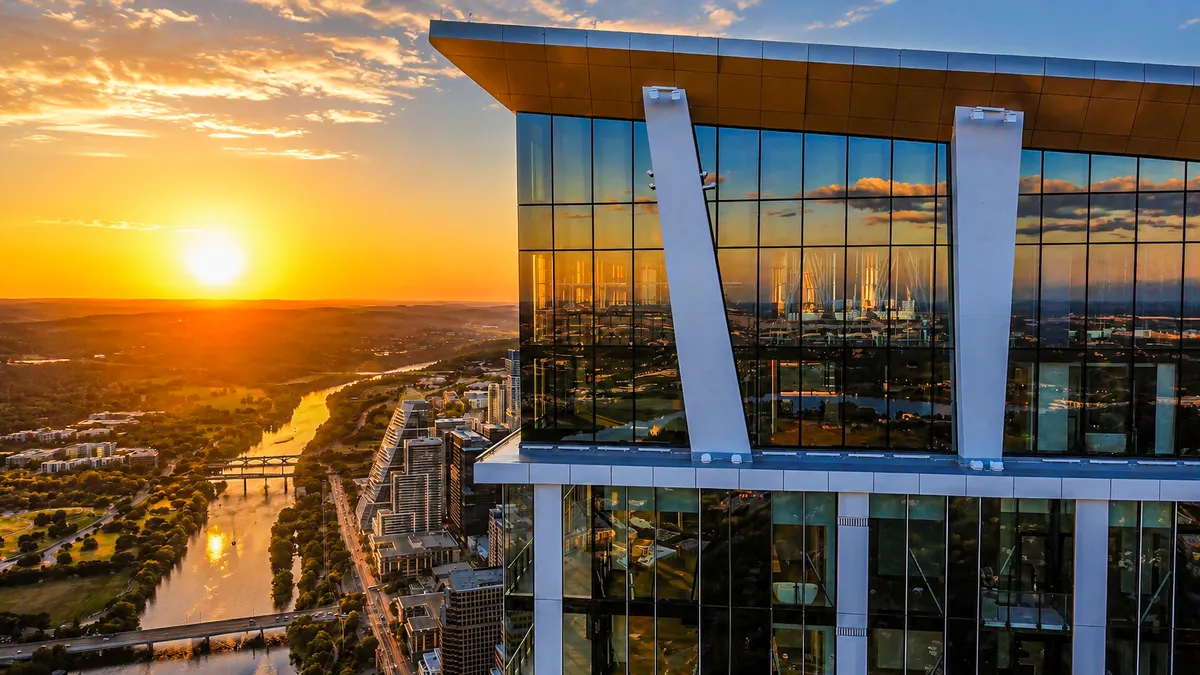
Management isn’t Kairoi’s only line of business. The firm invests in existing apartments and co-developed Waterline, a 74-story mixed-use tower in Austin, Texas, with Lincoln Property Co. The tower includes Bosque Residences, a 352-unit apartment community. Kairoi has also built condos, for-sale homes and other large mixed-use projects, according to Lynd.
Lynd took some time to speak with Multifamily Dive about his company’s ventures and broader industry topics, including how he analyzes new markets, the roadblocks to development and the mistakes many struggling owners are making right now.
This interview has been edited for brevity and clarity.
MULTIFAMILY DIVE: How do you gear up to move into new markets?
MICHAEL LYND: We want to do it strategically in markets where we can compete and where we feel like we've got great talent. We're always hiring the talent ahead of that growth and subsidizing those markets until they get up and running.
Our goal is to have 8,000 to 10,000 units per market. That's what we have in our mature markets generally. We will usually start with an existing client in a lot of these markets where we don't have a presence. But we have entered a lot of markets extremely successfully.
We manage some amazing assets across the board, whether that be in Salt Lake or Charlotte. Those are more of newer markets that are starting to mature in terms of their unit counts. We're getting more and more assets and more and more at-bats and more and more pitches in those markets now regularly. And then there are new markets like Nashville and Atlanta, South Florida and Southern California.
What other areas are you interested in?
We continue to broaden our geographic footprint. I could see us going up to the mid-Atlantic, all the way down to Florida, up and down the West Coast and throughout the South.
We want to be in markets where we will either invest in and/or develop in. Not all markets will be developed in because we don't think every market provides us the same leverage for our balance sheet. So we're very protective about where we are spending that balance sheet capital from a development perspective.
We will continue to grow. It's been an extremely busy month [in October] for us on the property management side of our business. Development has been a challenge and continues to be, with interest rates and construction costs.
Is access to equity the main development roadblock that you’re facing?
It's a lack of equity, and it's really a lack of clarity about where these markets are headed. We've made a lot of investments in technology and data, and in mining our own data. And then mapping and graphing and categorizing that data so that we aren't just making decisions off of CoStar and other data services, which we also subscribe to. But there's nothing better than our own data. So we're using that to make decisions and assess market conditions.
The good news is we're seeing the best submarkets in most, if not all, of our markets really generating positive rent trade-outs now. So that's great to see. It's broader in places like Austin, Dallas, and then a smaller geographic representation in a place like Denver. We’re seeing positive momentum.
I expect development to remain challenged, especially with all the geopolitical risks. A lot of things outside the fundamentals of our business continue to put capital on pause. This creates uncertainty, which is driving risk-averse sentiment among big institutional investors. The majority of my career, really all of it, has been in partnership with large institutional investors. So we really need those folks to have confidence around the market going forward.
What roadblocks are you seeing on the acquisition side of the business?
On the acquisition side, it's been a challenge. Not much has been offered to the market. It's been a very tight sales market. Most sponsors and owners have opted for refinances.
As long as you can refinance cash-neutral, people have been opting to kick the can down the road, understanding that the environment is going to be better later. I don't think anybody would disagree with that.
When I look at a lot of these refinances, the cost of that refinance isn't great for your existing equity. If rent growth doesn’t show up in the first six to nine months or a year, then you risk further impairing the equity value that isn't in place. So, I think a lot of groups are making misaligned decisions for the investors because they don't want a negative trade.
How prevalent is this issue?
What I refer to as a misalignment, and I see it happening all over the place, is this: You can get a loan, but should you take that loan? Is it the best risk-adjusted decision for your existing equity?
I see investors that have complete equity loss, and these are big, big, big groups — big funds that nobody is talking about. They're not really recognizing those positions, and they're holding onto the fees.
If they lose more equity because they put on a bad piece of debt, I don't think that's really being included in their calculus, as opposed to what that does if they post a negative mark if they're out raising money and trying to raise another fund.
It's just a really interesting time in this business. I think a lot of sponsors and operators have looked back to 2009, including lenders, for the recipe and playbook for how to operate in this environment. But it's a different environment. They've made mistakes by trying to look at the global financial crisis as a way to make decisions in this cycle because it's very different.
Are lenders starting to lose patience with these borrowers?
They are, because of NOI. If you started buying assets heavily three years ago, congratulations, your NOI went down and interest rates went up. The perception was that we were in a temporary high-rate environment. If folks haven’t lost faith in that message, then they're crazy.
We've continued to see a different interest-rate environment, and most suburban locations continue to be pressured by supply. So you are seeing continued rent declines.
But unless you have a high-barrier-to-entry, low-supply suburban location — there are some, but across the Sun Belt there are really very few — then you're continuing to feel a lot of pressure from the massive wave of supply that's occurred.
Are lenders scared of making the same mistakes they made during the GFC?
I think the lenders are sort of waking up and saying, ‘Hey, do I really need to extend?’ A lot of balance sheet lenders have a lot of assets on their books today, and they're saying, ‘Hey, what do I do?’
Nobody wants to have what happened happen again, after the GFC, where banks sold it, they got it off their books, they took the write-down, they moved on, and then a year and a half later the values went back up. But obviously we're faced with a much different interest rate environment. So the circumstances surrounding that part of the cycle are completely different.
Click here to sign up to receive multifamily and apartment news like this article in your inbox every weekday.