The federal government could pay about $1 billion to settle claims from roughly 1,800 landlords and counting who say that the nearly yearlong eviction freeze during the COVID-19 pandemic cost them rental income and violated their Fifth Amendment rights, according to a lawyer for the plaintiffs in Darby Development Company, Inc. v. United States.
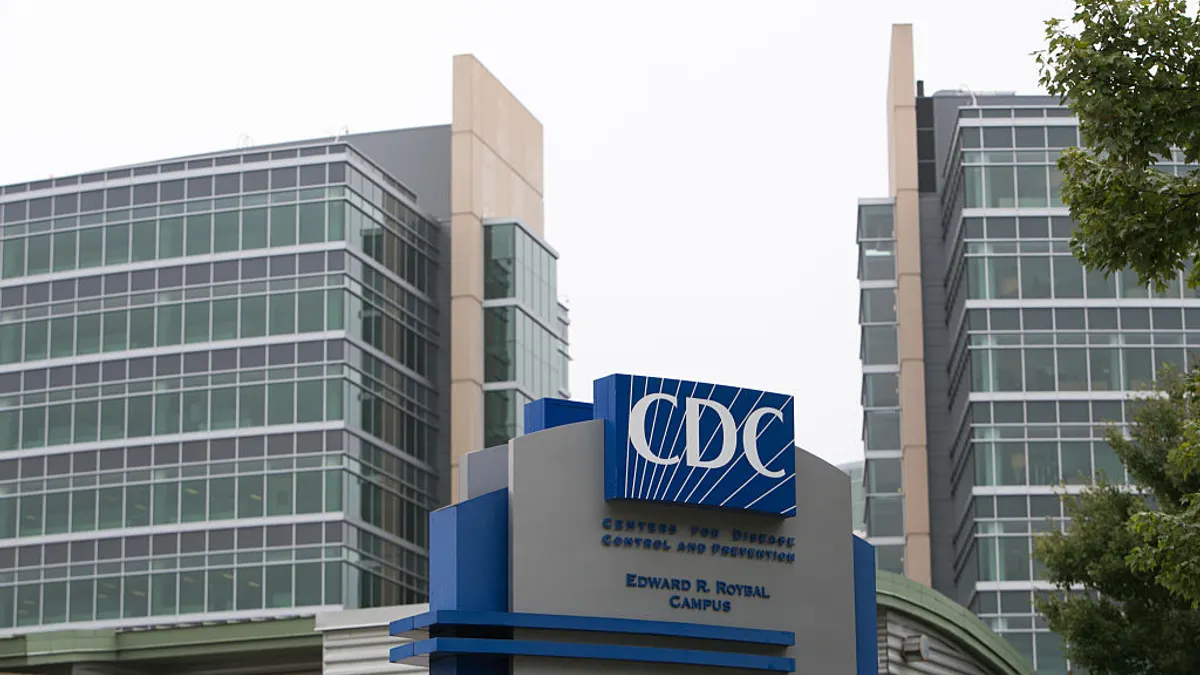
The Centers for Disease Control and Prevention extended the March 2020 CARES Act’s nationwide eviction moratorium multiple times in an effort to slow the spread of COVID-19. That action constituted a “taking” by the federal government because landlords were unable to exercise their constitutional property rights and were not adequately reimbursed for lost rental income, according to the third amended complaint filed April 10 by a group of landlords in the U.S. Court of Federal Claims.
Although the federal government did provide rental assistance, including through the Emergency Rental Assistance Program and the American Rescue Plan Act’s Homeowner Assistance Fund, the programs were slow to start and the rental housing industry still lost tens of billions of dollars due to the eviction moratorium, according to the complaint.
Now, the legal teams are in discussions to determine how much the government should pay the affected landlords as the parties move toward a settlement agreement, John McDermott, co-counsel with Dorsey & Whitney for the plaintiffs, told Multifamily Dive.
“We have been operating under the assumption that it's going to be about a billion dollars, but to prove it, we've got to have everyone submit their data,” McDermott said. “We're asking the companies to submit … their actual rent rolls, how their internal documents tracked unpaid rent.”
In order to create a reimbursement formula, the parties are also debating how long the eviction moratorium effectively lasted, McDermott said.
“[It was] technically in effect from September of 2020 till August of 2021, but there's nobody in the business that could get into a courthouse to evict anybody in September of 2021 because the courts were jammed. Some of them, you couldn't get a court date for like, six months. So that's the other thing, like, how long do we take the data out?” McDermott said. “These are the discussions that we're having with Justice Department lawyers right now.”
Property rights are evolving
After the Alabama Association of Realtors and others sued over the moratorium, the Supreme Court ruled in August 2021 that the CDC lacked the authority to issue it. Around that time, Darby Development Co. and other landlords filed suit against the United States in the Court of Federal Claims, claiming that the CDC’s action constituted a physical taking of property. The court dismissed the argument in 2022 on the grounds that the CDC’s eviction ban was unauthorized and therefore could not be considered a taking.
However, in August 2024, the U.S. Court of Appeals for the Federal Circuit reversed the decision and ruled that the government was nonetheless liable. In June 2025, the Federal Circuit denied the government’s petition for a rehearing and reaffirmed property owners’ right to bring takings claims against the government — opening up the possibility of billions of dollars in restitution, per a client alert from Philadelphia-headquartered law firm Duane Morris.
The ruling that the moratorium constituted a physical taking of the property was key, Anna Wills, associate at Duane Morris and member of its Real Estate Practice Group, told Multifamily Dive in emailed comments.
“Part of the reason this case is so interesting is because the eviction moratorium temporarily removed one of the key sticks in the bundle of rights of property ownership: the right to exclude,” said Wills. “The majority determined that constituted a physical taking of the property, as opposed to a regulatory one, which is generally much harder to prove.”
Takings cases have historically been subject to the Supreme Court’s three-part Penn Central standard, which stems from its 1978 decision in Penn Central Transportation Co. v. City of New York. Per Cornell Law School, the framework is designed to help courts determine whether a government action is in violation of the Fifth Amendment clause of the Constitution: “…nor shall private property be taken for public use, without just compensation.”
Ethan Blevins, senior legal fellow working at the conservative nonprofit Pacific Legal Foundation, surveyed over 200 cases in which state courts addressed regulatory takings claims. His December 2024 paper found that state courts struggle to apply the Penn Central standard, and property owners almost always lose such cases.
However, a June 2021 Supreme Court decision shifted the legal landscape. In Cedar Point Nursery v Hassid, it determined that a California regulation granting labor organizations the right to access an agricultural employer’s property to solicit support for unionization is a per se physical taking under the Fifth Amendment, according to Oyez.
When McDermott learned about the CDC’s eviction moratorium policy, he anticipated that the then-recent Cedar Point Nursery v Hassid decision would later come into play.
“I said, ‘Oh, in light of that case that was decided just three or four months ago, everything's changed on this. This is another per se taking because the landlords couldn't get into their properties,’” McDermott said. “They own the properties. They couldn't get in there. They couldn't dispossess their non-paying tenants. So that's all you’ve got to know.”
Ongoing impact
The pandemic hit class C rental property owners hardest, according to McDermott, because their tenants tended to be workers at restaurants and other types of businesses that were closing.
“The landlords of the C properties, they got hurt the most because [their tenants] had it the worst. You know, if you had an A property and your tenants were teleworking, they kept paying the rent because they didn't lose their jobs,” McDermott said. “They didn't suffer the same kind of consequences.”
Nonetheless, the federal rental assistance programs were effective in reaching tenants who needed it most, according to an April 2026 analysis published in the Journal of Urban Affairs.
“It’s significant to see a very large federal aid program reach communities that had long faced higher eviction risk,” the researchers wrote in an article about their findings for Eviction Lab. “Large emergency programs are often criticized for missing people who really need help. Here, the evidence points in a more hopeful direction, one in which the distribution of aid matched the geography of housing insecurity.”
For the landlords affected, the Darby ruling opens up more possible avenues for reimbursement for lost income, according to Wills.
“If you own property in a state that had its own, stricter eviction moratorium, you should consider consulting an eminent domain attorney in your state about the statute of limitations for bringing a de facto taking claim against the state government,” Wills said.
The Darby complaint has already been amended three times to account for new plaintiffs, and there is still time for companies to bring similar claims before the statute of limitations runs out in early September 2026, according to McDermott.
“We're hoping that we'll be able to get it resolved this year — even if not to get everybody paid this year — but to get it resolved,” McDermott said.
Click here to sign up to receive multifamily and apartment news like this article in your inbox every weekday.