Dive Brief:
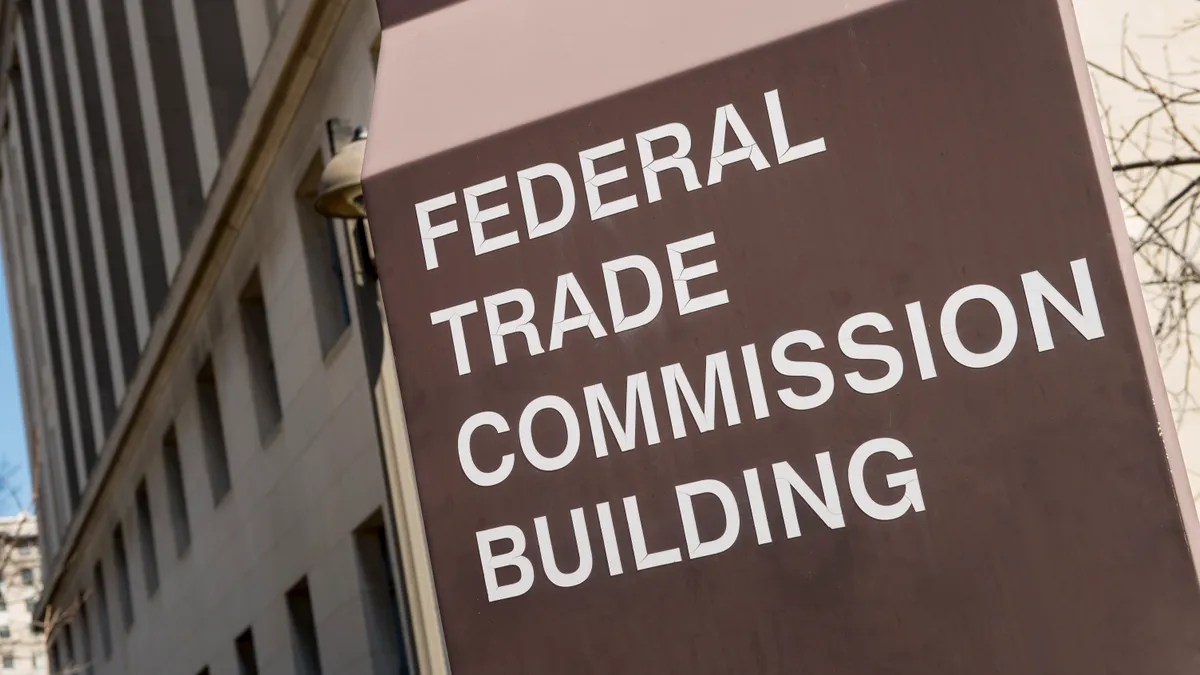
- Seven housing industry groups sent an open letter last week asking the Federal Trade Commission and the U.S. Justice Department to provide clear guidance on collaborating with competitors, particularly regarding data sharing and technology tools used in residential rental operations.
- Currently, housing providers are unsure what types of collaboration and data use are allowed under antitrust laws because “the withdrawal of several competitor collaboration guidelines in 2023 and 2024 has left American businesses without clear ‘rules of the road’” and created operational and legal uncertainty, according to the May 21 letter.
- The FTC and the DOJ recently indicated that they may issue new guidelines to promote certainty and competition. Guidance would also aid the agencies’ “efforts to enforce clear boundaries between procompetitive collaborations and collusive conduct causing anticompetitive harm,” per the letter, which was signed by the National Apartment Association, National Multifamily Housing Council and others.
Dive Insight:
In December 2024, under the outgoing Biden administration, the FTC and DOJ withdrew their Antitrust Guidelines for Collaborations Among Competitors, saying the 2000-era rules “no longer provide reliable guidance about how enforcers assess the legality of collaborations involving competitors.”
The agencies said at the time that the guidelines “fail to address the competitive implications of modern business combinations and rapidly changing technologies such as artificial intelligence, algorithmic pricing models, vertical integration, and roll ups,” and “risk creating safe harbors that have no basis in federal antitrust statutes.” Instead, they directed businesses to “review the relevant statutes and case law” to assess whether a potential collaboration would be legal.
The end of those longstanding antitrust safe harbors signals that companies should expect “increased regulatory attention to AI-driven pricing tools, data aggregation, and other emerging technologies that could facilitate coordinated conduct,” lawyers at Baltimore-based Gordon Feinblatt wrote in a March post.
Indeed, the DOJ sued property management software company RealPage in 2024 over its “unlawful scheme to decrease competition among landlords in apartment pricing and to monopolize the market for commercial revenue management software.” RealPage settled in November 2025 after agreeing to limitations around data collection and use, but it faces other similar lawsuits from states.
More clarity could be coming, though. In February, the FTC and DOJ’s Antitrust Division launched a joint public inquiry seeking input on potential guidance, noting that in recent years, “new types of competitor collaborations, joint ventures, and alliances, including those facilitated by new technologies, have led to increased requests for clarity.”
“In an everchanging economy, businesses need transparency and predictability from enforcers more than ever. These times may require the federal government to update its guidelines,” FTC Chairman Andrew Ferguson said in the release. He added that the 2024 withdrawal had “left millions of businesses in the dark.”
In their letter, the housing groups said they want the agencies to reinstate an antitrust safety zone for information exchanges like the one outlined in the 1996 Statements of Antitrust Enforcement Policy in Health Care, which the Biden administration pulled in 2023.
“Withdrawal of this safety zone has created significant uncertainty as to whether and to what extent information exchanges among competitors are appropriate,” the letter reads. “This uncertainty has only increased with technological advancements, including algorithms and generative AI.”
The groups said they also want guidance on information sharing for industry benchmarking purposes, which “allows firms to measure their performance, processes, products and services to identify opportunities for further efficiencies and innovation.”
Benchmarking provides substantial procompetitive benefits, according to the housing groups.
“It allows firms to identify opportunities within their operations for cost savings and increased efficiencies, to calibrate spending against industry standards and to set competitive budgets and financial goals based on evidence-based market data rather than mere guesswork,” the letter reads. “Benchmarking also minimizes the problem of information asymmetry between large and small firms, allowing smaller firms access to more and better data.”
Finally, the housing groups requested that any new guidance apply the Rule of Reason legal standard to algorithmic pricing software, “because its use can be highly procompetitive.” Most antitrust claims are analyzed under the four-part Rule of Reason test, which distinguishes between restraints with an anticompetitive effect that are harmful to the consumer and those that stimulate competition, according to Bona Law. By contrast, claims analyzed under the Per Se rule are those that are almost always inherently anticompetitive.
The groups that signed the letter are:
- Council for Affordable and Rural Housing
- Manufactured Housing Institute
- National Affordable Housing Management Association
- National Apartment Association
- National Leased Housing Association
- National Multifamily Housing Council
- Real Estate Technology & Transformation Center
Click here to sign up to receive multifamily and apartment news like this article in your inbox every weekday