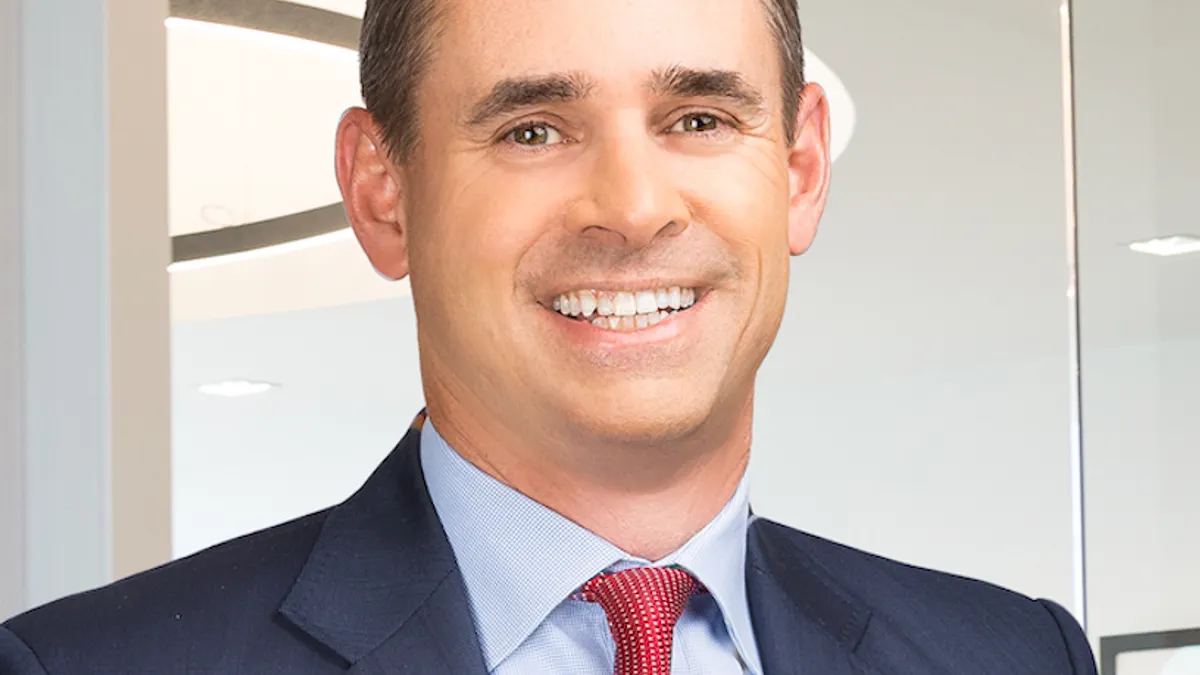
Margi Glavovic Nothard is using her Fort Lauderdale, Florida-based architectural firm, Glavovic Studio, to explore creative ways to build affordable housing.
Nothard, a South African, decided to enter into the affordable housing space after seeing people experiencing homelessness in Los Angeles while attending the Southern California Institute of Architecture in the early 1990s as a graduate student. She didn’t expect to encounter such disparities that are prevalent in South Africa in the U.S.
That perspective helped push Nothard to place a focus on multifamily affordable housing projects.
“It really became a passion and commitment of mine to think, ‘how can I use architecture as a tool to try to create housing that could be for everyone, regardless of income?’” said Nothard.

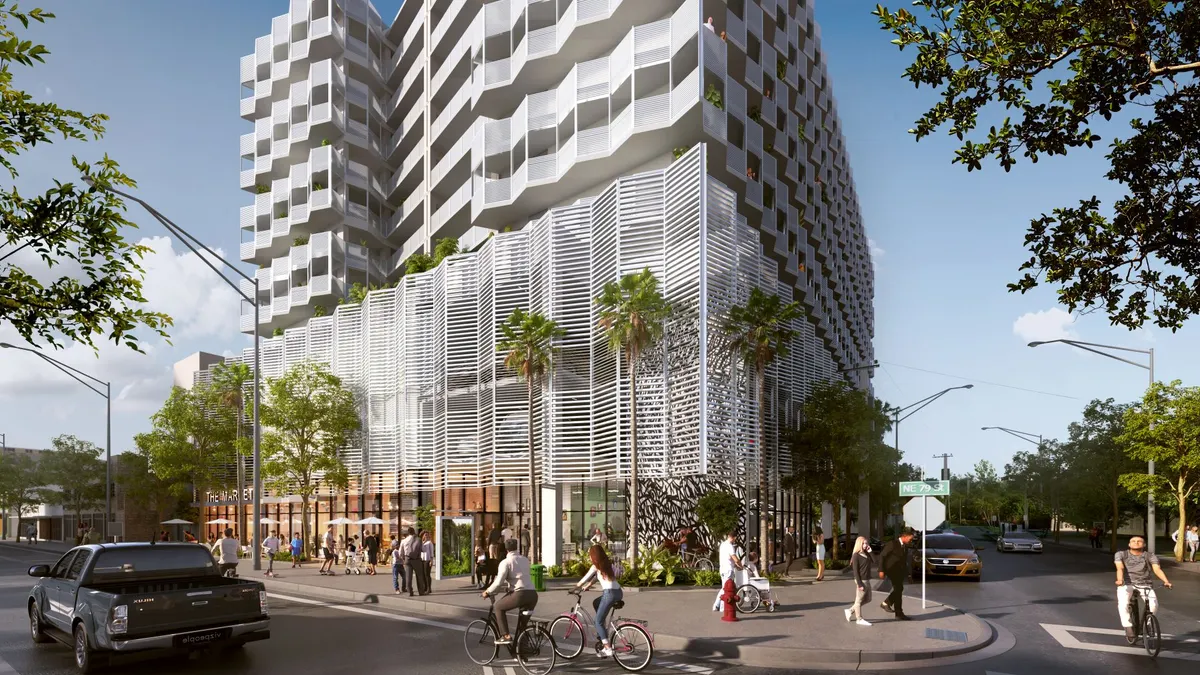
Starting with a 132-unit affordable community in Fort Lauderdale that entailed redesigning an aging public housing complex in the early 2010s, Nothard is now developing several new multifamily homes in Southern Florida and Los Angeles. That includes a 12-story, 250-unit affordable building in Miami and a 15-story affordable residential tower in downtown LA, both in partnership with the AIDS Healthcare Foundation.
When planning buildings, she looks for ways to cut costs through modular construction, reusing older buildings or identifying transit-adjacent locations where she can add more units while cutting down on parking costs.
Here, Nothard talks about the future and challenges of affordable housing construction, how adaptive reuse can reduce costs and what makes Southern Florida an attractive market.
This interview has been edited for brevity and clarity.
MULTIFAMILY DIVE: What are some key moments in your affordable multifamily housing career?
MARGI GLAVOVIC NOTHARD: Working with the housing authority of the city of Fort Lauderdale, and then being hired by AIDS Healthcare Foundation to look at models for affordable housing to try to find ways to specifically address housing affordability. These are for low- and very-low-income tenants.
That work was key to my spending the next decade with them and others in trying to search for affordable housing solutions through design and looking at different aspects — whether it’s adaptive reuse, whether it’s modular construction, whether it’s new construction — what the elements are that could bring costs down.
What challenges does Glavovic Studio face when working on adaptive reuse projects, and how has the firm navigated them?
Reusing buildings is more sustainable and environmentally responsible. But also, from a developer's standpoint, it provides the developer with options for reducing costs — potentially. That isn’t always the case and it has to be very, very carefully managed, but potentially it could be a faster project, which overall is more cost effective.
Very careful consideration needs to be given to adaptive project reuse projects, because if you're using, for example, a commercial building, and it doesn’t have as much plumbing or all the plumbing is not located in where it would optimally be located for residential units, that can cause a project to be quite costly and not necessarily an effective tool.
But if one, say, converts motels or hotels which have smallish bedrooms, you can now imagine that it's not as difficult to add a kitchen because you already have plumbing.
What are some unique challenges that developers of affordable multifamily housing face compared to market-rate or luxury?
There needs to be a lot more support for advancing opportunities in the affordable housing arena, and I say that because of the high demand. There's such an important need, and there isn't a region that I'm aware of that doesn't need affordable housing.
Some of the challenges when evaluating a potential project are things like transportation. Can we reduce costs with less parking?
Very often, one to two parking spaces per unit is required. And when you’re looking at more urban communities, obviously those costs can be anywhere from, depending on the level of the project, $30,000 per unit to one that we're doing in a very small site in a very high economic area in Edgewater in Miami, where it's costing $100,000 per space to build structured parking.
You can see with those types of numbers, you now are pushed into a more market-rate and not an affordable environment to be able to realize your returns for the developer. So having legislation or opportunities where transport is very readily available can provide more opportunity to bring prices down for affordable multifamily developers.
Where do you see the affordable multifamily housing economy trending?
Nearly half of U.S. renters are considered cost- or rent burdened. I have seen an uptick in interest in building affordable housing over the last year, and I feel like that could go exponentially.
Deloitte put out an article that talked about over 90% of housing in the future will likely be done by adapting existing buildings, and so that also is a future that I can see. Quite importantly, I think it's going to be better for the planet and better for the developer to have those opportunities from a financial perspective.
I also just think that our understanding and our education of what affordable housing is and who affordable housing serves has broadened. It isn't necessarily a person who is homeless, it's a person who has restricted income or doesn't have a change in income as prices go up.
The conversation around the country, in my opinion, is more robust and more educated, and therefore I believe it will lead to the opportunity for more housing that is affordable.
Glavovic Studio has invested heavily in Southern Florida. What makes the region so strong for development?
Florida seems to be a very popular place to move to right now. We have a large influx of residents that are new to Florida, which often causes costs to go up. In that environment, legislation that can effectively offer alternatives for existing residents is really important. So that's why adapting existing buildings has worked quite well in some parts of South Florida.
But mostly there's also just a general sense that comparing it to, say, California or New York, the costs are less. I would say that whilst the cost directly might be less for a developer in one of our South Florida markets, the typical income is not as high as, say, California or New York, and therefore local residents may still have a higher cost burden.
In South Florida, the state’s 2023 Live Local Act has been huge. I really have seen an uptick in developers coming here and reaching out to us because of the Live Local Act.
Click here to sign up to receive multifamily and apartment news like this article in your inbox every weekday.