Richard Ross is CEO of Quinn Residences, an Atlanta-headquartered real estate operating firm focused on the Southeastern United States. Opinions are the author’s own.
This year, 102.7 million Americans live in rental housing. Their needs are diverse, their numbers are growing and the policies currently being debated in Congress could inadvertently make their situation worse.

For younger generations, especially Millennials and Gen Z, housing stability has been significantly and protractedly disrupted. First, the subprime mortgage crisis in 2008 triggered a global economic recession, flooding the housing market with foreclosed and distressed properties. Now, the pendulum has decisively swung the other direction.
The U.S. has a profound housing shortage. According to Zillow, the U.S. housing deficit approaches 5 million homes, a number that is increasing as new construction fails to keep pace with population growth.
There are too few housing options for too many people.
Solving this problem requires an all-in approach to housing creation. We need more starter homes, high-density apartments, missing-middle housing, built-to-rent homes, dedicated rental communities and everything in between.
More housing options for everyone
To effectively overcome our housing deficit, policy must embrace and incentivize a multitude of housing solutions.
Congress is currently debating the 21st Century ROAD to Housing Act (H.R. 6644), a massive, bipartisan piece of federal legislation to address the nation’s severe housing shortage and affordability problems.
It’s the right conversation at exactly the right time.
However, as the debate is, in part, focused on protecting existing starter homes from corporate buyers, we risk unintended consequences for a vital part of the real estate ecosystem that actually adds to the national supply.
The institutional investor narrative makes for an irresistible villain, a faceless corporation moving into neighborhoods, driving up prices and replacing invested homeowners with a revolving door of transient renters. But the data tells a more complicated story.
Nationwide, single-family rental providers own less than 1% of single-family homes while helping fill the supply gap for renters.
If we zoom in on a high-growth market like metro Atlanta, the recent U.S. Census report shows that the area is approaching 3 million total homes, and institutional ownership of single-family homes accounts for only 4.2% of the total housing market. Furthermore, metro Atlanta’s homeownership rate currently stands at 66%, the highest in a decade.
Simply put, rental housing isn’t displacing traditional homebuyers, and larger-scale investors are instrumental in providing affordable, dedicated rental communities.
Meeting the needs of the modern renter
The dedicated rental industry provides renters with the space and stability they need when buying isn’t practical or wanted.
Those “renters by choice” seek out renting, even when they have the means to buy.
For example, families who rent single-family homes include military families, veterans, teachers, nurses, first responders and other hard-working Americans who appreciate the flexibility renting provides.
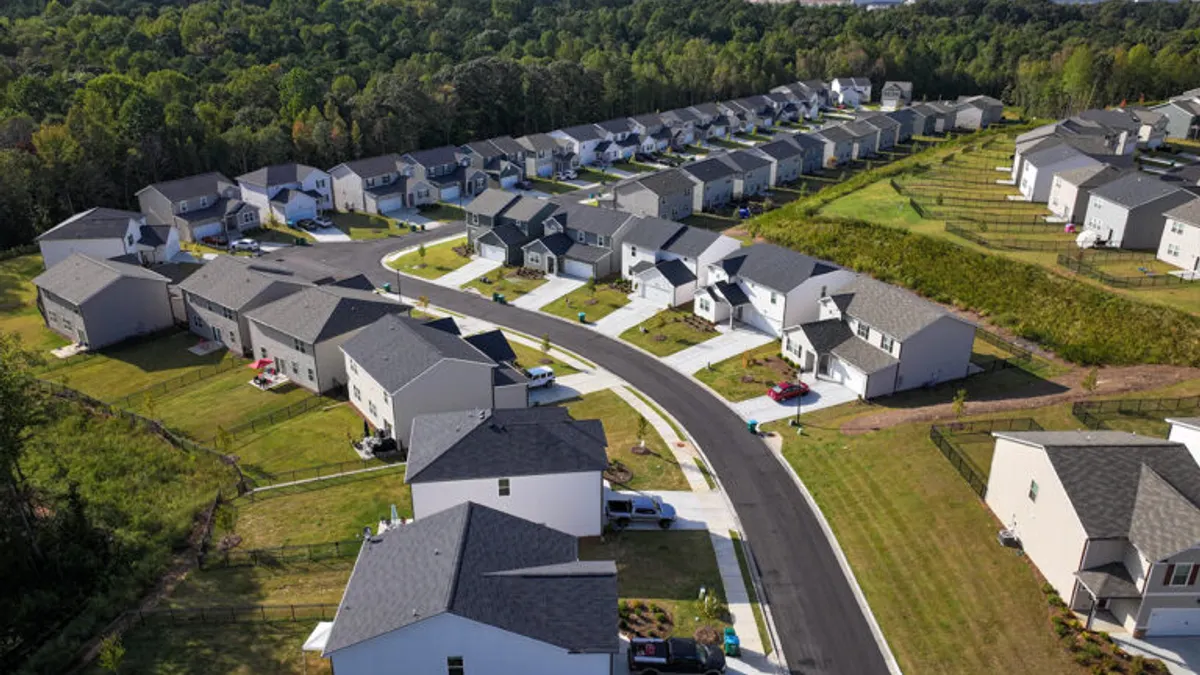
Dedicated rental communities, sometimes called build-to-rent (BTR), are brand new neighborhoods built specifically for these renters. They cater to those who want the space, privacy, and community of a single-family home but desire the flexibility, affordability and maintenance-free convenience of a rental.
They exist as stand-alone neighborhoods and don’t undermine other residential housing options. Rather, they expand the pie, giving more people more options to live where and how they choose.
Put differently, dedicated rental communities are a vital pressure release valve in high-growth markets, expanding options for those who are renting to save for a down payment, as well as those who are renting purely by choice.
Three policy levers to unlock supply
The U.S. housing sector is currently a regulatory morass, governed by federal, state and local rules that influence new development at almost every turn. Policy at every level is the pivot point that determines if housing actually breaks ground or is hopelessly constrained by red tape.
If we are going to build our way out of this shortage, we must shift our focus from dictating who can buy to expanding what can be built.
To achieve this, policymakers should focus on three critical unlocks:
1. Attract Capital Instead of Scaring It Away
The ROAD to Housing Act contains a provision that actively undermines build-to-rent businesses by forcing builders to sell within seven years of construction. The National Association of Homebuilders estimates this single mandate would result in 72,000 fewer rental units built each year.
We must leverage policies that mobilize private capital, much like the Low-Income Housing Tax Credit has successfully done for decades, rather than driving it away with restrictive mandates.
2. Expand What Can Be Built
According to Goldman Sachs' 2025 State of Housing report, land use restrictions are the “first and most important constraint” on new development. Their analysis found that relaxing these rules could add 2.5 million more housing units in 2025 alone, eliminating about two-thirds of the estimated shortage.
3. Speed Up How Fast Homes Get Built
States like California are demonstrating what’s possible when we clear the path. A UC Berkeley assessment found that California’s SB 35 streamlining law has successfully accelerated housing development by cutting through local red tape, which is a proof of concept for accelerating project timelines.
A call to build
Housing policy doesn’t immediately produce millions of homes. It can create the economic and regulatory conditions that make abundant housing possible over time.
Taming the country’s latest housing crisis requires us to promote policies that attract the investment capital required to get shovels in the ground, streamline regulatory standards and accelerate local approvals.
We need an all-hands-on-deck approach that champions everything from starter homes and high-density apartments to dedicated rental communities. The goal isn't to pick winners in the housing market. It's to build enough housing that everyone has a genuine choice, and that requires welcoming every tool available to get there.
Click here to sign up to receive multifamily and apartment news like this article in your inbox every weekday.