With 2025 in the rearview mirror, AvalonBay executives expect multifamily fundamentals to improve as the year progresses. For the full year, the firm saw 2.5% same store residential revenue growth year over year, up 1.8% YOY in the fourth quarter, according to the Arlington, Virginia-based REIT’s Q4 and full-year 2025 earnings report released Wednesday.
Keeping existing residents satisfied was a priority last year as AVB navigated lingering supply and macroeconomic uncertainty. “Our turnover rate of 41% in 2025 was the lowest in our company's history,” AvalonBay President and CEO Ben Schall said in an earnings call Thursday.
This year, AVB is expecting a relatively similar economic environment as in 2025 — but with about 40% less housing supply being delivered. As a result, the firm is forecasting sequential improvement each quarter until Q4 as that supply is increasingly absorbed, according to AvalonBay CFO Kevin O’Shea.
“Even though deliveries will be down meaningfully in both the first half and the second half, there is some standing inventory to absorb, and once that occurs, then there are just much fewer options for people to choose from,” O’Shea said in the earnings call
BY THE NUMBERS
| Category | Q4 | YOY Change |
| Operating revenues | $11.8 million | 1.8% |
| Net operating income | $467.1 million | 1.3% |
| Operating expenses | $6 million | 2.9% |
| FFO per share | $2.80 | 6.5% |
| Revenue per occupied home | $3,079 | 1.7% |
| Occupancy rate | 95.8% | 10 bps |
SOURCE: AVB
The primary driver of AVB’s expected 1.4% same-store revenue growth is an increase in rent prices, COO Sean Breslin said on the call. It also forecasts an effective rent increase of 2% for the full year 2026, with the first half expected to average in the low 1% range.
“We're expecting year-over-year revenue growth in the second half of the year to exceed what we produced in the first half with slightly better job growth, an improved mix of jobs and the cumulative effect of lower supply and softer comps,” Breslin said.
Going into the new year, “I think the main question is the demand question,” Breslin said.
Development trends
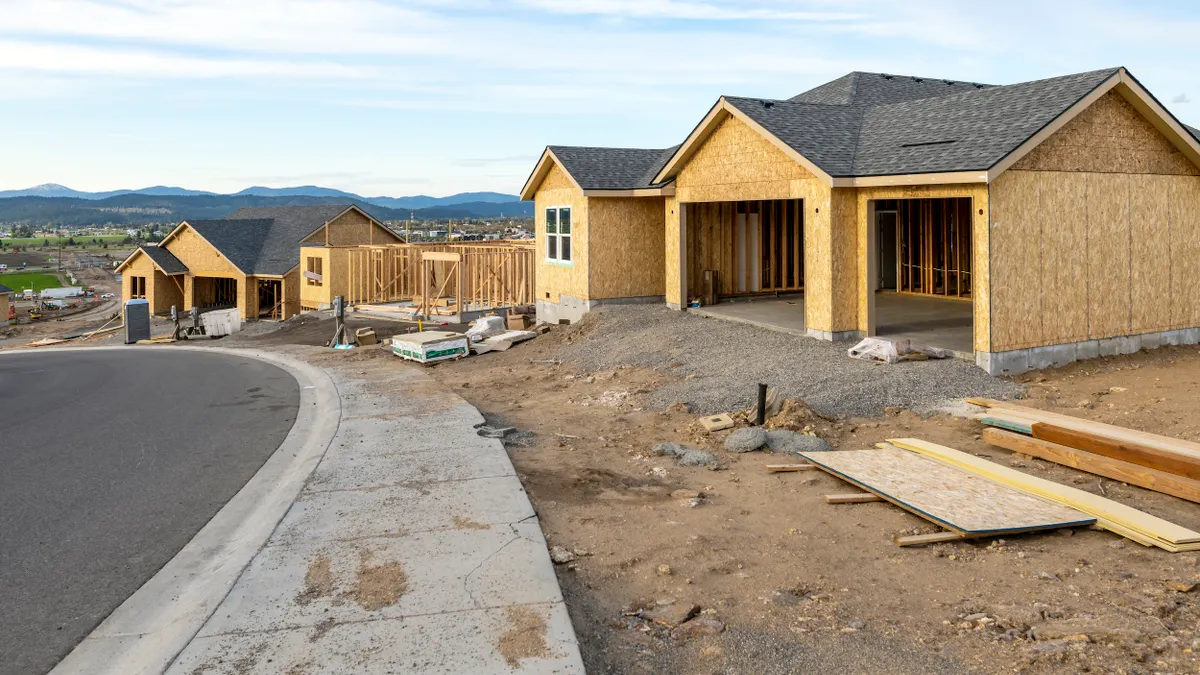
With $800 million in starts planned this year — compared to the $2.7 billion in new development over the past two years — the firm is taking a wait-and-see approach as the year unfolds to decide whether to take action in the form of stock buybacks or more development, Chief Investment Officer Matt Birenbaum said on the call.
“We're going into the year expecting less of that quick-start business to underwrite,” Birenbaum said. “The starts we planned this year are much more heavily weighted to our established East Coast region.”
The firm’s recent elevated transaction activity “reflects our having acted on some unique opportunities last year, including the timely sales of a portfolio of assets in a challenging submarket in Washington, D.C., and acquisition of a tailored portfolio of communities at a very attractive cost basis in Texas,” O’Shea said. “We don't execute meaningful trades of that nature very frequently, but we do take advantage of them when opportunities arise.”
Right now, investors are eagerly waiting for opportunities in the housing sector.
“There is a lot of equity that's on the sidelines that's anxious to get in, and we've seen that, you know, really growing for the last couple years. There's dry powder out there. It's looking to be deployed. There's a lot of people whose livelihoods depend on it,” Birenbaum said.
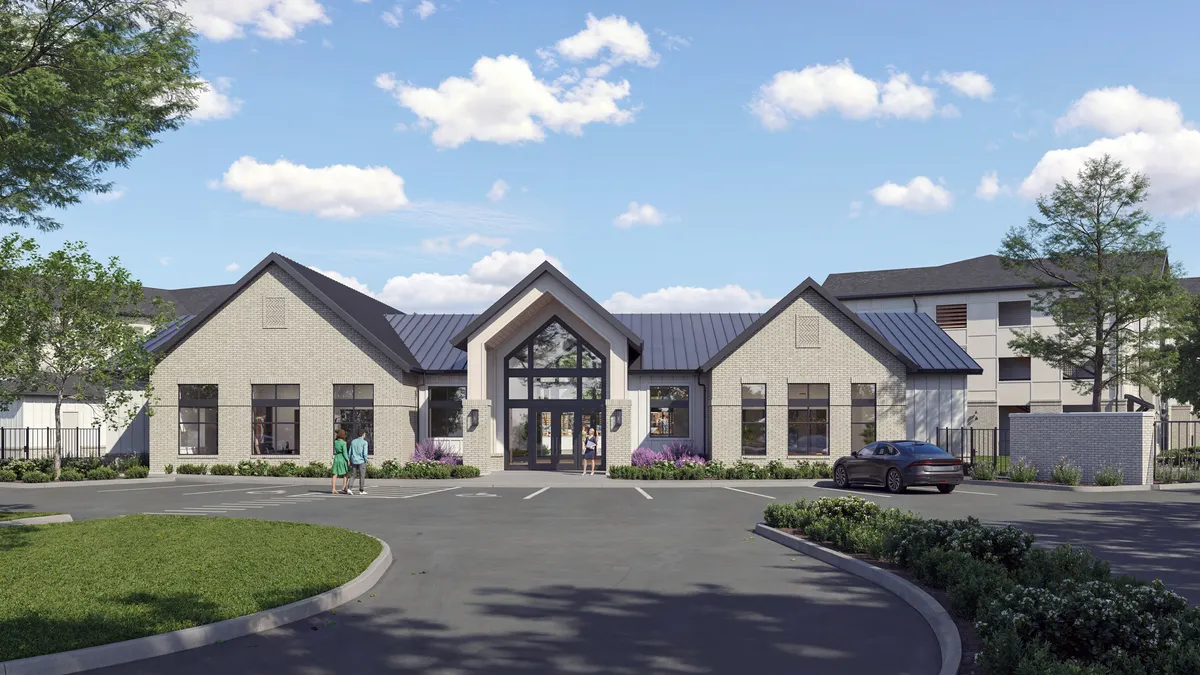
AVB is aiming to design and build housing to respond to future demographic trends, according to O’Shea. To that end, the firm has another BTR townhome community and concept plan slated to start this year.
“We are including more larger-format homes designed for working from home in our unit mix, including eight communities with a BTR component, and many feature excellent infill locations, walkable to nearby retail,” O’Shea said.
In particular, the firm is bullish on BTR townhome communities, according to Birenbaum. The BTR sector appears to be excluded from President Donald Trump’s recent executive order restricting institutional investors from buying single-family homes.
“We do think that it is a niche which is kind of where the puck is headed in terms of future demand, and so we are very consciously trying to increase the proportion of our portfolio that will access that demand,” said Birenbaum. “They do tend to be older residents that do tend to stay longer, and over time that should drive greater profit.”
Policy watch
Recent policy changes regarding bulk utility billing and fee transparency are creating some uncertainty. Going into effect this year are California’s new AB 1414, which allows residents to opt out of a bulk internet program, and Colorado’s junk fee law, which, among other things, bars a landlord from requiring a tenant to pay certain charges.
“[We’re keeping an eye on policies] that are similar to what happened in Colorado or California, where people are being thoughtful about not going directly at things like rent control, but, you know, wanting to make sure there's increased transparency and disclosure around the fees that you're charging for different things, how you recover utilities, etc., those are the ones that we're keeping an eye on,” Schall said.
At the national and federal level, the firm is focused on working with trade associations to support supply-based solutions, according to Schall.
“We very much see ourselves as a creator of housing,” Schall said. “Most of our developments, we provide 20% to 30% affordable housing as part of that that typically comes with the approval requirements. So finding ways that we both, individually at AvalonBay and as an industry, can help support further supply is where we've been focusing our efforts.”
Click here to sign up to receive multifamily and apartment news like this article in your inbox every weekday.