Dive Brief:
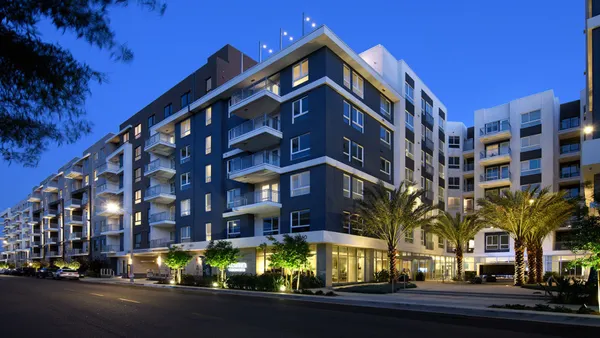
- The pandemic-era surge in Texas apartment construction that resulted in a deluge of apartment supply over the past couple of years has drawn the attention of the Federal Reserve Bank of Dallas.
- The share of apartment properties offering concessions is more widespread in Texas's major metro areas relative to the nation, according to the Dallas Fed. Free rent ranges from six to eight weeks to as much as 10 to 12 weeks in some submarkets.
- Austin leads Texas in concessions, followed by Dallas, according to the Fed. “Concessions are expected to continue through mid-2026, restraining rent growth despite healthy demand fundamentals,” per the report.
Dive Insight:
Texas multifamily has faced stress at different times over the past half-century, including during the savings and loan crisis in the early 1990s and during the global financial crisis in the mid 2000s, when delinquency rates rose.
Since peaking in mid-2024, vacancy rates have improved due to increased concessions, flexible lease terms and more competitive pricing, according to the Dallas Fed. New arrivals to Texas and the high costs of homeownership have helped prop up apartment demand despite new supply. However, demand is starting to slow with net absorption lagging completions both nationwide and in most major Texas metros in 2025.
Rents remain under pressure, with the sharpest rent declines in Austin, San Antonio and Dallas, according to the Dallas Fed. “Apartment market fundamentals should improve as deliveries of new buildings decline this year,” according to the report. “However, progress will be uneven. Texas markets face lingering headwinds from elevated supply and continued discounting pressure.”
While areas with slower population and job growth will likely “take longer to rebalance,” supply-constrained metros will see faster normalization. Concessions are pressuring valuations of both new construction and older properties.
“Texas banks’ double-digit loan growth supported the increase in multifamily supply during a period of strong housing demand and low financing costs,” according to the report. “Historically, bank lending for multifamily housing has been characterized by low delinquency and charge-off rates.”
Since 2021, multifamily loans have been the fastest-growing category at Texas banks, according to the Dallas Fed. However, rising delinquency rates are worth monitoring, as loan modifications in the state exceed the U.S. rate overall. Still, the situation appears manageable.
“Most Texas banks do not appear to have elevated multifamily loan concentrations — only a few report multifamily loans in excess of capital and loan loss reserves,” according to the report. “In addition, none of the bankers surveyed for the Federal Reserve Bank of Dallas’ Banking Conditions Survey in November 2025 selected ‘extremely concerned’ about the performance of multifamily loans.”
However, issues appear to be surfacing. Recently, The Waterford Grove Apartments in Houston and The Riley in Richardson were transferred to special servicing, according to separate Morningstar reports.
“We’re starting to track these Texas loans — this is the third loan to transfer to special servicing because of this tax exemption issue,” David Putro, head of analytics at Morningstar Credit, told Multifamily Dive in emailed comments about The Waterford Grover Apartments.
With The Riley, servicer commentary noted that a cash trap has been sprung for several reasons, including a tax exemption, according to Morningstar.
The Riley participated in the Garland Housing Finance Corporation program, which allowed the property to be exempt from real estate taxes if it met certain conditions and required mandatory prepayments if it failed to qualify or lost that exemption, according to Morningstar.
“It is unclear whether that is what has occurred here, so we are simply highlighting this as a possible cause for the transfer,” Morningstar wrote.
Click here to sign up to receive multifamily and apartment news like this article in your inbox every weekday.