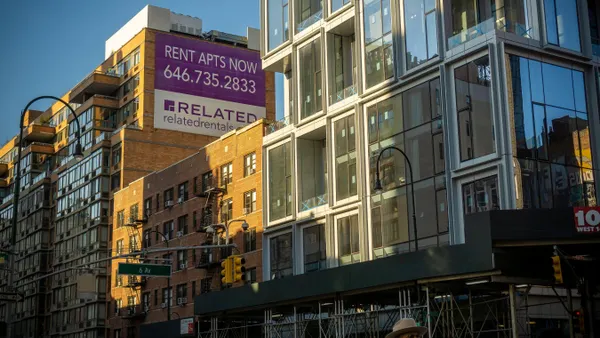
Multifamily rents stayed flat in February as the average U.S. advertised rent stood unchanged from January at $1,740, and slumped 10 basis points year over year to 0.1%, according to a March 11 report from Yardi Matrix. Only nine of Yardi’s top 30 markets posted growth.
Although February is typically a slow month, “economic trends signal softness heading into the spring leasing season and raise the possibility that 2026 could shape up to be a weak year for rent growth,” according to Yardi.
Primary and Midwest markets recorded the highest YOY rent growth, led by New York (4.2%), San Francisco (3.6%), Chicago (3.5%), the Twin Cities in Minnesota (2.3%) and Kansas City, Missouri (2%). Rent growth remained negative in many high-supply metros, including Austin, Texas, (-5.2%), Phoenix (-3.6%), Denver and Tampa, Florida, (both -3.2%) and Charlotte, North Carolina (-1.9%).
Rates for single-family build-to-rent units were flat at $2,191 in February, down 0.4% year over year, while those occupancy rates averaged 94.5% in February, down 0.5% YOY.
Industry groups are fighting a measure in the 21st Century ROAD to Housing Act that they say would throw cold water on the single-family build-to-rent sector. A provision would bar investors that own 350 or more homes from buying most single-family homes and require any that are bought or built by institutions to be sold within seven years.
Macro concerns
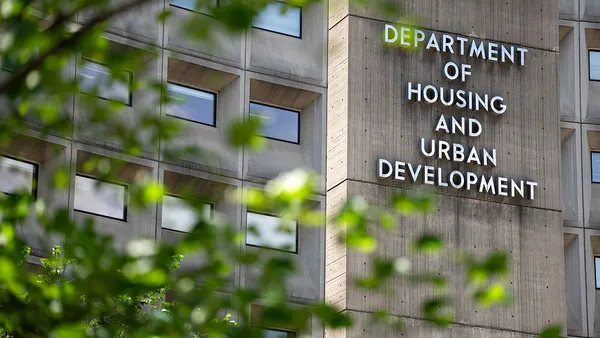
High levels of new deliveries persist as a primary structural headwind, particularly in the Sun Belt, per Yardi. Although starts and deliveries are down from peak levels, a sizable volume of units remain in lease-up and will take time to absorb. Longer term, multifamily housing starts jumped in January on a monthly and yearly basis, buoying residential construction overall, according to HUD and the U.S. Census Bureau’s latest residential construction report.
There are other macroeconomic concerns weighing on rents, according to Yardi. The economy lost 92,000 jobs in February amid already-weak consumer confidence, and population growth is slowing sharply due to immigration policy and the long-term decline in the birth rate.
At the same time, escalating geopolitical tensions around the military action in Iran and the possibility of further tariffs are also increasing uncertainty and concerns about energy disruptions and rising prices, per Yardi.
“Drivers of demand such as population growth, immigration and the job market are not
robust, while the occupancy rate and absorption have been weak in recent months,” according to the report. “Rents have been essentially unchanged over the past 18 months, while absorption slowed starting in the second half of last year.”
Another area of concern is occupancy rates, which are negative year-over-year in 28 of the top 30 Matrix markets. The national occupancy rate held steady MOM at 94.3% in February, but was down 0.4% overall from a year ago. The steepest drops occurred in Tampa, Florida, (-1.1%), followed by Houston and Washington, D.C. (both -0.9%).
Operators continue to turn to concessions to draw renters, particularly in the high-supply South and West regions, according to a March 2 report from RealPage. Concession usage increased in January across all four national regions, led by Austin, Denver and San Antonio, with each market posting discounts among roughly one‑third of all stabilized units. Concessions ranged from roughly 10% to 15% across the top 10, with Austin replacing Phoenix for the highest average discount in January at 14.8%.
Still, lease renewal rates remain positive, according to Yardi. Core markets such as San Francisco and Chicago have bounced back, and Sun Belt markets retain healthy long-term growth characteristics.
Plus, “equity and debt capital is plentiful, and opportunities exist for core properties and value-add assets with 2020-2022 vintage mortgages that need to be restructured,” per Yardi.