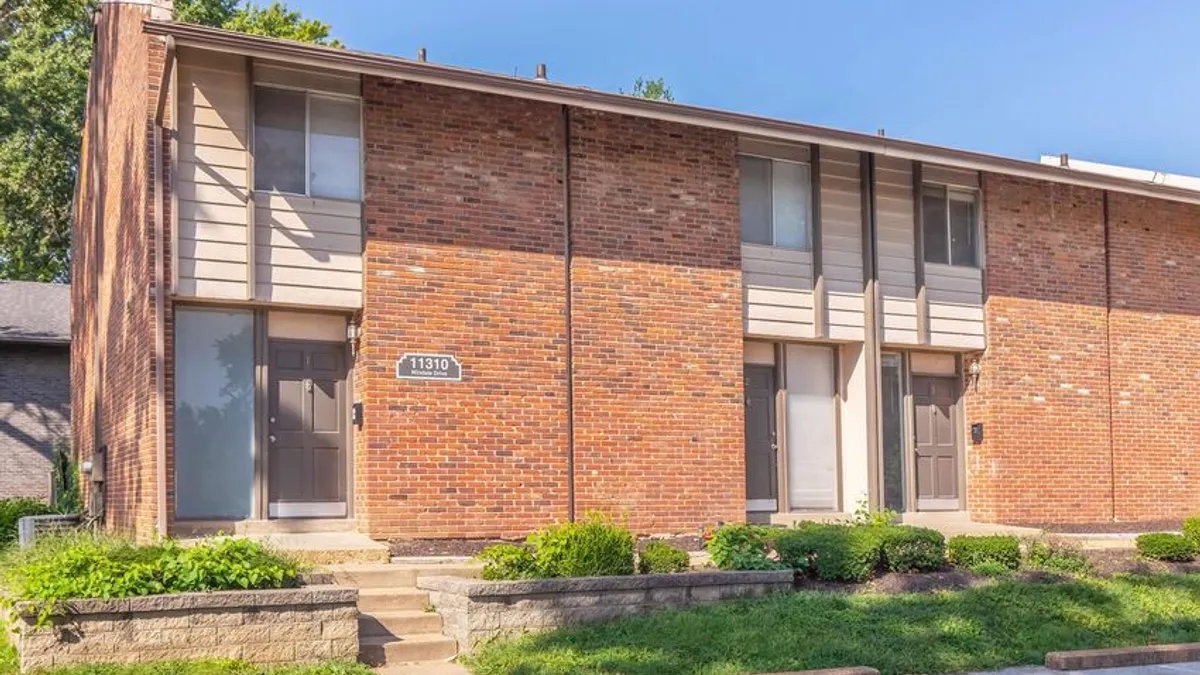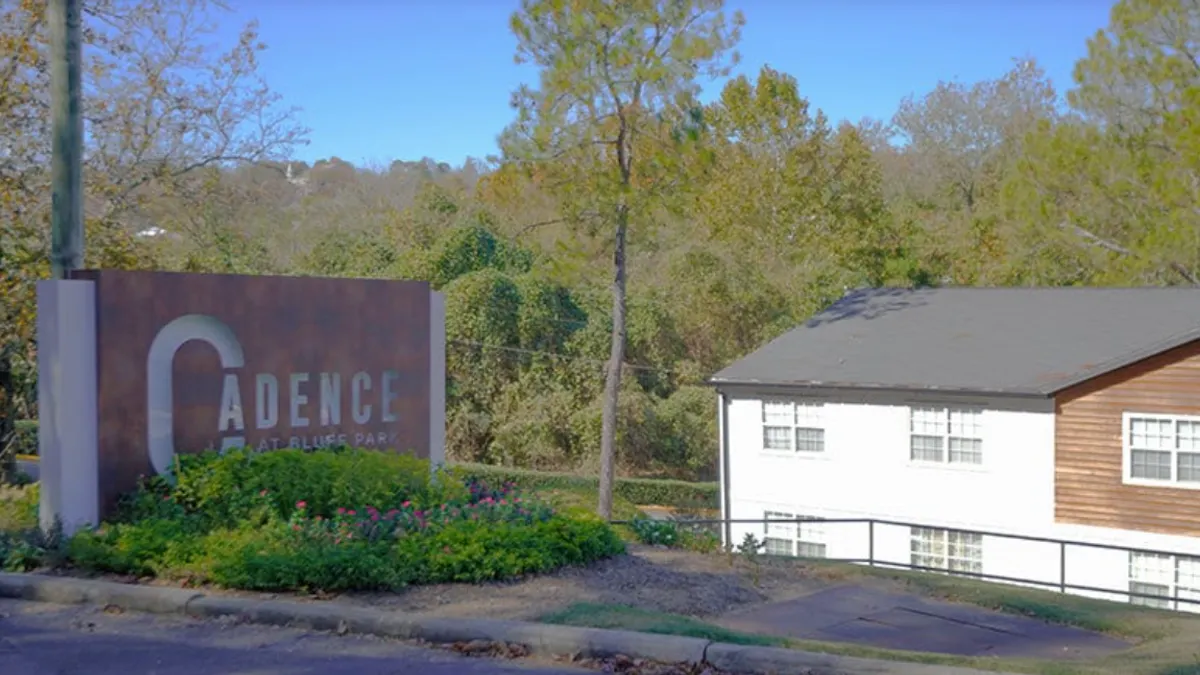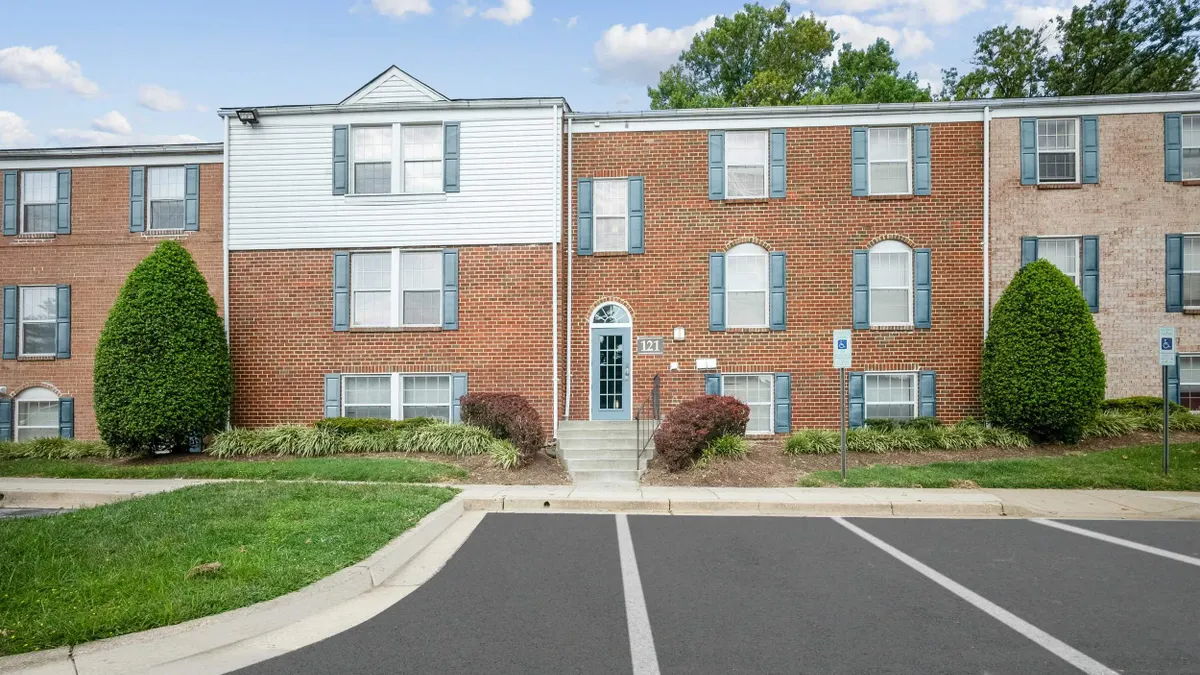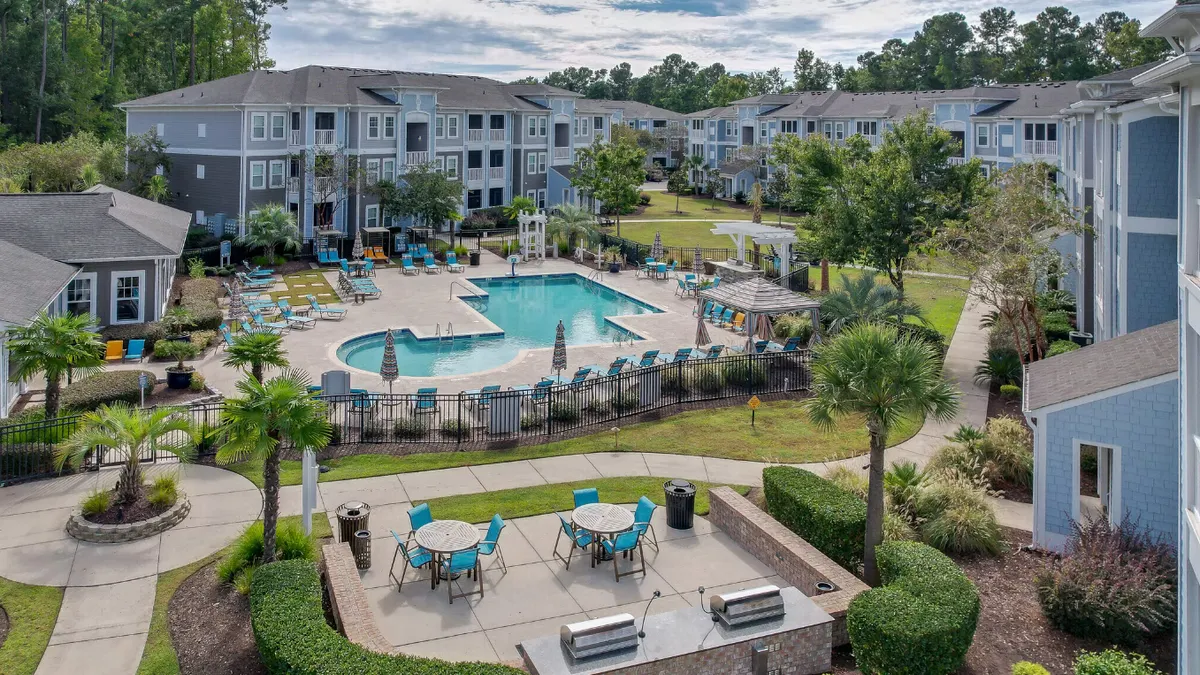
Amid market turmoil, Bonaventure has continued to expand.
In the past two years, the Alexandria, Virginia-based multifamily owner-operator has broken ground on three developments totaling 928 units, representing $246.2 million in total project costs. Further, it has closed on eight acquisitions totaling 1,518 units and approximately $354 million in transaction value.
Bonaventure, which has spent decades investing in supply-constrained markets across the mid-Atlantic and Southeast, now owns 9,192 units and has $2.9 billion in assets under management. But the firm isn’t focused on expanding at all costs.
“We don't want to just grow to grow,” Bonaventure CFO Stephen Burch told Multifamily Dive. “It's got to be growth on our terms.”
Recently, Bonaventure acquired an ownership interest in Crescent at Chevy Chase, a 111-unit property in Chevy Chase, Maryland, according to a press release. It added the asset through the Bonaventure Multifamily Income Trust, a non-traded real estate investment trust that it sponsors.
“We aren't trying to swing outside our strike zone,” Burch said. “We're not trying to do things that we don't have a really high conviction on.”
Bonaventure focuses on developing three to four projects a year using HUD loans, which can provide long-term, fixed-rate financing for multifamily properties.
On Aug. 26, Bonaventure announced that it had broken ground on Attain at Swift Creek, a 344-unit class A property in Chesterfield County, Virginia, according to a press release. The $93.3 million project is financed through a $79.9 million, 40-year, fixed-rate HUD Section 221(d)(4) loan originated by Walker & Dunlop.
While many developers have traditionally wanted to build and sell properties relatively quickly, or only own a property for a limited time, Bonaventure has a different horizon. “We love being long-term owners of real estate and long-term wealth creation in multifamily,” Burch said. “So that's really what we're using HUD for.”
While raising equity can still be challenging, Burch said the environment is improving. “The bottom line is equity fundraising is definitely not as good as it was in maybe 2022 or 2023, but it's better than it was last year,” Burch said.
Here, Burch talks with Multifamily Dive about investor interest in apartments, property pricing and how the firm uses artificial intelligence to find deals.
This interview has been edited for brevity and clarity.
MULTIFAMILY DIVE: Are you seeing investor interest increase for multifamily this year?
STEPHEN BURCH: I think real estate is becoming more appealing to people. It had gone out of favor for a while.
We did third-party equity on a couple of development deals this year, where we contributed the land and then brought in high-net-worth syndication. We don't do institutional equity deals because we do the HUD loans.
I wouldn't say it was easy, but they got capitalized. We didn't have to go and syndicate it out with a third-party equity person. It happened pretty quickly through friends-and-family fundraising or people who were already investors in the fund.
What deals are you looking for?
We're not out pursuing core, brand-new deals. We stumble upon them, and we find people that have them. But we're doing that in more of an opportunistic way, or in a UPREIT type of transaction.
We're sourcing who has great debt, and how do we find that owner? How do we connect with them and see if we can make them an offer? We’re having consistent conversations with the brokerage community. They will bring us things too.

We're generally going to be off-market. We're not going to win bidding wars. That's not the type of buyer we are. We're going to win by structuring an off-market deal and putting something together that works for everybody.
Are you using AI to find acquisitions?
We're a HUD borrower, and we like that 40-year long-term fixed rate. It's great debt, in our opinion. What's great is finding somebody who had a HUD loan originated between 2019 and 2022, because some of those HUD loans are 40 years, and they've got a two- or three-handle on them.
We have a tool now that can identify where all those HUD loans are. Here are the submarkets we're interested in. Then it goes and scrapes and finds the owners. It's not always easy to find the owners of these properties. It does all of this research and then comes back to us and presents it to us.
How is it to work with HUD right now?
I processed my first HUD large borrower approval several years ago, and it was 9, 12 or 15 months or something like that. We started our most recent HUD large borrower approval in March of this year. I think we had full approval by mid-May or early May. So that's a very substantial decrease.
We're also seeing that when we are submitting deals to go through their approval process, effectively getting your credit line with HUD and then you've got to go on a deal-by-deal basis and present it to them, we're getting approvals in as quickly as a week, which is substantially quicker than it used to be.
Do you see much competition in the HUD borrowing space?
We've built the HUD flywheel here and built that side of our balance sheet around it to some extent. We are very comfortable with it. But we're definitely in the minority. It doesn't work for institutional capital. It doesn't work for short-term holders. It only works if you're a long-term patient investor.
We value that debt. It adds value to us. I don't know that there are other players out in the market that see that.
Click here to sign up to receive multifamily and apartment news like this article in your inbox every weekday.