Dive Brief:
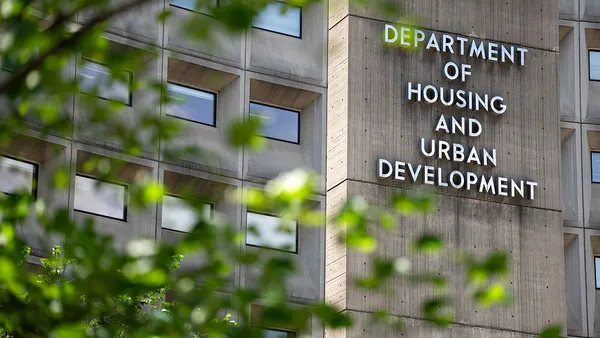
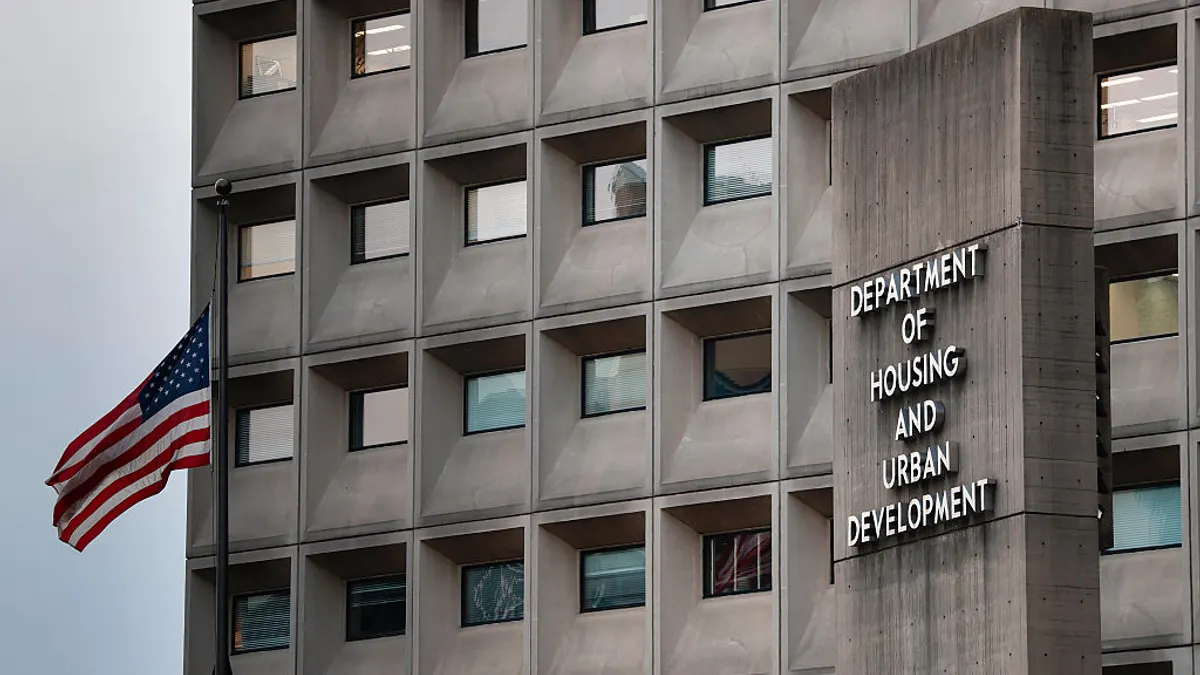
- HUD is appealing a December ruling that temporarily halted the Trump administration’s move to dramatically change its homelessness programs, according to a Tuesday press release from the agency. The overhaul could affect tens of thousands of people housed via its Continuum of Care grant program.
- HUD wants to cut much of its funding for permanent supportive housing and shift it toward temporary transitional housing with work requirements and mandatory addiction and mental illness treatment. It would also be able to deny money to groups that don't comply with the Trump administration on issues like DEI and immigration.
- On March 2 the agency submitted an emergency motion to pause the December ruling that blocked its changes, pending its appeal, Federal District Court of Rhode Island records show. The court denied the request on Friday. On Monday, HUD asked the U.S. Court of Appeals for the First Circuit to stay the injunction that halted its plans.
Dive Insight:
A vast and growing evidence base shows the Housing First strategy is most effective at keeping people off the streets, according to research analyzed by Samantha Batko and Pear Moraras at the nonprofit Urban Institute. By contrast, studies found transitional housing excludes the people who most need support, and those exiting transitional housing still rely on public assistance “despite the stated goals of self-sufficiency.”
“Permanent supportive housing effectively helps people exit homelessness; transitional housing does not,” according to Batko and Moraras. “Rigorous studies consistently show that it is the most effective solution to increasing housing stability and reducing chronic homelessness.”
However, HUD said in the release that its appeal “underscores HUD’s commitment to reform the misguided ‘Housing First’ approach that funded the self-serving homeless industrial complex, rewarded activists, and ignored solutions” and has “turned America’s streets into a petri dish of disease, drugs, and despair.”
In November 2025, HUD Secretary Scott Turner announced plans to cut permanent supportive housing funding and redirect money to transitional housing. The move was in accordance with President Donald Trump’s July 2025 executive order, “Ending Crime and Disorder on America’s Streets,” according to HUD’s release.
The changes were announced with little notice, just weeks before local homeless service providers had to apply for about $4 billion in new funding, NPR reported. A group of 20 states, local governments and nonprofits including the National Alliance to End Homelessness sued to stop the revisions, arguing that they would likely push people onto the streets in the middle of winter.
In December 2025, U.S. District Judge Mary McElroy of Rhode Island — a Trump appointee — agreed and granted a preliminary injunction, ruling that the last-minute changes to homelessness program requirements were unlawful. McElroy ordered the agency to maintain its previous funding formula.
If HUD is ultimately successful, its proposed changes will have a devastating impact and cause hundreds of thousands of children, adults and families to become homeless, the National Alliance to End Homelessness said in December. The organization told Multifamily Dive Wednesday that it is unable to comment on active legislation.
HUD is continuing to tighten rules for tenants and loosen regulations for operators. Recently, it moved to allow work requirements up to 40 hours per week, term limits for residents in agency-supported housing and more rapid evictions.
Click here to sign up to receive multifamily and apartment news like this article in your inbox every weekday.