Ten years ago, you had to scroll pretty far down the National Multifamily Housing Council’s Top 50 to find Morgan Properties. In 2016, the Conshohocken, Pennsylvania-based firm sat at No. 35 with 32,384 units.
But over the last decade, Morgan has been on one of the strongest growth trajectories among multifamily owners. This year, it moved into the No. 2 slot with 110,475 apartments.
As the company has grown, it has still maintained its original DNA as a workforce housing provider.
“The company was founded in 1985 by Mitch Morgan, and he bought his first property, which we still own today, here in the suburbs of Philadelphia,” Chief Operating Officer Greg Curci told Multifamily Dive. “When he bought that property, that property itself was like 20 years old.”
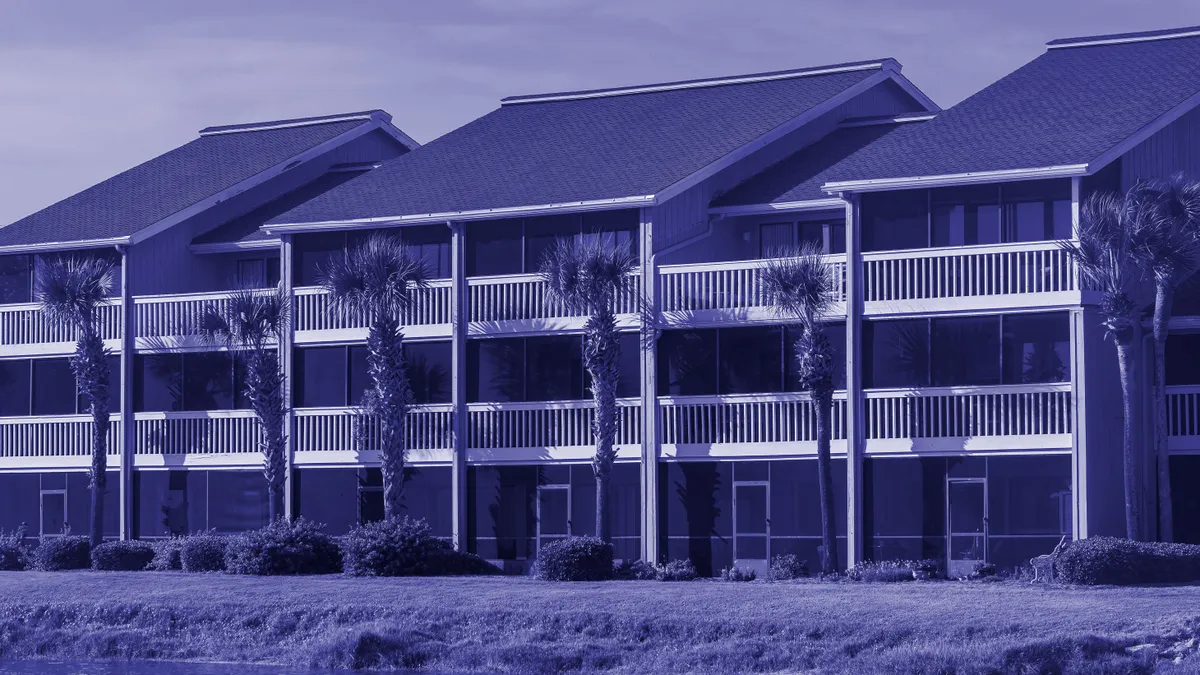
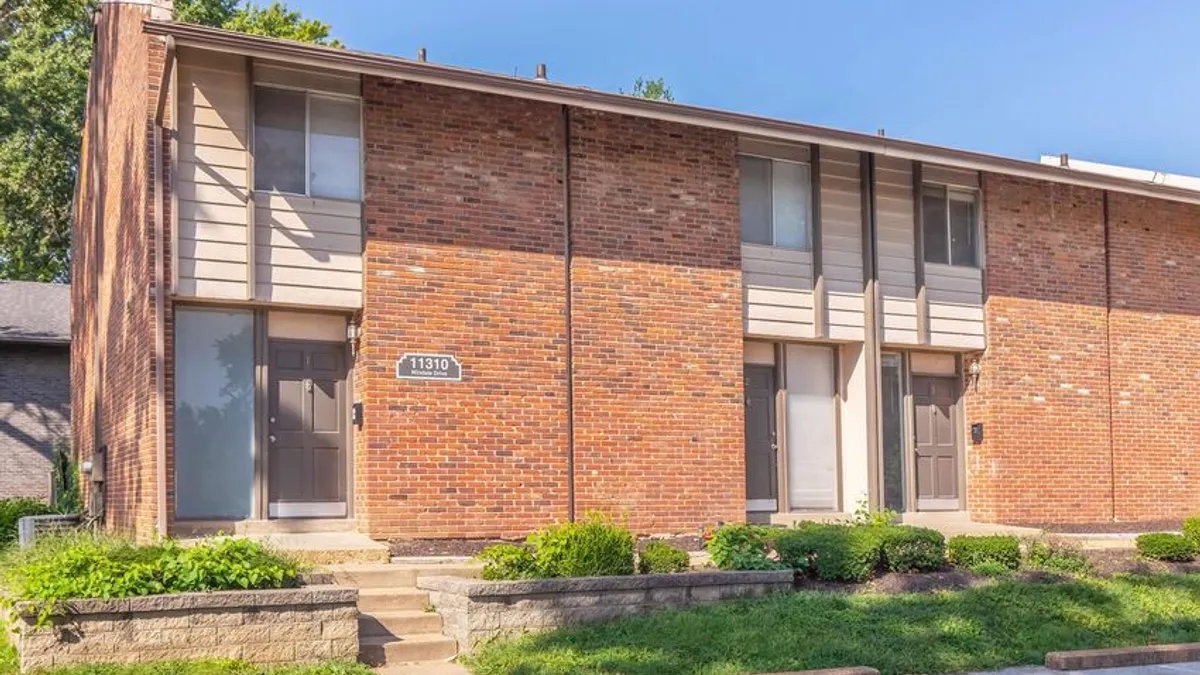
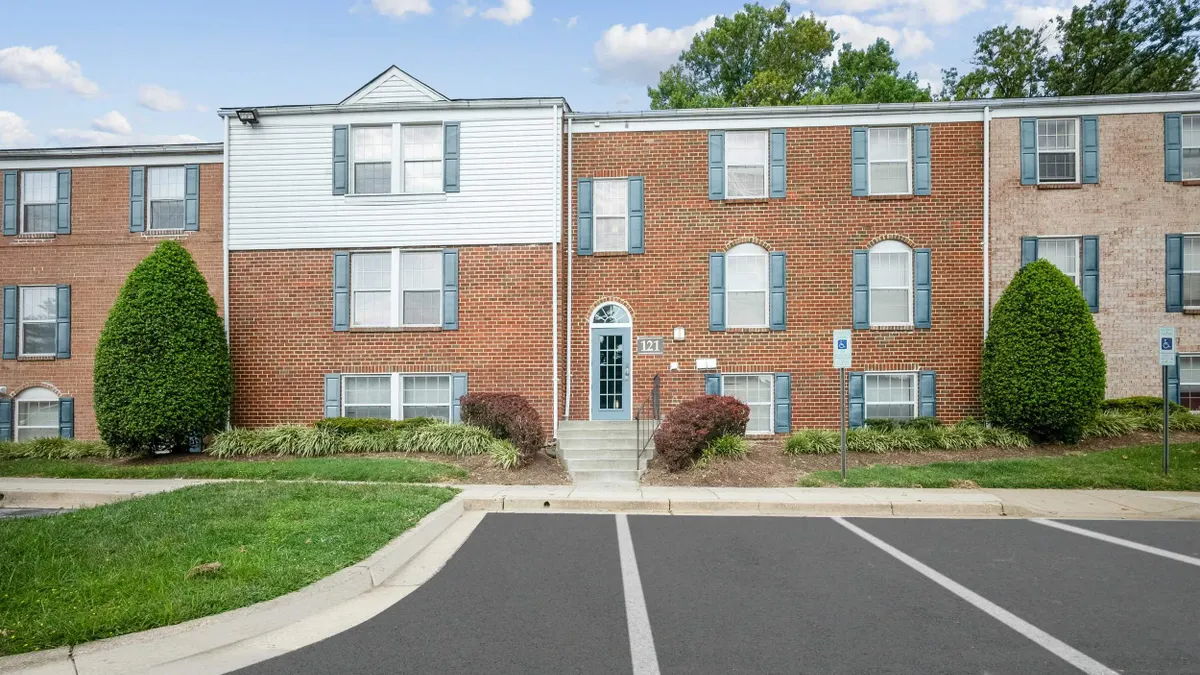
Roughly 55% of Morgan’s portfolio is 1960s- or 1970s-vintage, and the median household income of its residents is slightly under $75,000, according to Curci.
“We have always gone after things that require maybe a lot of capital to reposition a property or cure deferred maintenance issues, and likewise, where the operations may not have been as sound as they could be,” Curci said. “We’re accustomed to dealing in the workforce housing space and that commitment has never wavered.”
But 20% of Morgan’s portfolio comprises newer properties. “We have nine different joint venture partners that we acquire assets with,” said Curci, who joined the firm in 2019. “They all have different appetites.”
Here, Curci talks with Multifamily Dive about Morgan’s investment strategy, apartment turnaround strategies and distressed buying opportunities.
This interview has been edited for brevity and clarity.
MULTIFAMILY DIVE: Despite near-term economic concerns and oversupply in some markets, Morgan is still buying properties. What is behind that strategy?
GREG CURCI: We're always active on the acquisition side. We tend to have a longer time horizon. We're not a fund that has urgency to invest the equity and then return it within five years. Most of our partners are pretty aligned with us on a very long-term hold.
From an underwriting standpoint, we typically think in terms of a 10-year hold. That is how we model. We'll do a five-year, just as a gut check, but in many instances, we will hold much longer even than 10 years. When you have that time horizon to look out upon, it takes some of the pressure off of having to really time the entry point perfectly.
Does the longer-term hold help you take on more intense turnaround projects?
We're comfortable acquiring and improving the types of assets that intimidate some others. By that, I mean we buy properties with 1,000 units. We bought one that was 2,000 units. These are large assets. Not everybody has the operating capability or the stomach to do that or to reinvest those capital dollars needed to upgrade and maintain properties of that size and age.
We buy things that have unstable operations. We buy things that are in the 80%s occupancy-wise and have a lot of deferred maintenance. We recognize it will take quite a while to change the trajectory of those assets, but we are patient in that respect.
Do you also have flexibility in the markets you’ll buy in?
We are also not shy about entering more secondary and tertiary markets. Others in the space have a mandate to really articulate their investment strategy and say, ‘We're going into these 10 primary markets based on job growth or population growth or incomes,’ and they just target that.
We target more opportunities. We wait to see what comes along. We never know what the complexion of that portfolio is going to be that shows up for us. But we always try to take a creative approach and say, ‘Does this fit our operating model?’ which is one of improving a usually considerably older product, where we can bring some operating expertise to it.
What kind of management upgrades can you implement when you buy these properties?
Our product type is older. Our operating platform is fairly modern. So a lot of times when we're buying these types of things, they tend to come from less sophisticated operators. So, there's a fair amount of opportunity there for us, but it's not an opportunity that can be realized in, like, a year. It’s not like we’re buying a 2000-vintage asset, upgrading 200 kitchens, and then we're going to put it back out there.
It's more of a holistic approach. We may have to do all the siding everywhere and all the roofs. There are plumbing issues and the diverters are shot. It's a major, multiyear approach to revitalizing these communities, but I will also say we do buy one-offs. Our bias really depends on the investors.
How do your investors drive these decisions?
Some of our investors really are only interested in writing larger checks. So that kind of steers them toward portfolio acquisitions. Some of those investors have been with us for 15 years. Likewise, we’ve had investors with us for 15 years and they just want to buy one or two deals a year. So we will close a series of one-offs, but may or may not do a press release about that.
Distress is creeping up with some of these older properties. Are you seeing buying opportunities there?
People talk about waiting for the distress to come for great buying opportunities. I think we're finding that there are two types of distress.
There’s seller distress. They’re running out of money, but the product type is good. Maybe we can come in with a little bit of rescue capital, versus the assets themselves having atrophied to the point where they do not appear to be worth the debt [the second type of distress]. People are either in the midst of a mid-term default or the loan is coming due, and there's no way for them to reasonably refinance out without putting more equity in.
I've been shocked at some of the stuff that we have seen over the last, really, just six months. We see occupancies in the low 80%s and high 70%s, with a lot of bad debt and economic vacancy, probably in the mid-to-high 60%s. It's really just like, how did they get to this point? I mean, that's actually almost difficult to do in multifamily, to drive an occupancy level down to that.
So while we're looking at those things, we've been a little frustrated that the opportunities aren’t worth the debt.
Click here to sign up to receive multifamily and apartment news like this article in your inbox every weekday.