Ivan Barratt is founder and CEO of BAM Capital, a vertically integrated multifamily investment firm based in Carmel, Indiana. Opinions are the author’s own.
Two reports crossed my desk this summer. CBRE said renters absorbed 167,500 apartments in the second quarter — more than double the 77,700 units delivered — and national vacancy fell to 4.3%, below its long-run average. But Trepp said the share of delinquent commercial mortgage-backed securities apartment loans climbed to 7.69% in July, up more than a point from two years ago.

One report says apartments are fine. The other says apartment owners are not. Both are true.
This represents the best buying opportunity I've seen in the 16 years since I started BAM Capital in my spare bedroom with 2008 still ringing in my ears.
Let’s start with the buildings. The supply wave that flattened rents in 2024 and 2025 is receding on a schedule anyone can read. Deliveries over the past year ran about 340,000 units, down from nearly 590,000 at the late-2024 peak, per RealPage — the first time in three years completions fell below the decade average — and construction starts are at their lowest level since 2011. Developers' deals stopped penciling. At today's costs and rates, a new building doesn't work until rents rise enough to justify it, and that protects the buildings already standing.
Demand didn't go anywhere, it just parked. Buying a home now costs roughly double what renting one does — CBRE puts the monthly premium at 105% — and half of all outstanding mortgages carry a rate under 4%, so owners aren't selling and would-be buyers can't buy. Household formation moved into the rental pool and it's staying there. Rents are up only about 1% year over year nationally, and I read that as the reason prices are still cheap, not proof the sector is broken.
Now consider the owners. Between 2021 and 2022, a lot of multifamily properties were bought with floating-rate bridge debt, underwritten at 4% money and 6% rent growth forever. Roughly 13% of multifamily loans mature this year, per the Mortgage Bankers Association. And the ones that can't refinance without a big check are showing up as delinquencies, receiverships and foreclosure notices — sponsors who set the pace at auction in 2021 now defaulting on loan pools in the hundreds of millions and handing back keys by the thousand.
These aren't bad buildings; the capital structure wrapped around them is. That same 2021-22 buyer can't raise a new fund either, so the buyer pool for institutional-quality multifamily is the smallest in a decade.
Howard Marks, whose memos I've read for most of my career, put it this way: "Since buying from a forced seller is the best thing in our world, being a forced seller is the worst." A maturing loan is a structural motivation, not a strategic one, and that shows up in pricing whether the owner likes it or not.
Building challenges, buying opportunities
Construction costs are still climbing about 5% a year, JLL reported, with tariffs pushing steel, aluminum and copper up as much as 50%. Apartment prices just posted their second straight year of declines, and cap rates sit near 5.9% versus 4.4% in 2022 — those two lines have crossed.
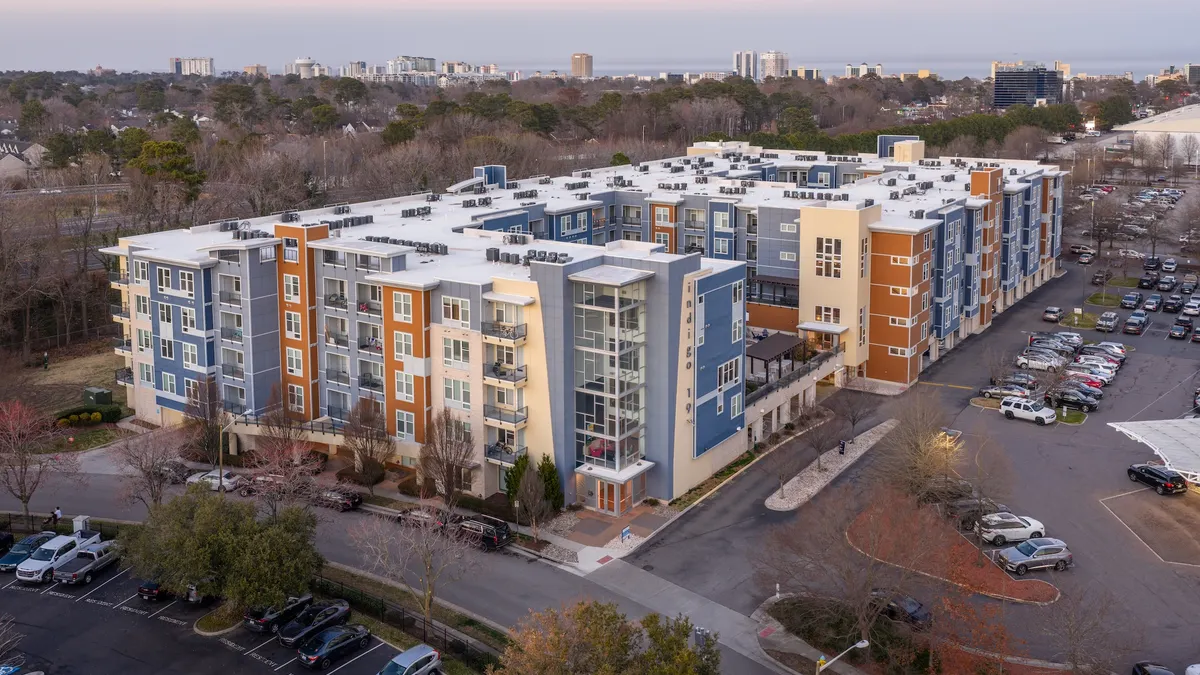
Here's a live one: we're under contract on a 300-plus-unit community in a coastal Southeast market, finished in 2024. Comparables run in the high $250,000s a unit; building it today would cost about $250,000. We're paying a little over $200,000 — eighty cents on the dollar, in a submarket with zero new market-rate apartments within five miles through 2030.
Buy for less than it costs to build the competition, with nobody building it, and you have a margin of safety no rate forecast can touch.
And nobody has a rate forecast worth much. Inflation is back to 3.4% with energy up 16%, and the Fed just hiked rates a quarter point. I won't predict what they do next — but a building with leases that reset every 12 months, occupied by people who have to live somewhere, is a better inflation hedge than a 10-year bond. Just sitting in cash is a bet too.
None of this is a license to buy anything at any price. Periods like this raise the bar, not lower it. Getting the basis wrong now is expensive. We'll certainly pass on far more than we pursue.
Marks calls one adage the most important in investing: What the wise man does in the beginning, the fool does in the end. In 2021 the fools were buying. In 2026 the fools are waiting for the all-clear — and the all-clear is the moment the discount disappears. This window opened because of forced sellers, not hype, and it closes when rents catch up to supply math already in motion.
I've spent my career waiting for markets that reward discipline over optimism. This is one of those markets.
Click here to sign up to receive multifamily and apartment news like this article in your inbox every weekday.