Richard Richman spent the early part of his career at The Related Cos., learning from the company’s chairman and CEO, Stephen Ross.
“Part of the genius of Steve Ross — because he is truly a visionary and I recognized that very early on — is that he looks for synergies,” Richman said. “In fact, the name of the company Related really comes from the idea that you'd have related businesses that would all do different parts, and not just farming out.”
After a stint at Related, Richman decided it was time to move on — not because of a dispute with Ross, he is quick to point out. As the youngest of three brothers, Richman wanted to branch out and start his own business.
“From one particular opportunity, you created multiple profit centers,” Richman said. “Well, being his young partner, I saw that, and so I wanted to start our company.”
Now, 40 years later, Richman’s firm, The Richman Group, has become a powerhouse in its own right, ranking as the No. 38 owner and the No. 6 syndicator on the 2026 National Multifamily Housing Council lists of the biggest firms in the apartment industry. Since its inception, the firm has owned more than 166,500 units and invested more than $28 billion in development, according to the firm’s website.
“I started a company in the image of Steve's company, and so we do almost every kind of thing in the rental apartment business,” Richman said. “We do homeless housing in L.A. We do workforce housing. We do regular low-income housing. We do luxury housing. We do farmworker housing.”
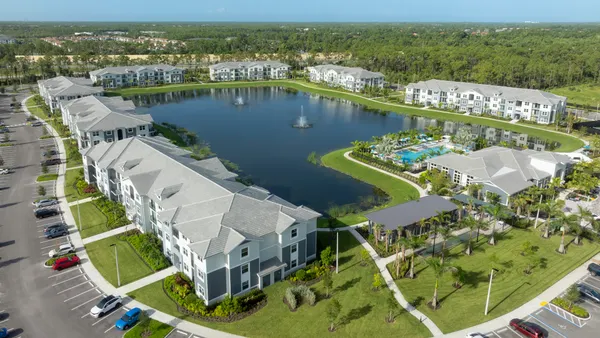
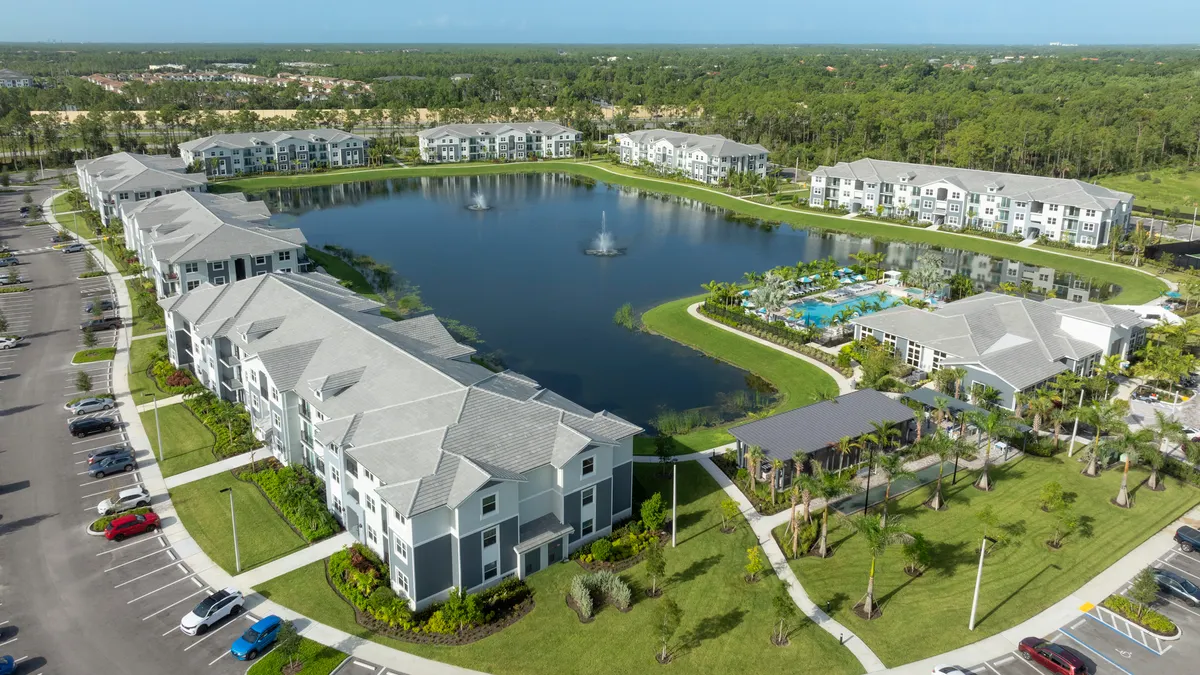
Richman said his long track record and his firm’s resources have helped him navigate the current environment. In August, The Richman Group closed approximately $225 million in permanent financing across three fully stabilized Florida luxury multifamily communities — $107 million for The Marc in Palm Beach Gardens, $72.5 million for Everly in Naples and $45.5 million for Vista Sur in South Miami, according to a press release shared with Multifamily Dive.
“We're set for the next 10 years on all three projects,” Richman said.
Here, Richman talks with Multifamily Dive about how development experience helps with syndication, the implications of rising 10-year Treasury yields and the challenges of refinancing apartment projects.
This interview has been edited for brevity and clarity.
MULTIFAMILY DIVE: What’s the advantage of doing syndication on affordable construction deals, while also being a developer?
RICHARD RICHMAN: You get a lot of intellectual capital when you're working on all these other subsidies. We know all the subsidies because we've seen them in the other deals. We've seen the structures. We know the tax law. On the development side, we'll find the land ourselves. We'll do everything through the process — get it rented up and get it financed.
Knowing the development side makes us a stronger investment banker for our clients because, as I always said, we have our own construction company. We're all over the country. Construction really is a local business.
But as I would always say to investors, there's no project that you are investing in that's built by another developer that we couldn't be the developer of. So if it gets in trouble, we know how to fix it.
Have you had to take a more active role in some tax credit deals?
In some cases, we need to replace the developer and finish construction and rent-up. We're in every aspect of it.
We had Freddie, Fannie and FHA licenses. We merged our mortgage company with Merchants Bank, which is now a public company. Other than the founders of Merchants Bank, I'm one of the biggest personal shareholders after Merchants' IPO. We still provide some mortgage origination services to Merchants.
What are some big trends in the tax credit business?
One of the big things today in the syndication business is that a lot of the banks don’t want to just buy credits. They want to get the loans. So, because of our vast network, we're very good at producing a lot of loans for banks, especially where we have insurance companies.
Insurance companies are really not interested in affordable housing loans. So then we can bring a bank that's not even in the deal, that may not even have been found by the developer, and say, “Would you be interested in being the construction lender?” Banks usually are, particularly if the project is in their CRE [Community Reinvestment Act] area.
How will the spike in the 10-year Treasury affect the construction market?
The production of rental housing is going to slow because no one can make the numbers work because construction costs are way up. Who can make a deal work today unless it's a very unique situation, at a 5.25% 10-year Treasury? So it will help address the problem that the low interest rates caused [with oversupply], because the amount of new deliveries for the next few years are going to go down.
What are some of the challenges that apartment developers are facing?
You have a huge reduction in rents and you have at-market real estate taxes if you're a conventional builder. Now you probably got a construction loan that you're going to have to replace with a permanent loan. But it's with a way higher interest rate than you programmed when you gave the numbers to the bank three years ago.
That's why you're seeing it all over the country. It's happening even in some Los Angeles markets, like downtown.
You have huge overbuilding, and now rents have actually declined. You see concessions everywhere. And you see now your construction loan has to be taken out, and you're dealing with the 10-year Treasury at 5.25%.
How have you been able to handle rising interest rates as you put long-term debt on your construction projects?
We are going to have no trouble paying back on construction loans because we have a lot of capital. But not everybody has the capital that we have. They're not our size. They don't have our policies and our theory of always being extremely liquid.
Click here to sign up to receive multifamily and apartment news like this article in your inbox every weekday.