On the recent round of REIT earnings calls, multifamily’s biggest public companies continued a quarterly string of impressive renewal rates.
“The REITs are continuing to highlight their low resident turnover rates that are giving them some pricing power on renewal leases,” LeaseLock Chief Economist Greg Willett told Multifamily Dive in emailed comments.
While factors like high home-buying costs played a major role in these results, they were not the only factor REIT executives pinpointed.
“There's a hassle to moving as our residents get a little bit older,” MAA Executive Vice President and Chief Strategy and Analysis Officer Tim Argo said on the REIT’s Q4 earnings call earlier this month. “The cost of that and the willingness to go through that hassle and spend that money and take that time, I think people are less willing to do that.”
As renters age and the build-to-rent sector becomes more popular, it may not be a coincidence that retention is increasing, especially in certain parts of the country.
Geographic differences
In 2000, the median renter was 36 years old. It hit 40 in 2023, before rising again to 42 in 2024, according to a Zillow analysis of U.S. Census Bureau data.
Additionally, the oldest Americans are increasingly choosing to lease their homes. Between 2013 and 2023, the number of renters aged 65 and over jumped by nearly 30% to 2.4 million, the largest increase among any age cohort, according to an analysis by Point2Homes. The 55–64-year-old age group was also more likely to rent than their counterparts were 10 years ago.
“I think a bigger change is that 20 or 30 years ago, renting an apartment was seen more as a transitory living experience. You didn’t expect to be renting long and thus, you didn’t settle in.”

Jay Lybik
Senior director of market research at Continental Properties.
As residents age, they’re more likely to stay longer, according to Willett. “Household composition tends to be more stable for older renters, and older workers tend to change jobs less frequently than their younger counterparts,” Willett said. “Thus, a couple of the key influences that tend to trigger moving are dampened.”
Arlington, Virginia-based REIT AvalonBay Communities found that 38% of older renters came to its properties from home ownership, according to a survey of its residents aged 50 and older. Forty-five percent of respondents said they plan to rent for life.
“We're seeing renters over fifty become an increasingly important part of our resident base, making up 15% of our market-rate adults. Our data shows that this group isn't renting out of necessity; they're choosing it for the lifestyle it enables,” Sarah Mathewson, senior vice president of property operations at AVB, told Multifamily Dive in emailed comments.
Those trends aren’t uniform across the county, however. “Turnover tends to be lowest in the Northeast, especially New York and Northern New Jersey, and in Midwest locations like Cleveland and Milwaukee,” Willett said.
Meanwhile, renters are younger in the Sun Belt, Mountain and Desert regions, including Austin and San Antonio in Texas and Salt Lake City. “Those metros are almost always relatively high turnover markets,” Willett said.
The BTR factor
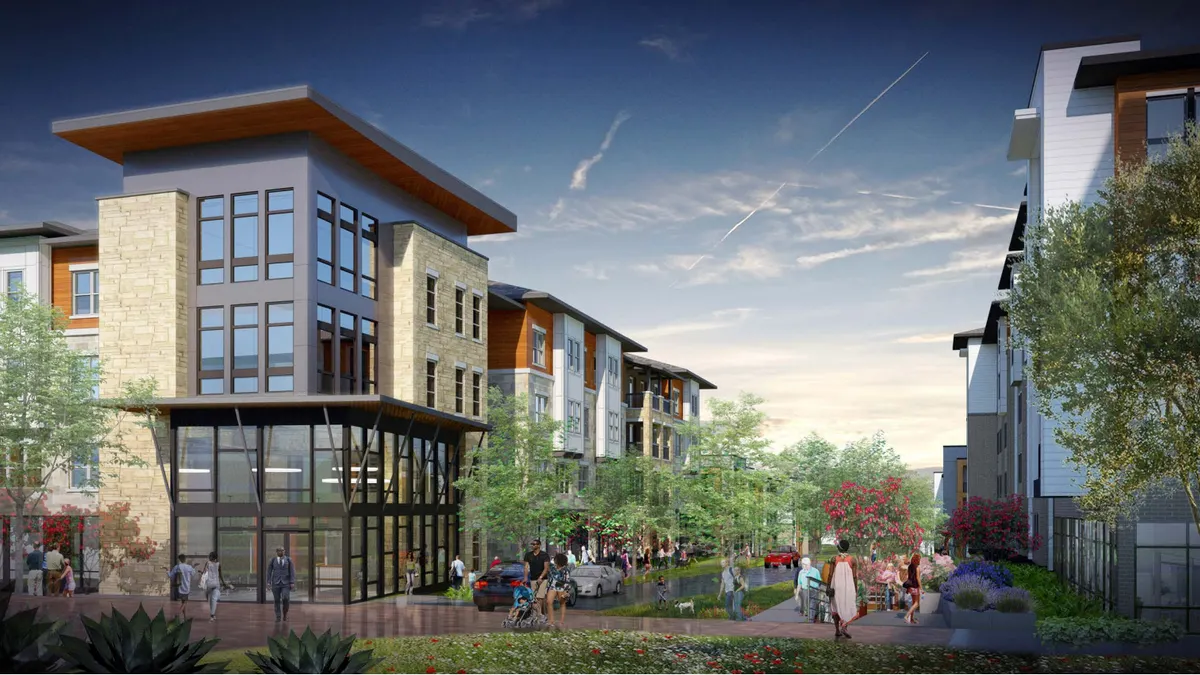
The rise of BTR as an institutional asset class over the past decade also helps attract and retain older renters, according to Willett.
“BTR product can be a great lifestyle fit for older renters who have moved past living alone as singles and who have accumulated more possessions, creating a need for more space,” Willett said.
However, Willett points out that BTR is a relatively new product, and initial leases are just turning over for the first time in some developments.
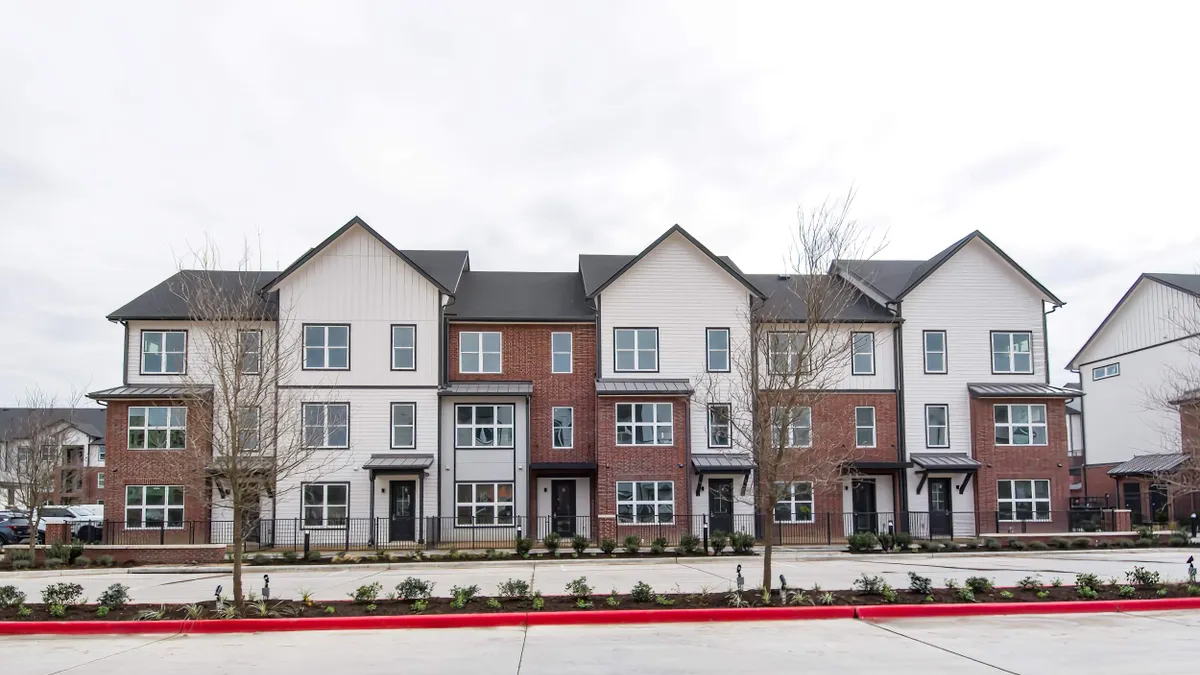
On AvalonBay Communities’ Q4 earnings call, Chief Investment Officer Matt Birenbaum said the firm was bullish on its BTR townhome communities, partially because retention rates are strong.
“We do think that it is a niche which is kind of where the puck is headed in terms of future demand, and so we are very consciously trying to increase the proportion of our portfolio that will access that demand,” said Birenbaum. “They do tend to be older residents that do tend to stay longer, and over time, that should drive greater profit.”
Another Northern Virginia firm, Vienna-based Middleburg Communities, noted similar trends.
“We are seeing older residents stay in rental housing longer,” Chris Finlay, founder and CEO of the apartment owner, manager and developer told Multifamily Dive in emailed comments. “The fact is, many are intentionally choosing a lifestyle that offers flexibility, minimal maintenance, and homes designed to support them over time.”
Renewal Growth
Ultimately, older Americans deciding to rent longer or return to apartments later in life aren’t the only reasons apartment renewals have increased, approaching an all-time high in Q3, according to software and data firm RealPage. “There are other factors that influence turnover rates across markets too, especially the pace of job creation and the volume of new supply growth,” Willett said.
The increasing cost of home ownership is yet another factor. Elevated mortgage rates and home prices make apartments an affordable option compared to home ownership, UDR Chief Financial Officer Dave Bragg said on the REIT’s Q4 earnings call earlier this month.
Last year, the typical age of first-time buyers hit a record high of 40 years, according to the National Association of Realtors 2025 Profile of Home Buyers and Sellers.
“I think a bigger change is that 20 or 30 years ago, renting an apartment was seen more as a transitory living experience,” Jay Lybik, senior director of market research at Continental Properties, told Multifamily Dive in emailed comments. “You didn’t expect to be renting long and thus, you didn’t settle in.”
While Lybik said Continental’s renter base skews younger, retention rates are still up, supporting a possible systemic change.
“Now that renting by many younger households is viewed as a viable housing option, rent households may be settling in more in terms of belonging and location,” he said. “Thus, they may be less interested in going through the hassle and cost of moving just to save some money.”
Click here to sign up to receive multifamily and apartment news like this article in your inbox every weekday.