For almost 50 years, Amoroso Cos. has developed, operated or invested in close to 8,000 multifamily units.
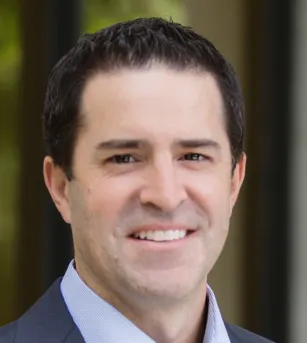
“My dad and grandfather started it in the late ‘70s, and primarily we're developers,” Amoroso Cos. Chief Operating Officer Jason Amoroso told Multifamily Dive. “We’re third generation. We have a very stable portfolio of assets, ranging from ground-up development all the way to existing hospitality.”
However, even at nearly 50 years old, companies can evolve. “We thought it was a good time for us to reposition some of those assets that have been in a portfolio for 30-plus years, maybe some development deals and some of our hospitality deals, and really go out and take advantage of what we think is an opportunity in the market to buy some assets below replacement costs,” Amoroso said.
To accomplish this, Amoroso announced in January that it was combining with private real estate investment firm Arselle Investments to form a multifamily platform to acquire up to $500 million in properties across major Western U.S. markets over the next two to three years, according to a press release.
“They [Arselle Investments] were launching their platform where they were looking for operators that were like-minded,” Amoroso said. “Over a year-plus of meetings and chatting, we had the same outlook, especially on some of these markets. They bring their institutional knowledge, which is helpful for a family office.”
Over the course of 2025, the two firms partnered to acquire three multifamily properties totaling approximately $90 million and plan to continue growing the portfolio in areas such as Phoenix, San Diego, Los Angeles and Seattle under their newly formalized venture, Amonte Living, according to the press release.
Here, Amoroso talks with Multifamily Dive about the sale market, the properties he’s targeting and the appeal of California.
This interview has been edited for brevity and clarity.
MULTIFAMILY DIVE: What makes now a good time to buy?
JASON AMOROSO: From 2020 to 2023, there were a lot of these debt funds and floating rate deals. Now you have a lot of balance-sheet strain because you're coming up from the property cap rates. As interest rates shot up, cap rates shot up. So now you're looking at deals that were bought in 2022. You need a $4 to $10 million pay down to resize your loan, and you don't have it.
So, sellers have finally decided to move on in many cases?
I think you're seeing sellers meet the market, and we've seen that in the last year. The three deals we bought last year are, on average, like 35% below replacement costs. And two of them were bought below their purchase price.
So I think you're seeing sellers meet the market now, where they're looking at their portfolio and saying, ‘Okay, I have to basically reset this whole thing — put in capital and reset the loan or just reset it and place the capital somewhere else.’
We're very active with the brokerage community. We talk to them all the time. The number of BOVS [broker opinion of value] in the last two years has gone through the roof. But there were not a lot of sales. Then all of a sudden, in the middle of last year, you start seeing that they're sellers now.
What sort of properties are you seeking as far as age and condition?
We look at every market kind of differently. The coastal markets are a little different than Phoenix. Phoenix had a big supply problem. It's going through its burn-off, and it took its lumps. When we're looking at deals in Phoenix, can we find well-located assets that have taken the rent hits? Rents have flattened out or decreased, but the supply is burnt off.
There is well-documented population growth in these areas and good employment drivers. It's a three- to five-year plan, maybe a three- to seven-year plan. That 1990s vintage is probably the latest we would go.
We’re probably focusing on the early 2000s, which is maybe a light value-add, core-plus type strategy where we can come in and maybe stabilize operations and see rent growth. Then at that point, maybe call it year two or three, we come in and do some value add and maybe turn 20% of the units, prove out a strategy and then go back out to market.
How would that strategy differ in the coastal markets?
Los Angeles is a little different. It hasn’t had the same supply problem. LA has the political headwinds, but it still has the economic drivers, as far as employment, and you have a lot of renters by necessity out here. The housing prices are just so high in LA that you keep the renter pool engaged for much longer, and they want to be near the job centers.
The pockets in LA that we're picking — Pasadena, West Hollywood, San Fernando Valley — are dense infill areas. We're not going out to Lancaster and Santa Clarita where there's land.
Despite some big companies potentially moving out of California, are you still bullish on the state?
There is population coming in. We're still probably net negative, to be honest. But at the same time, the people who are moving in are renters. You're not moving here to buy a house.
If you're coming here, you're likely going to be a renter, and you're likely coming here for a job or for some reason like that. Maybe you're here for five years or maybe you're here for seven years, but you're renting. So I think having that strong renter base should allow rents to increase.
How does your local expertise help in California?
You can't just say, California or LA. There are many pockets of LA and so many submarkets. So having the understanding and the market knowledge of the pockets out here and where there's strong renter demand is really important for us.
We're strong believers in California. There is just always going to be a desire for people to come to California. Are they going to live here forever? Maybe not. We’ve become a little bit of a transitory place where people come out here for their first or second job. Then when they get money, they want to buy a house. But they can't buy a house. The median home prices are too high.
Click here to sign up to receive multifamily and apartment news like this article in your inbox every weekday.