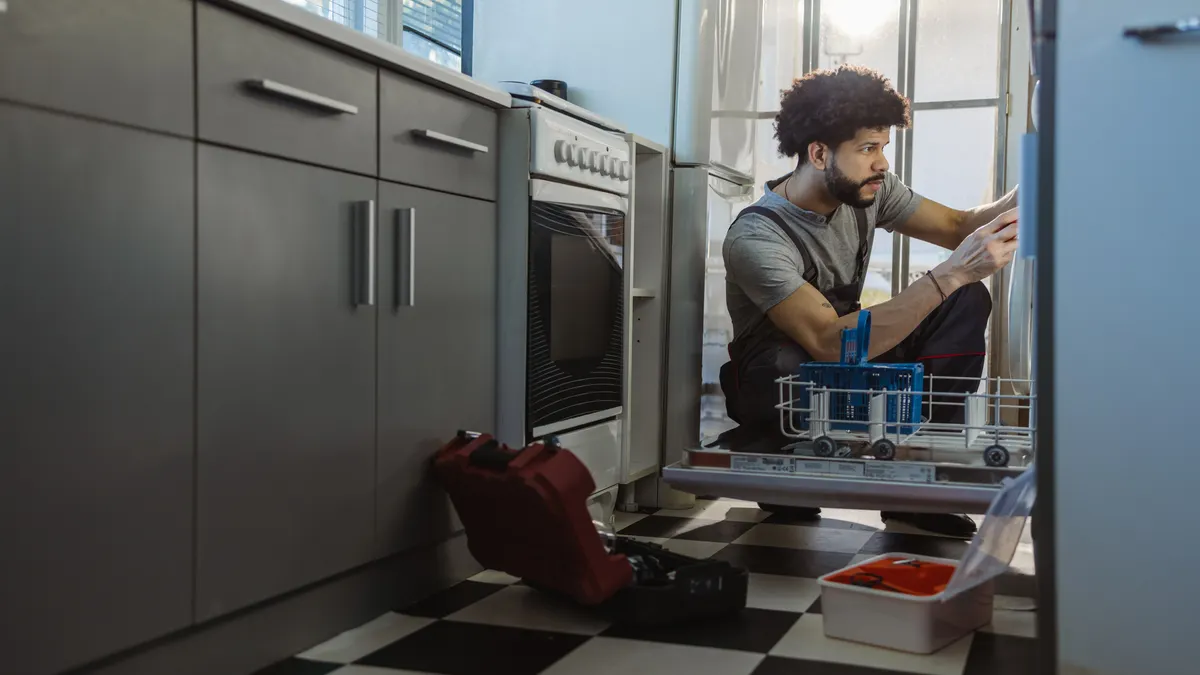
While staffing pressures have eased for many apartment operators in 2026, one hiring challenge has proved stubborn: finding skilled maintenance professionals.
According to the National Apartment Association’s latest Apartment Market Pulse, multifamily deliveries remain elevated even as new construction begins to slow, leaving operators responsible for an expanding inventory of communities that require experienced on-site teams.
So, while leasing consultants and other on-site office positions have become easier to recruit, maintenance technicians, service supervisors and other skilled trades roles remain difficult to fill as apartment companies compete with construction, hospitality and other industries for the same talent, according to Merideth Reigel, managing director of people and culture at Greystar.
“While we’ve seen some stabilization in hiring activity over the past year, demand for qualified talent continues to outpace supply in many markets,” said Reigel.
Maintenance still the toughest position to fill
Apartment operators point to maintenance as the most difficult on-site role to recruit, although the reasons extend beyond multifamily itself.
For instance, Greystar continues to compete for technicians with backgrounds in HVAC, electrical systems, plumbing and general building maintenance against employers throughout the skilled trades economy.
“The primary challenge is not a lack of jobs, it’s a shortage of skilled professionals entering the trades,” Reigel said. “Experienced technicians are retiring while fewer younger workers are entering skilled trades careers, creating a long-term pipeline challenge.”
CAPREIT is seeing many of those same trends.
“The labor market continues to be tight, with qualified candidates remaining hard to find and associates having options in other industries,” said Savas Karas, the company’s chief technology and transformation officer.
Of course, recruiting challenges often vary by geography. Smaller and more rural markets typically have fewer available candidates, and experienced maintenance professionals have skills that transfer easily to other industries, according to Karas.
“It seems like there are currently more staff interested in leaving the profession than entering,” Karas said. “That creates both a talent and knowledge deficit.”
At the same time, staffing for leasing consultants and other operations positions has improved from the challenging numbers of the past couple of years, allowing recruiting efforts to focus more heavily on specialized technical talent.
Companies are investing beyond compensation
For many, today’s recruiting environment requires much more than offering competitive pay.
Candidates increasingly want employers that provide career growth, flexible work environments, meaningful recognition and clear advancement opportunities, according to Reigel.
“We’ve focused on delivering a comprehensive team member value proposition that extends beyond pay,” Reigel said.
In that regard, Greystar has expanded technical training, certification support, mentoring opportunities and structured career development while partnering with trade schools and workforce development organizations to introduce more people to multifamily maintenance careers.
CAPREIT has taken a similar approach through a mentorship program that pairs less experienced employees with seasoned associates to prepare them for leadership opportunities.
“We continue to lean into our mentor program,” Karas said. “It is a top-notch method to train staff, pair them with someone who has had success and teach them the CAPREIT way.”
At Rentyl Apartments & Homes, a third-party apartment management company based in Orlando, Florida, workplace culture has become one of the company’s strongest recruiting tools.
“The biggest shift we’re seeing is that culture and engagement have never been more important,” said Ellie Norton, president of Rentyl Apartments & Homes. “Younger workers increasingly expect work-life balance, recognition and a visible career path rather than spending years waiting for advancement opportunities.”
To address those expectations, Rentyl has developed national and regional manager-in-training programs designed to prepare employees for leadership positions while creating a stronger internal talent pipeline.
“It’s created an incredible bench for our organization, allowing us to quickly backfill key leadership roles with minimal to no business disruption,” Norton said.
Technology helps existing teams do more
Technology is also changing how apartment operators approach staffing, though executives consistently said it is enhancing — not replacing — on-site employees.
Rather than replacing maintenance technicians, companies are using AI, centralized support and workflow automation to reduce administrative burdens and improve workflow efficiency. That allows maintenance teams to spend more time addressing resident service requests and less time on routine administrative tasks
Greystar has adopted technology to streamline workflows and improve efficiency without sacrificing customer service, according to Reigel.
“We view technology as an enabler rather than a replacement for people,” Reigel said. “AI and centralized services can automate repetitive tasks, improve consistency and provide teams with more time to focus on higher-value work.”
Karas also expects AI to have its greatest impact by improving employee training, consistency and problem-solving rather than reducing staffing levels.
Looking ahead, there is cautious optimism that hiring conditions will continue to improve. Even so, no one expects recruiting maintenance professionals to become substantially easier in the near future. Instead, they believe companies that successfully address labor challenges will be those that invest consistently in their people.
“While technology can enhance productivity, the human element of service, relationship-building and problem-solving will continue to be central to successful property operations,” Reigel said.
Click here to sign up to receive multifamily and apartment news like this article in your inbox every weekday.