The conflict in Iran hasn’t been a major talking point in multifamily circles. The major apartment REITs largely avoided the subject on their recent earnings calls, and other executives say it’s not a top-of--mind subject.
“The war conflict hasn’t yet been a topic many are talking about in our world,” Jon Tullo, executive vice president of client services at apartment manager AMC, told Multifamily Dive in emailed comments.
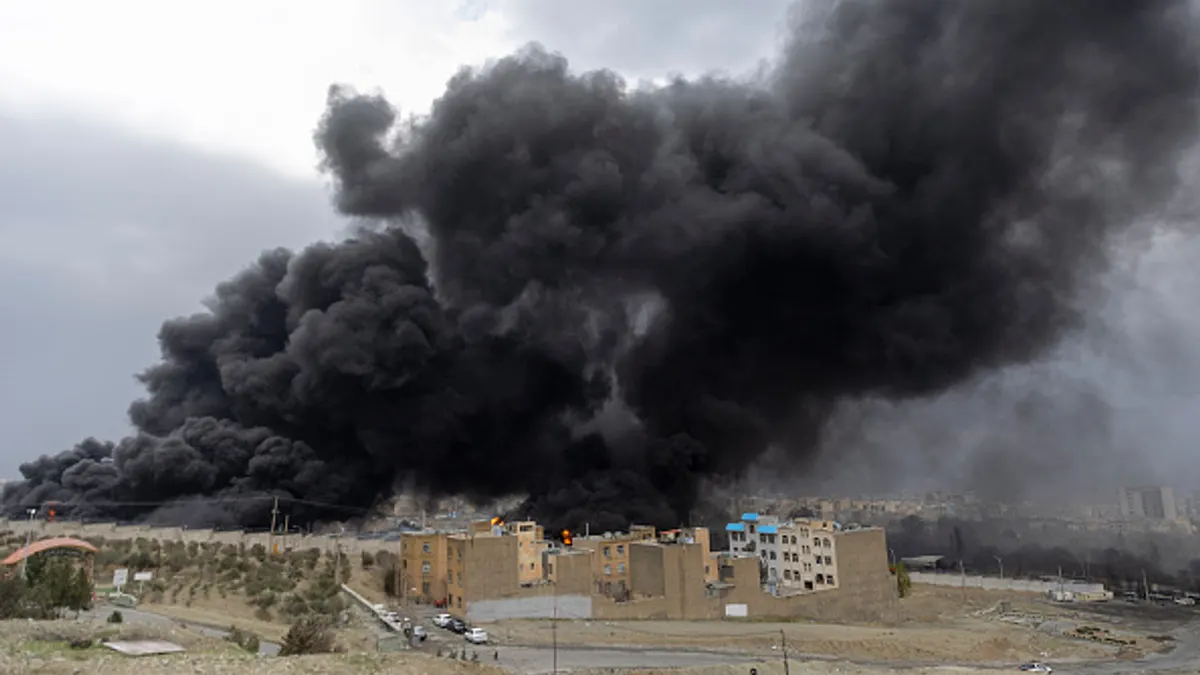
But the military action that began in late February has had very real effects on the overall economy, as the price of oil jumped to over $100 a barrel before coming down, 10-year Treasuries surged and a general sense of uncertainty has continued to resonate in an already-uncertain labor climate.
“It's more noise,” said BAM Capital Founder and CEO Ivan Barratt, who noted defense buildup could bring manufacturing jobs to his Midwestern markets. “And the more noise we have, the harder it is to find the signal.”
Treasury fluctuations
The most significant impact of the Iran conflict, according to Tyler Chesser, co-founder and managing partner at Louisville, Kentucky-based multifamily firm CF Capital, lies in financing costs.
“The 10-year Treasury moved from below 4% in late February up to the mid-4% range after the strikes, and that flows directly into our debt costs and exit cap rate assumptions,” Chesser said in emailed comments to Multifamily Dive.
Right now, apartment values are stable, even with Treasury fluctuations. But a longer military action introduces more risk. “Valuations are largely unchanged in the short term, but that could change if the conflict is prolonged,” Chesser said.
Tullo cites recent stock market performance as evidence that the “capital markets sector more or less currently trusts the military’s execution of its stated objectives,” thereby reducing the likelihood of liquidity issues.
“However, the global developments are rapidly unfolding and we are watching for any market shifts that will impact our owners,” Tullo said.
Gas prices
Though Talonvest Capital Co-Founding Principal Thomas Sherlock doesn’t think the military action in the Middle East has fundamentally impacted transaction volume in the multifamily sector, rising gas prices have been noticeable.
“The spike in energy prices has had a negative impact on operating profits,” Sherlock said in emailed comments.
Tullo is also watching the downstream impact of elevated energy prices. “We expect there will potentially be an inflationary impact on a wide range of consumer items,” he said. “However, from our vantage point as an operator, we don’t anticipate a huge, unmanageable impact.”
Developers are also getting hit. Underwriting apartment construction is already difficult. Rising fuel prices are adding another obstacle, according to John McCullough, president of Kennedy-Wilson’s Multifamily Development Group.
“Everything that comes to our job comes on the back of the truck,” McCullough said. “So when gas goes up $1, it has an impact.”
Lingering uncertainty
When queried about the war's impact, apartment executives continue to go back to one word: uncertainty.
For instance, the military action is introducing uncertainty among investment committees, further muddying the waters when companies underwrite deals, according to Chesser.
“Deals that were getting closer to clearing in February paused in March while everyone re-underwrote with a higher 10-year and stress-tested for a longer conflict,” Chesser said. “We're seeing more questions from our LPs about exit assumptions and break-even analysis than we were a quarter ago.”
Still, Chesser expects the Iran conflict to be temporary rather than a complete macroeconomic reset. “If we prioritized trying to time the geopolitical cycle over long-term fundamentals, we'd never transact,” Chesser said.
The uncertainty also showed up in Essex Property Trust’s recent earnings call. Despite the REIT’s strong first-quarter numbers and same-store revenues coming in higher than anticipated, CEO Angela Kleiman didn’t raise guidance.
“When we set our guidance last year in early February, we weren't in a war with a new country,” Kleiman said on the REIT’s earnings call in April. “So things are moving around, and there's a lot of noise out there in the broader economy.”
Click here to sign up to receive multifamily and apartment news like this article in your inbox every weekday.