



Dive Brief:
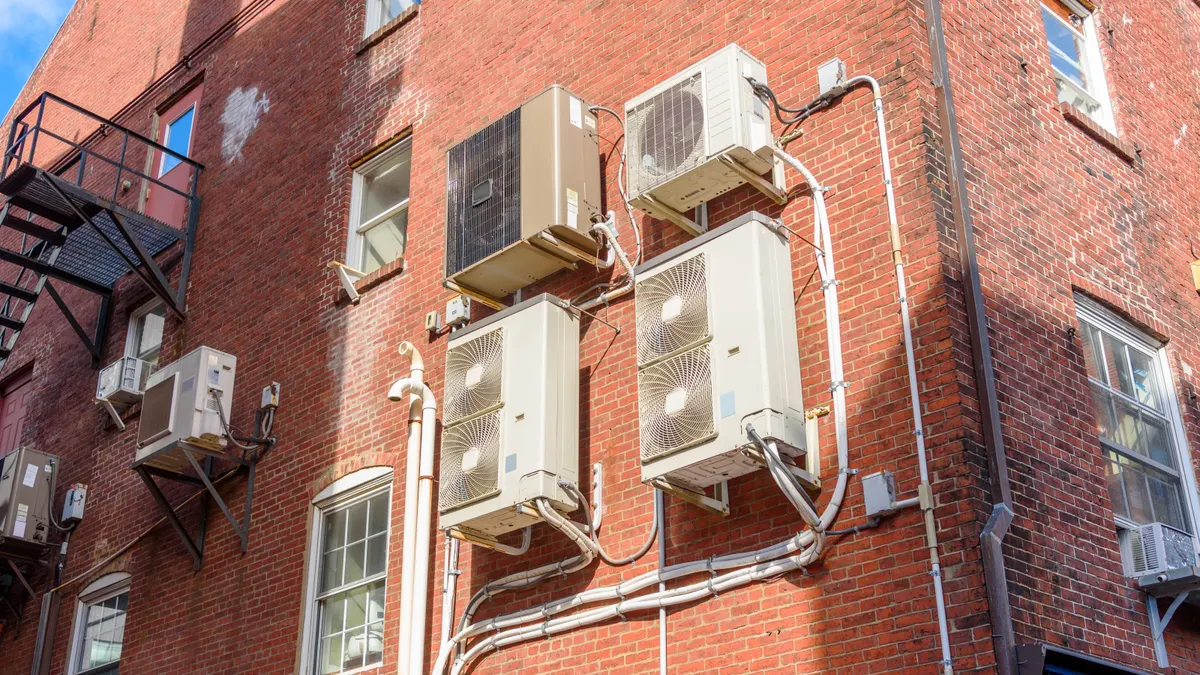
- New housing in Oregon must be built with energy-efficient heat pumps instead of ducted air conditioning following an update to the state’s residential energy code the Oregon Building Code Division’s Residential and Manufactured Structures Board approved Wednesday.
- The switch to mandatory heat pumps is expected to save residents of the newly constructed buildings an average of $125 a month in energy costs and more than $1,700 annually, per a Building Code Division analysis. The Oregon Department of Energy, local government leaders and building professionals backed the change.
- Energy costs have risen 50% in Oregon since 2020, according to an Oregon Capital Chronicle report. “The increased energy savings for new construction will benefit every Oregonian who moves into one of these new homes for years to come,” Talent, Oregon, City Council President Eleanor Ponomareff said in a Sierra Club press release.
Dive Insight:
Utility rates are expected to increase for nearly 60% of natural gas utility customers across 49 states and the District of Columbia by 2027, according to an analysis last year by the Center for American Progress and Natural Resources Defense Council.
Oregon last year doubled the funding for its Energy Assistance Program to help low-income households pay utility bills.
Some climate and housing advocates see heat pumps as an energy-efficient way to reduce costs.
“Heat pumps provide both heating and cooling in one system and do so efficiently,” according to a letter to the Residential and Manufactured Structures Board signed by local government officials, climate advocates and homebuilders. “From a housing affordability perspective, it is hard to separate construction decisions from long-term utility costs. Homes that are cheaper to operate are, in practice, more affordable homes.”
Joshua Salinger, founder and CEO of Birdsmouth Design-Build, a building and design firm based in Portland, Oregon, said in a statement that the update to Oregon’s energy code would protect home buyers from rising energy costs.
“I've been installing heat pumps for years, and have seen how cost-effective they can be for both builders and homeowners,” Salinger said.
The update aligns Oregon with building standards in California and Washington, Dylan Plummer, acting deputy director of Sierra Club’s Clean Heat Campaign, said in a statement.
“As heat pump technology improves, codes like these are necessary to ensure that new buildings are taking full advantage of the benefits that these high efficiency, non-polluting appliances offer,” Plummer said.