As has been widely reported over the past couple of years, Arbor Realty Trust has battled multiple issues with multifamily loans it originated to apartment owners.
However, CEO Ivan Kaufman said the climate is improving on the multifamily lender’s fourth-quarter 2025 earnings call in late February.
“We think we're at the bottom,” Kaufman said. “We're seeing a firming up of economic occupancy. We're seeing the properties stabilize.”
Paul Elenio, executive vice president and CFO at Arbor, said on the call that it resolved $350 million in delinquent loans and real estate-owned loans in Q4. “We put on another $270 million, which was the wave we said we were going to have in the fourth quarter,” he said.
Arbor ended 2025 with nonperforming assets of roughly $1.1 billion, including $570 million in delinquencies and around $500 million of REO properties. That was an 11% drop, or roughly $130 million, from Q3, according to Kaufman.
“We're also very optimistic we can reduce our REO assets to around $250 million to $300 million by the end of 2026, even after adding an additional $100 million to $200 million of REO assets along the way, mostly all of which are already reflected in the $570 million of delinquent loans reported by year-end,” Kaufman said.
While Arbor is taking steps to aggressively address problem loans and borrowers, the properties in its book of business still face stress, including from immigration enforcement.
More issues to work through
On Arbor’s Q4 call, Elenio reiterated Kaufman’s message that the “lion’s share” of issues were behind the company and it was focusing on quickly resolving assets, including taking over troubled assets.
“Any time we're not pleased with an operator, or they don't have enough capital, we're stepping in, and we're seeing good results with our efforts,” Kaufman said.
When Arbor takes over a distressed property, it sees “multiple bids” and “pretty good price discovery” as liquidity returns to the market. “We're being very aggressive, and we're pleased with the results once we get our hands on these properties,” Kaufman said.
Out of Arbor’s $5 billion in legacy loans, $1.5 billion are performing in accordance with the original terms, $3 billion have been modified to pay in accrued structures and $570 million are delinquent.
One tactic Arbor is using to resolve its legacy book of business is to reset interest rates on certain notes to today’s market spreads, positioning the loans to cover debt service from property operations without a shortfall.
“This, combined with having the right guarantees and requiring the borrowers to commit significant additional capital to support their deals, gives us comfort about how these loans will perform going forward,” Kaufman said.
Immigration enforcement hits properties
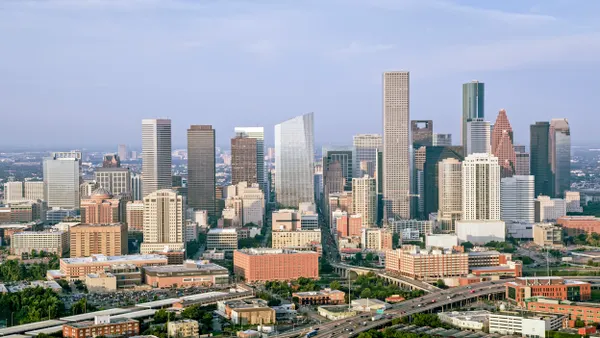
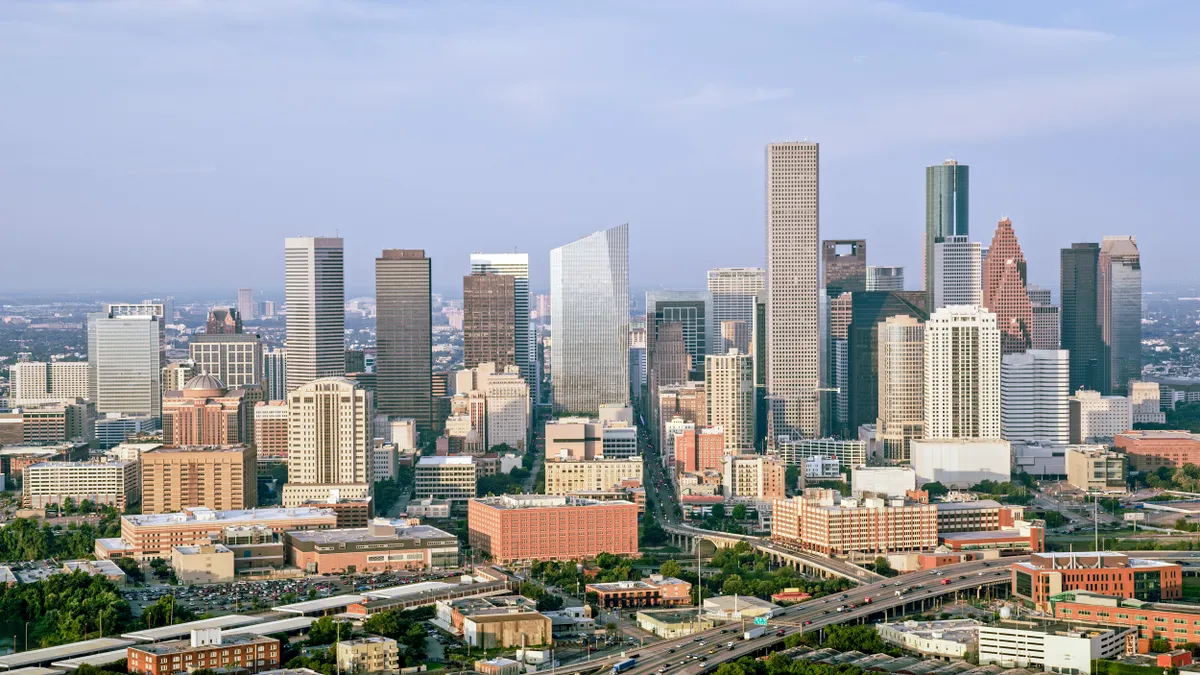
Houston continues to be a problem spot for apartments. While the market is traditionally boom-and-bust, it has also been hit by immigration issues, starting under the Biden administration.
“First, under the prior administration, you had a significant number of immigration centers next to a lot of properties,” which led to those assets being damaged, according to Kaufman.
Now, under the Trump administration, ICE raids are hitting occupancy rates in Houston and, to a lesser extent, San Antonio and Dallas, as well as other areas.
“You're seeing properties that were 90% occupied,” Kaufman said. “Next day, they're back down to 65% or 70%. We're also seeing a little bit of that in the Atlanta area, too, [and] in certain pockets of Florida. But those would be the markets that have significant softness.”
Click here to sign up to receive multifamily and apartment news like this article in your inbox every weekday.